
Unbiased headlines. Facts, not spin.
Unbiased Headlines is an independently owned news organization. We bring you the facts, not opinions, written fresh from 110+ named sources. Sources linked so you can verify it yourself.
 politics
Notable (6/10)
politics
Notable (6/10)
Wisconsin Democrats Need Two State Senate Seats and Five Assembly Seats for Full Control This November
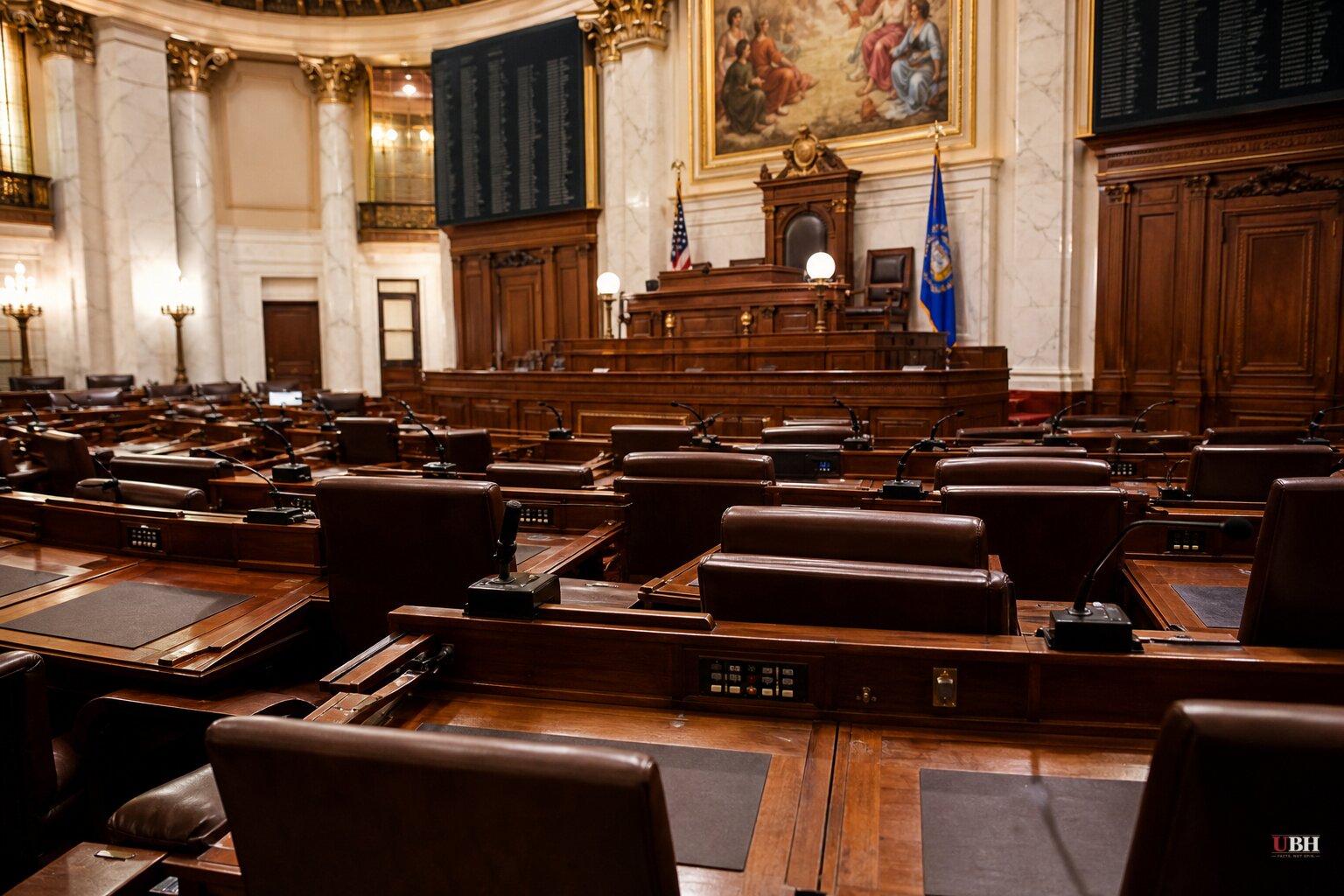
Wisconsin has had divided government since 2018, when Democrat Tony Evers narrowly beat Republican Scott Walker for governor while Republicans kept control of the Legislature. That split ends or continues on Nov. 3.
Democrat David Crowley, the Milwaukee County executive, faces Republican U.S. Rep. Tom Tiffany for the open governor's seat, according to The Daily Cardinal. Crowley served in the Wisconsin Assembly from 2017 to 2020, won Evers' endorsement, and beat state Rep. Francesca Hong, a democratic socialist, in the August primary. Tiffany has represented Wisconsin's 7th Congressional District since 2020 and spent nearly a decade in the state Legislature before that.
The Math Democrats Are Chasing
Republicans hold the state Senate 18-15. Seventeen of the 33 seats are on the ballot this year, so Democrats need to flip just two Republican-held seats to take the majority, assuming they hold everything they already have, per The Daily Cardinal.
The Assembly is a heavier lift. Republicans control it 54-45, and all 99 seats are up. Democrats need five flips there.
Barry Burden, a University of Wisconsin-Madison political science professor and director of the Elections Research Center, told The Daily Cardinal that Democrats have a better shot in the Senate than the Assembly. Only half the Senate has run under the new maps so far; the whole Assembly already has. "Democrats grabbed the wins that were easy in 2024, and now the next set of districts is a little harder to get," Burden said.
Six Republican Assembly and Senate incumbents did not file for reelection this cycle, including two of the most powerful figures in state government: Assembly Speaker Robin Vos, R-Rochester, and Senate Majority Leader Devin LeMahieu, R-Oostburg, according to The Daily Cardinal.
How the Maps Changed
The reason any of this is competitive traces back to a 2023 ruling by Wisconsin's Supreme Court, which had flipped to a liberal majority. The court struck down the Republican-drawn legislative maps, and Evers signed replacement maps in 2024, according to reporting from The New York Times republished by the Election Law Blog. Under the old maps, Democratic Assembly candidates won 53% of the statewide vote in 2018 but took only 36 of 99 seats, per that reporting.
Republicans, the Times reported, "begrudgingly accepted" the new maps. Under them, Democrats cut the GOP's Senate majority from 22-10 to 18-15 in the 2024 election. None of the sources reviewed for this article include an on-record Republican response defending the old maps or objecting to the new ones, which leaves a real gap in understanding how the GOP frames the redistricting fight itself.
The Times/Election Law Blog piece calls the old GOP maps "a case study in undemocratic gerrymandering" while describing, without the same scrutiny, that a Democratic trifecta would let the party "redraw a congressional map for 2028 to counter Republican gerrymandering threats throughout the South." Whether that's turnabout or just a different party doing the same thing depends entirely on who's asked, and the sourcing here only captures one side of that argument.
The Political Stakes and the Betting Markets
Dianne Hesselbein, the Democratic minority leader in the state Senate, told the Times this is "the most important election that Wisconsin has ever seen." Prediction markets tracked by Crypto Briefing put the odds of a Democratic win in the governor's race at 82.5%, up from 80% a week earlier. That's a betting line, not a poll, and it should be read that way — prediction markets can move on thin volume and don't measure turnout mechanics the way an actual survey does. Separate polling cited by Crypto Briefing shows Crowley and Tiffany essentially tied overall, with Crowley ahead among likely voters, while his tax record as county executive is under active scrutiny.
The governor's race and the legislative math are legally separate questions, but both hinge on the same maps and the same November electorate. If Democrats do complete the trifecta, the fight over Wisconsin's congressional lines heading into 2028 becomes the next battleground. Republicans will get the chance to make the exact gerrymandering argument against Democrats that Democrats have spent the last three years making against them.
Sources used for this briefing
4 links from 4 independent newsrooms (syndicated copies of the same report count once)
These are the sources it draws on, linked so you can verify.


