
Unbiased headlines. Facts, not spin.
Unbiased Headlines is an independently owned news organization. We bring you the facts, not opinions, written fresh from 110+ named sources. Sources linked so you can verify it yourself.
 politics
Major Story (7/10)
French Protests Draw 410,000 by Government Count, 800,000 by Union Count, as Paris March Ends in Tear Gas
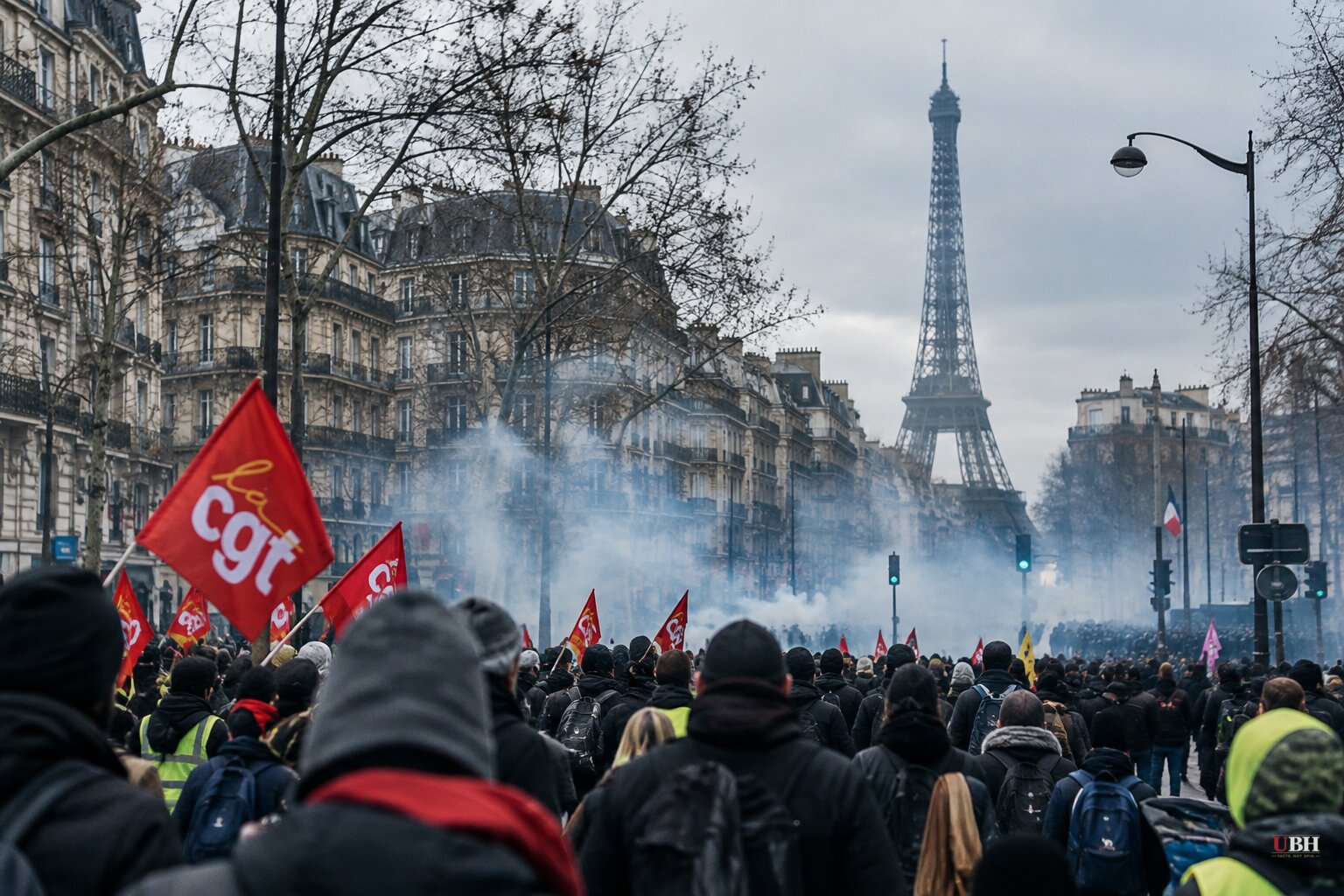
Since Interior Minister Laurent Nuñez's midday count of 35,000 marchers on Saturday, Oct. 24, the day's demonstrations over school funding and living costs grew sharply, and several ended in clashes with police.
The Interior Ministry's final figure was 410,000 people nationwide, including 110,000 in Paris. The CGT union, one of the organizers, puts it at about 800,000 nationwide and 250,000 in Paris. That is nearly double the government's number. About 550,000 people turned out last Saturday, before the riots and looting.
Calm march, violent finish in Paris
The Paris march started peacefully and stayed that way for most of the day. Authorities had confined it to the city's southeastern edge, between Porte d'Italie and Porte de Vincennes, keeping it away from the central neighborhoods damaged last weekend.
Near Porte de Vincennes, some protesters threw projectiles. Police answered with volleys of tear gas and water cannon. BBC Paris correspondent Hugh Schofield described riot police baton-charging masked youths who were smashing the windows of a car dealership on the Cours de Vincennes.
CNN's Joseph Ataman reported that about a thousand protesters were still holding the junction more than an hour after the clashes began. Some lit flares, and police stun grenades could be heard. Paris police said officers stopped a group trying to break into a car dealership.
The Paris prosecutor's office said 64 people were arrested in connection with the demonstration and 40 were placed in police custody. Six of those arrested were minors. Most arrests involved suspected weapons offenses or taking part in a group preparing violence or property damage, the office said.
Other cities
Police used tear gas in Lyon, Clermont-Ferrand and Strasbourg, and water cannon in Nice and Nantes. In Marseille, officers fired tear gas during clashes with several dozen people near the end of the march. Clashes were also reported in Lille, Montpellier and Toulouse. In Bordeaux, people were seen ripping boards off a shop and building barricades.
In Nantes, the regional prefecture said 41 people were apprehended over violence at "undeclared gatherings." Authorities said earlier in the day that 135 people had been arrested nationwide.
Nuñez warned that authorities "will not tolerate any violence or any disturbance of public order." His ministry counted 136 street actions, down from 264 the previous weekend. Up to 70,000 officers were deployed, backed by helicopters, armored vehicles and water cannons.
Bans on gatherings remained in force in several cities after last-minute legal appeals failed. In Nice, police ordered several hundred people at Place Masséna to disperse. In Bordeaux, demonstrators gathered at Place de la Bourse despite a city-wide ban and tram cancellations.
The route dispute and the stakes for Macron
Police first approved a Bastille to Nation route, then reversed that on Friday. Unions and left-wing politicians objected. They argued that the change could scatter demonstrators and fuel further chaos.
A 21-year-old student in Lyon told AFP that police "come and disperse marches before they even form." Brigitte Couderc, regional general secretary of the CGT-Commerce and Services union in the Gironde, said: "Whether the protest is banned or not, we will support the high school students' movement and we won't abandon them."
The far-right National Rally has taken the opposite line. It accuses Macron's government of failing to protect the public and is urging people to turn their anger into votes. Marine Le Pen and Jordan Bardella were due to speak at the party's congress in Orléans, which police were watching closely because of the risk of clashes between supporters and counterprotesters.
Shopkeepers are still bracing for a repeat of last weekend, when at least 3,000 shops were damaged or looted. Jonathan Siad, who owns a tobacco shop in Paris, told DW some owners are thinking about buying weapons to defend themselves. Many businesses boarded up or closed for the day.
Nuñez acknowledged on Monday that police had lost control in some cities during last weekend's violence. He offered to resign, and Macron refused.
The movement began last month over staff shortages at one high school southeast of Paris. It has since grown into a national protest over schools, wages and pensions. Unrest also spread beyond France on Saturday. Police used tear gas in Brussels and Tirana, and soldiers and police were deployed in Milan.
Macron's presidency ends with a vote on his successor in May. The 40 people in custody in Paris now face prosecutors' decisions on charges. The government has not announced any response to the marchers' demands on school funding or living costs.
Sources used for this briefing
8 links from 8 independent newsrooms (syndicated copies of the same report count once)
These are the sources it draws on, linked so you can verify.


