
Unbiased headlines. Facts, not spin.
Unbiased Headlines is an independently owned news organization. We bring you the facts, not opinions, written fresh from 110+ named sources. Sources linked so you can verify it yourself.
 economy
Major Story (8/10)
Wholesale prices rose 0.3% in October and 6.5% over the year, the fastest annual pace since November 2022
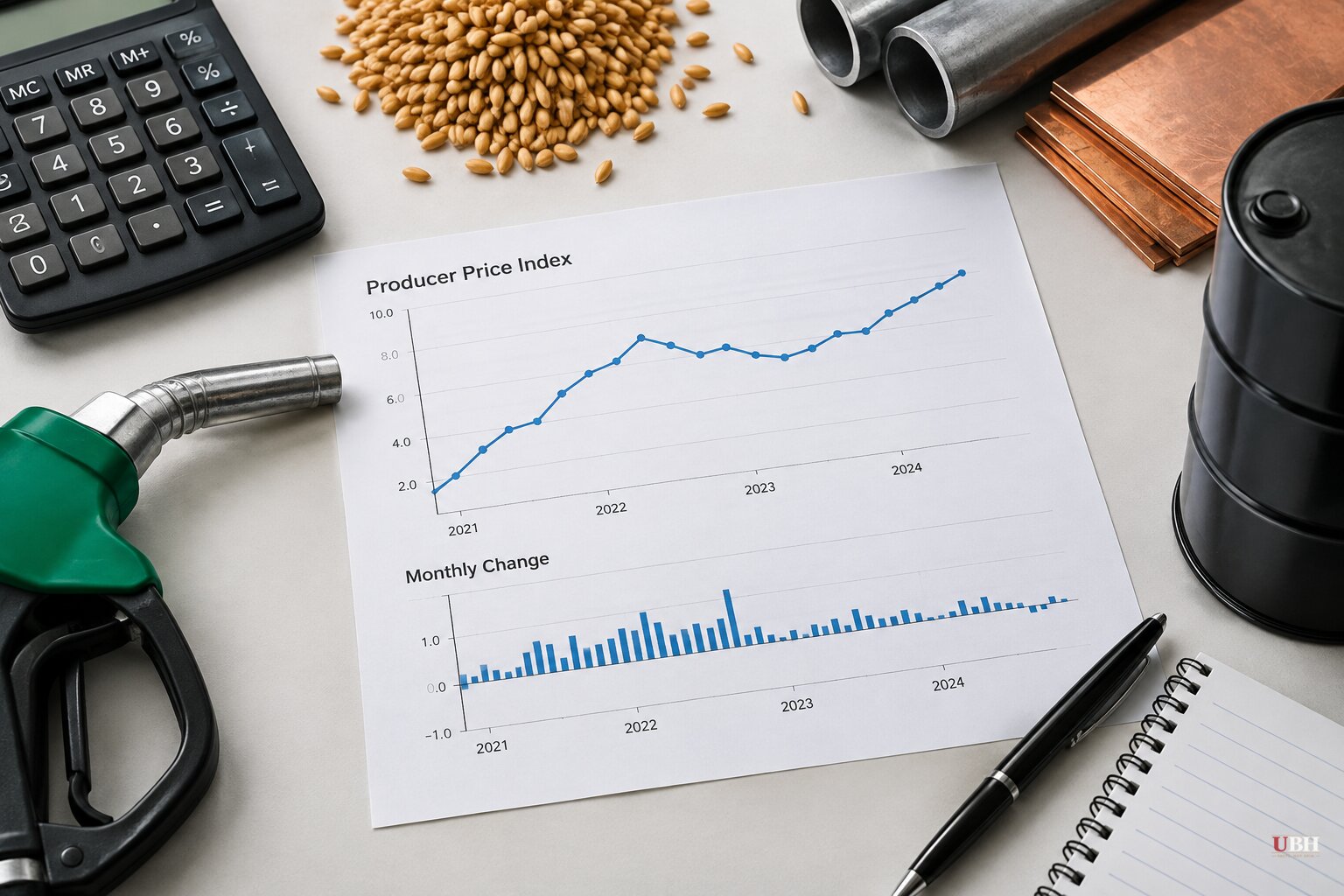
Wholesale inflation slowed in October but stayed high. The annual rate got worse.
The Labor Department's producer price index, which tracks what producers receive before goods reach consumers, rose 0.3% from September to October, the department said today, Nov. 13. September's gain was 1.4%.
Over 12 months, the index jumped 6.5%, up from 6.3% in September. That is the biggest annual increase since November 2022. A year ago, the figure was 3.1%.
The energy shock is still in the numbers
The Iran war and the resulting energy supply shock have pushed gas and diesel prices sharply higher in recent months. Fuel prices did not climb as fast in October as they did in September, but the earlier surge is still working its way through supply chains.
The Labor Department's report points to price pressure beyond fuel. Inflation that started at the pump is showing up in the cost of doing business.
Producer prices do not translate directly into what shoppers pay. They can still hint at what is coming, since businesses facing higher input costs often pass some of them along.
Consumer prices were also hotter than forecast
The consumer price index, the more familiar measure, rose 0.4% from September to October, the Labor Department said Tuesday, Nov. 10. That was down from 0.6% in September. Excluding food and energy, core prices rose 0.3%, the same as the month before. Both readings came in a tenth of a point above forecasts.
There is no official annual CPI figure for October. Last year's government shutdown meant no data was collected for October 2025. Riccardo Trezzi, founder of the consulting firm Underlying Inflation and a former Fed economist, used rough estimates for that missing month and calculated that consumer prices rose 4% from a year earlier, up from 3.7% in September. He put core inflation at 2.8%, up from 2.6%.
"It's worrisome," Trezzi said. "There is a sense that inflation is broad, persistent, a little bit everywhere. The Fed should be very worried."
That is an estimate from a private economist, not a government number.
The Fed is leaning toward another hike
The economy is not weak. It grew at a 3.4% annual rate in the July-September quarter, driven mostly by consumer spending. Strong demand layered on top of higher gas prices and supply disruptions tied to tariffs and global turmoil is a hard mix for the central bank.
The Fed raised its key rate in September and held it steady late last month. Fed governor Christopher Waller said Tuesday that "economic activity is strong, the labor market is stable, but inflation is too high, well above" the 2% goal. He said a half-point increase at the December meeting is possible, double the usual quarter-point move.
Many Fed officials have said they will almost certainly need to raise the rate further, possibly more than once. When the Fed lifts its rate, borrowing costs on mortgages, auto loans and credit cards rise too.
The political fallout
Democrats won historic gains in the House and Senate in last week's midterms, ousting Republican majorities in both chambers. The AP Voter Poll, a survey of 100,000 voters, found about two-thirds blamed President Donald Trump's policies for higher costs. About 9 in 10 called the cost of living a "crucial" or "major" factor in their vote.
Trump has acknowledged voter anger over the Iran war and gas prices. He has shown no sign of changing course.
Democrats now inherit the same problem. Incoming majorities in both chambers will own part of the response to prices that are still rising faster than wages-and-targets math can justify. Spending, tariffs, energy supply and the war are all levers in Washington's hands.
The next test is the Fed's December meeting, where the question is whether the move is a quarter-point or the half-point Waller floated.
Sources used for this briefing
6 links from 5 independent newsrooms (syndicated copies of the same report count once)
These are the sources it draws on, linked so you can verify.


