
Unbiased headlines. Facts, not spin.
Unbiased Headlines is an independently owned news organization. We bring you the facts, not opinions, written fresh from 110+ named sources. Sources linked so you can verify it yourself.
 economy
Notable (6/10)
Indian Officials Say U.S. Has Promised Tariff Edge Over Rivals, Target for First Trade Deal Phase Is March 2027
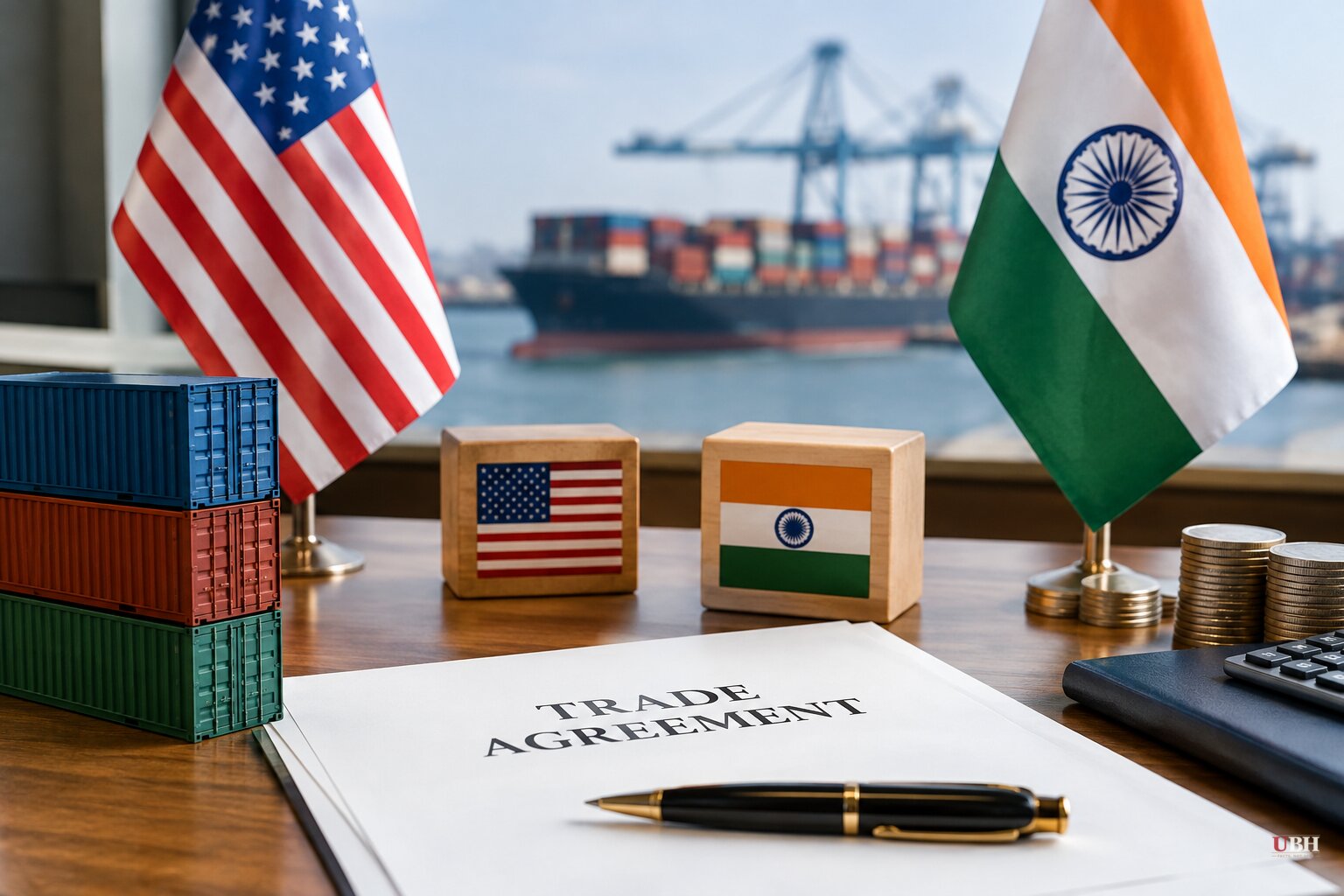
A senior Indian Commerce Ministry official said today, Nov. 13, that the United States has assured India a "comparative advantage" over competing countries in the trade deal the two governments are negotiating. The official spoke on condition of anonymity because the details of the talks have not been made public. Both sides are working to finish the first tranche of the agreement by the end of India's current financial year, which closes in March 2027, according to the official and government sources.
The assurance is the clearest sign yet on India's central demand. It is not a signed deal.
What India says it was promised
"Talks between India and the U.S. are ongoing and the U.S. has assured us of a comparative advantage over our competitor countries," the official said.
The extent of that advantage will depend on the tariffs Washington eventually imposes, government sources said. The official said the assurance already takes into account future tariffs, including any that come out of a pending U.S. investigation into excess manufacturing capacity.
The official did not disclose tariff rates or name the competing countries covered. Indian exporters in textiles, apparel, leather and footwear compete with suppliers such as Vietnam, Bangladesh and Indonesia.
The first tranche covers trade in goods only. Services will be taken up in the broader agreement, which is being negotiated alongside it.
The tariff backdrop
The two countries announced a framework in a joint statement on Feb. 7, in which they committed to "provide each other preferential market access in sectors of respective interest on a sustained basis." Less than two weeks later, on Feb. 20, the U.S. Supreme Court struck down the tariffs the administration had imposed under the International Emergency Economic Powers Act. That scrambled the talks.
The U.S. then opened two investigations under Section 301 of the Trade Act of 1974 in March, one on forced labor in production chains and one on excess capacity. The forced-labor findings produced a 10% additional tariff on India. Indian officials note that some rivals, including Indonesia, Malaysia, Pakistan and Sri Lanka, got the same 10%.
India's Commerce Ministry said in July that several competing economies faced a higher 12.5% rate under the same measure. The excess-capacity investigation is still open and could bring more duties.
The Indian official said the deal includes a clause letting either country modify its commitments if the other changes its tariffs. He called that "not usual" for Indian trade agreements but said it tracks the February joint statement.
The November visit
Commerce Secretary Rajesh Agrawal told reporters today the talks are "on the right track." A small U.S. team came to India in the first week of November, he said, to discuss customs and trade facilitation. Government sources put the visit at Nov. 2 and 3 and describe it as two people.
"The discussions went off in a very positive direction," Agrawal said. "A lot of issues were closed, and there was convergence in a lot of areas." The chief negotiators have stayed in touch virtually, he added.
Commerce Minister Piyush Goyal said Thursday that the visit was not a formal negotiating round. A deputy-level U.S. official met India's Customs Department to align procedures, he said. Goyal also said India had secured preferential access for products of interest compared with economies at a similar level of development, and that it would end up with "one of the best deals with the U.S." He said he expects the deal to help reach the leaders' goal of $500 billion in bilateral trade. Asked whether the U.S. midterm results could affect the talks, Goyal declined to link the two.
Where Washington stood
The optimism is mostly coming from the Indian side. U.S. Trade Representative Jamieson Greer said in early October that a deal with India was not imminent, even though both delegations had identified every outstanding issue. At the time, Washington was pressing India on its Russian oil imports, while New Delhi wanted its farm sector kept off the table and wanted to keep the tariff benefits that give its exporters an edge.
U.S. Ambassador to India Sergio Gor said last month that the bulk of the major sticking points had been settled. A U.S. measure that lets President Trump levy duties of up to 100% on countries buying large volumes of Russian oil remains in the background. Those levies have been waived, according to Bloomberg.
The U.S. government has not publicly described the assurance in the terms Indian officials used.
What comes next
Nothing is signed, and no new tariff rates have taken effect. The Indian official said the deal cannot fix India's final advantage until the Section 301 excess-capacity findings are out and Washington announces its rates. After that, the two sides are expected to finalize the comparative advantage, complete legal drafting and win approval for implementation. Whether the U.S. excess-capacity ruling lands before the March 2027 target is the open question.
Sources used for this briefing
6 links from 6 independent newsrooms (syndicated copies of the same report count once)
These are the sources it draws on, linked so you can verify.


