
Unbiased headlines. Facts, not spin.
Unbiased Headlines is an independently owned news organization. We bring you the facts, not opinions, written fresh from 110+ named sources. Sources linked so you can verify it yourself.
 health
Major Story (8/10)
WHO Panel Recommends Adding Oxford and Moderna Bundibugyo Vaccines to Congo Ebola Trial as Confirmed Cases Reach 10,444
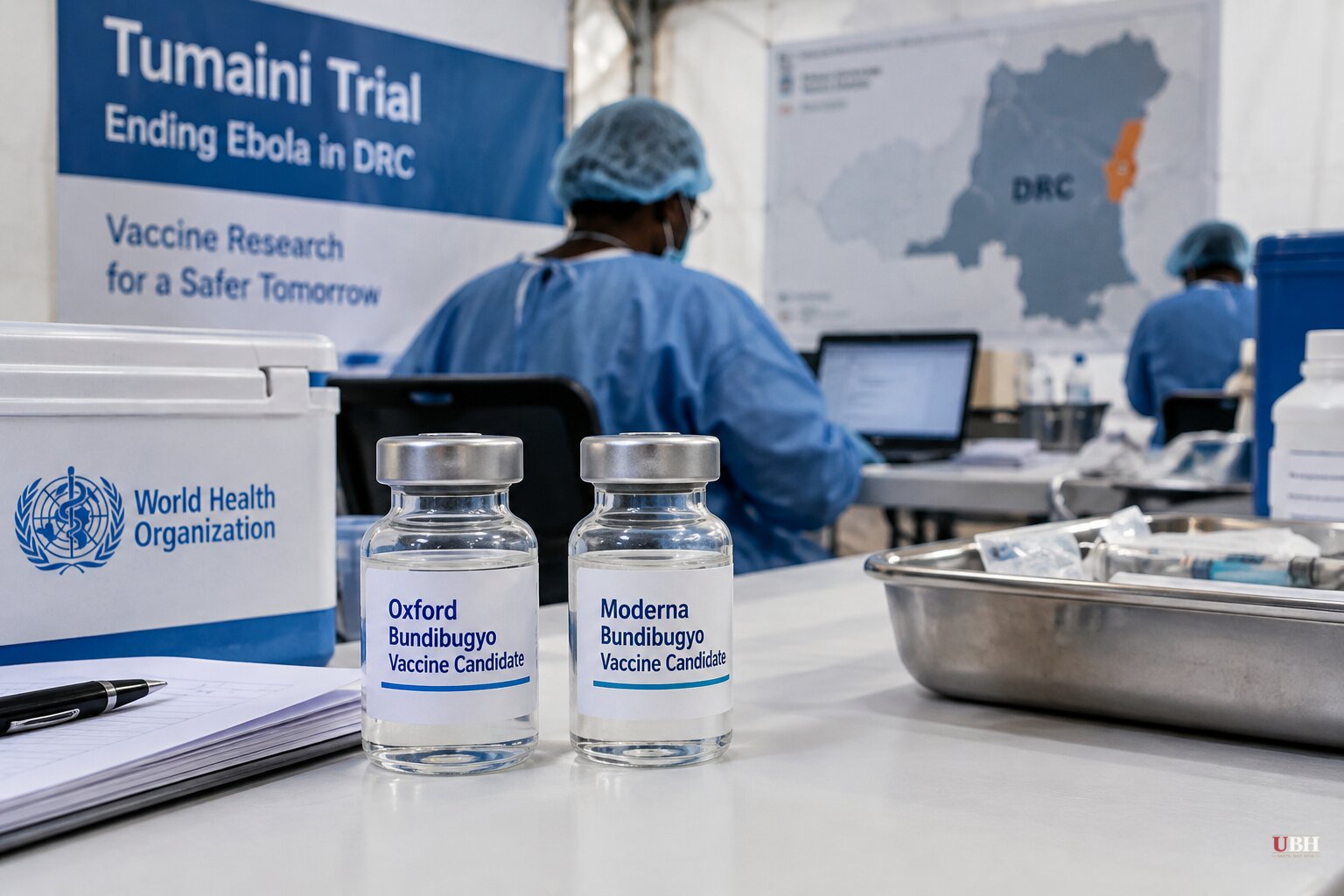
Since the outbreak was declared in the Democratic Republic of the Congo on May 15, Bundibugyo virus has spread to at least four other countries. Africa CDC counts 10,444 confirmed cases and more than 5,300 deaths. The new development, announced today, Nov. 4, is the first vaccine news aimed squarely at this strain.
WHO Director-General Tedros Adhanom Ghebreyesus told reporters in Geneva that WHO expert groups are recommending two additional candidates for the Tumaini trial in the DRC. Both were designed specifically for Bundibugyo.
The two candidates
The first is ChAdOx1 BDBV, developed by the University of Oxford with the Serum Institute of India. The second is Moderna's mRNA-1469.
According to WHO, its independent Technical Advisory Group on Candidate Vaccine Prioritization recommended both this week. The group based that on preclinical and early clinical evidence. The companies were told Monday.
The candidates enter the trial only after national approvals. WHO has not said when that will happen.
WHO says this is the first time vaccines designed for Bundibugyo will be evaluated during an outbreak of the disease.
How Tumaini works
The trial began last month using Ervebo. That vaccine is approved for Zaire ebolavirus, not Bundibugyo. WHO says Ervebo is the first vaccine in a Tumaini trial to be assessed for efficacy against Bundibugyo.
Tumaini uses ring vaccination, enrolling contacts of confirmed cases. WHO says four rings are in place and more are being prepared. The approach builds on the trial in Guinea during the West Africa outbreak a decade ago, which established Ervebo's efficacy against Zaire ebolavirus.
The DRC's Institut National de Recherche Biomédicale is leading the trial. Support comes from the University of Antwerp, WHO, Epicentre, Médecins Sans Frontières, the Institute of Tropical Medicine in Antwerp and Africa CDC. WHO credits the Coalition for Epidemic Preparedness Innovations for funding the fast development of the candidates.
Results from the vaccine trial are expected in early 2027, according to WHO.
Treatments
WHO's PARTNERS trial, launched in July, is testing the monoclonal antibody MBP134, the antiviral remdesivir, and the two together in confirmed Bundibugyo patients. Maftivimab will soon be added, WHO says.
The virus has a fatality rate above 50 percent. No vaccine or treatment designed for the strain has been approved.
Where the outbreak stands
Data from 31 October put DRC deaths at 5,103. Tedros said new hotspots continue to emerge in the country.
Outside the DRC, Kenya has reported nine cases, including two deaths. Uganda has also reported cases.
Nigeria's single case was confirmed Oct. 20 in the Federal Capital Territory. The patient is a woman who had traveled from Uganda. She was evacuated to Switzerland on Oct. 26 with her husband, a close contact. As of Nov. 3, the Nigeria Centre for Disease Control listed one confirmed case, no deaths, 62 contacts identified and 57 in quarantine.
A British healthcare worker infected with Ebola is being evacuated from the DRC to the UK for specialist treatment, a UK government spokesperson said.
Travel restrictions
Tedros used the briefing to press countries to drop entry restrictions on travelers from the DRC. Ghana and the United States are among the countries that have introduced them.
"We call on countries that have imposed travel restrictions to lift them," Tedros said. "Such restrictions punish countries for doing the right thing, create disincentives for transparency, and harm the response."
Africa CDC has said since the start of the outbreak that travel restrictions should not be the primary public health tool. In the U.S., the CDC's attestation requirement for all U.S.-bound air passengers took effect at 11:59 PM ET on Tuesday, Nov. 3.
Tedros also played down vaccines as a near-term fix. "Vaccines are powerful tools, but they are not substitutes for the proven measures that can save lives now," he said. He listed early care, contact tracing, isolation, safe and dignified burials, and trusted engagement with communities.
What comes next
The two new candidates cannot start dosing contacts until the DRC and any other participating countries grant national approvals. WHO has not announced a timeline for those approvals. Until then, Ervebo remains the only vaccine in the trial, and it was not built for this strain.
Sources used for this briefing
7 links from 6 independent newsrooms (syndicated copies of the same report count once)
These are the sources it draws on, linked so you can verify.


