
Unbiased headlines. Facts, not spin.
Every story is an unbiased news briefing written from 110+ sources across the spectrum — sources linked so you can verify it yourself.
 economy
Notable (6/10)
July 10, 2026 at 10:58 PM
economy
Notable (6/10)
July 10, 2026 at 10:58 PM
Where Inflation Hurts Most and Least in 2026: A State-by-State Reality Check
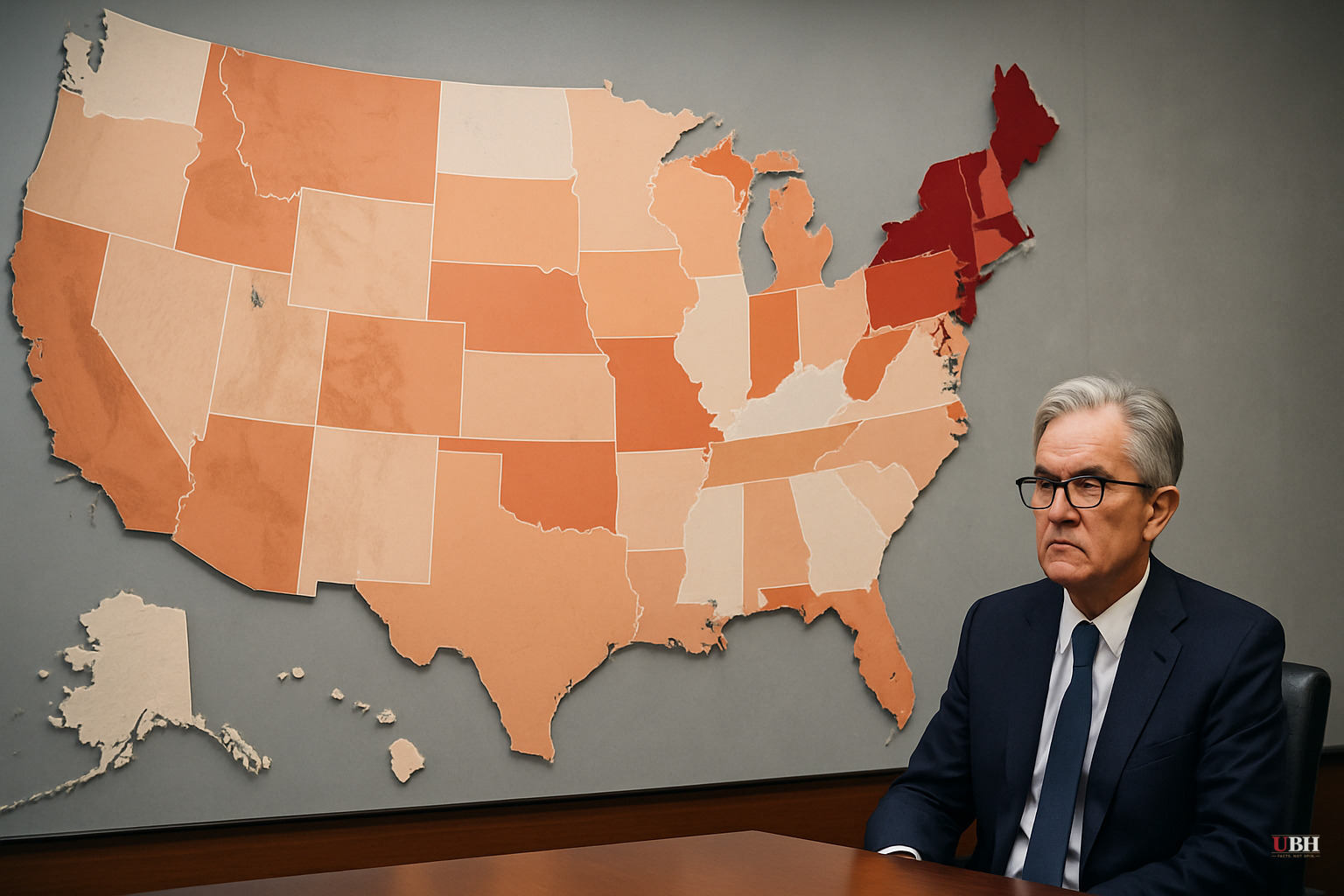
The Gap Is Real — and Growing
Fed Chairman nominee Kevin Warsh put it plainly at his April 22 Senate confirmation hearing: "If you were trying to do the most harm to the least well off among us, inflation would be the way to do it."
With the Consumer Price Index running 5% year-over-year in the Midwest region as of May 2026, according to CNBC's America's Top States for Business study — now in its 20th year — the burden is landing unevenly across states. The study rates all 50 states using a cost-of-living index from the Council for Community and Economic Research (C2ER), housing affordability data from the Census Bureau and ATTOM Data Solutions, and home insurance costs.
Where It's Brutal
New York sits at the top of the pain ladder. The average home price in Manhattan reached $2.9 million in Q1 2026, according to C2ER. Average apartment rent in New York City is closing in on $6,000 a month. Statewide, rents are the highest in the nation as a percentage of median income, per ATTOM Data Solutions.
Illinois isn't far behind. Nearly a third of Illinois residents are paying more than 30% of their monthly income on housing, according to Census Bureau and ATTOM data. Rent for a three-bedroom home averages $2,425. A dozen eggs cost $4.04 in Q1 2026. Illinois scored 17 out of 50 points on CNBC's Cost of Living index — a D+.
Democratic Gov. JB Pritzker signed a fiscal year 2027 budget in June that allocates $100 million toward affordable housing programs and $50 million toward down payment assistance. Whether that moves the needle on a structural affordability problem this deep is an open question.
Where the Dollar Still Stretches
At the other end of the spectrum, Ohio and Missouri stand out as genuine bargains.
Ohio's average rent is among the four lowest in the nation, according to ATTOM. Cleveland's average home price is roughly one-third that of Boston. CNBC named Ohio America's Top State for Business overall in 2026, with low living costs cited as a primary driver.
Missouri's average rent for a three-bedroom home was $1,582 in the most recent data — about half what a comparable unit costs in New Jersey. A head of lettuce in Joplin runs 12% cheaper than in New York City, per C2ER. Missouri scored 34 out of 50 points on CNBC's index, a B+.
Missouri's insurance costs deserve attention. A tornado in and around St. Louis last year killed at least four people and caused $1.6 billion in damage, according to CNBC. Insurify projects Missouri premiums, already 13th-highest nationally, will rise another 7% this year. Affordability in one column doesn't always mean affordability across the board.
The Conservative Critique Worth Hearing
Critics from the right argue that the most expensive states — New York, California, Illinois — share a common thread: decades of high taxation, heavy regulation, and government programs that drive up costs rather than reduce them. The Illinois 2027 budget's housing programs are exactly the kind of intervention skeptics point to. Government-subsidized housing programs have repeatedly failed to solve structural supply problems, and $150 million spread across a state of 12 million people isn't going to change the math on rents already 40% above Ohio's.
States with aggressive land-use regulation and zoning restrictions consistently appear at the top of cost rankings. States with lighter regulatory frameworks and lower tax burdens dominate the cheap list.
The counterargument — that lower-cost states also pay lower wages, so workers aren't actually better off — is worth examining honestly. CNBC's own framing notes that low living costs let employers "pay workers less, saving on wage costs." That's a real tradeoff. But purchasing power, not nominal wages, determines what a paycheck actually buys. Ohio workers paying a third of Boston's housing costs may be doing better in real terms even at lower salaries.
The Insurance Wild Card
Home insurance is cutting across both expensive and affordable states. CNBC's methodology this year specifically includes home insurance costs because the crisis is nationwide — not concentrated in high-cost coastal markets. Missouri's storm damage is one example. The insurance market is repricing risk at speed, and states that look affordable on rent and groceries may face significant upward pressure on total household costs as premiums rise.
Fed Chairman Warsh reiterated at his June 17 news conference that "persistently high prices are a burden for the American people." The Fed's next rate decisions will matter for mortgage costs nationwide, but monetary policy cannot build a house in Chicago or repeal zoning laws in Manhattan.
The unresolved question: whether Illinois's $150 million in housing aid and similar state-level programs can actually increase housing supply fast enough to affect affordability — or whether they primarily subsidize demand in markets where the real problem is restricted supply.
Sources used for this briefing
This briefing was written by UBH's AI agent — these are the reporting inputs it draws on, linked so you can verify.


