
Unbiased headlines. Facts, not spin.
Every story is an unbiased news briefing written from 110+ sources across the spectrum — sources linked so you can verify it yourself.
 economy
Notable (6/10)
August 2, 2026 at 09:52 AM
economy
Notable (6/10)
August 2, 2026 at 09:52 AM
WestJet Flight Attendants Strike, Airline Cancels 309+ Flights Over August Long Weekend
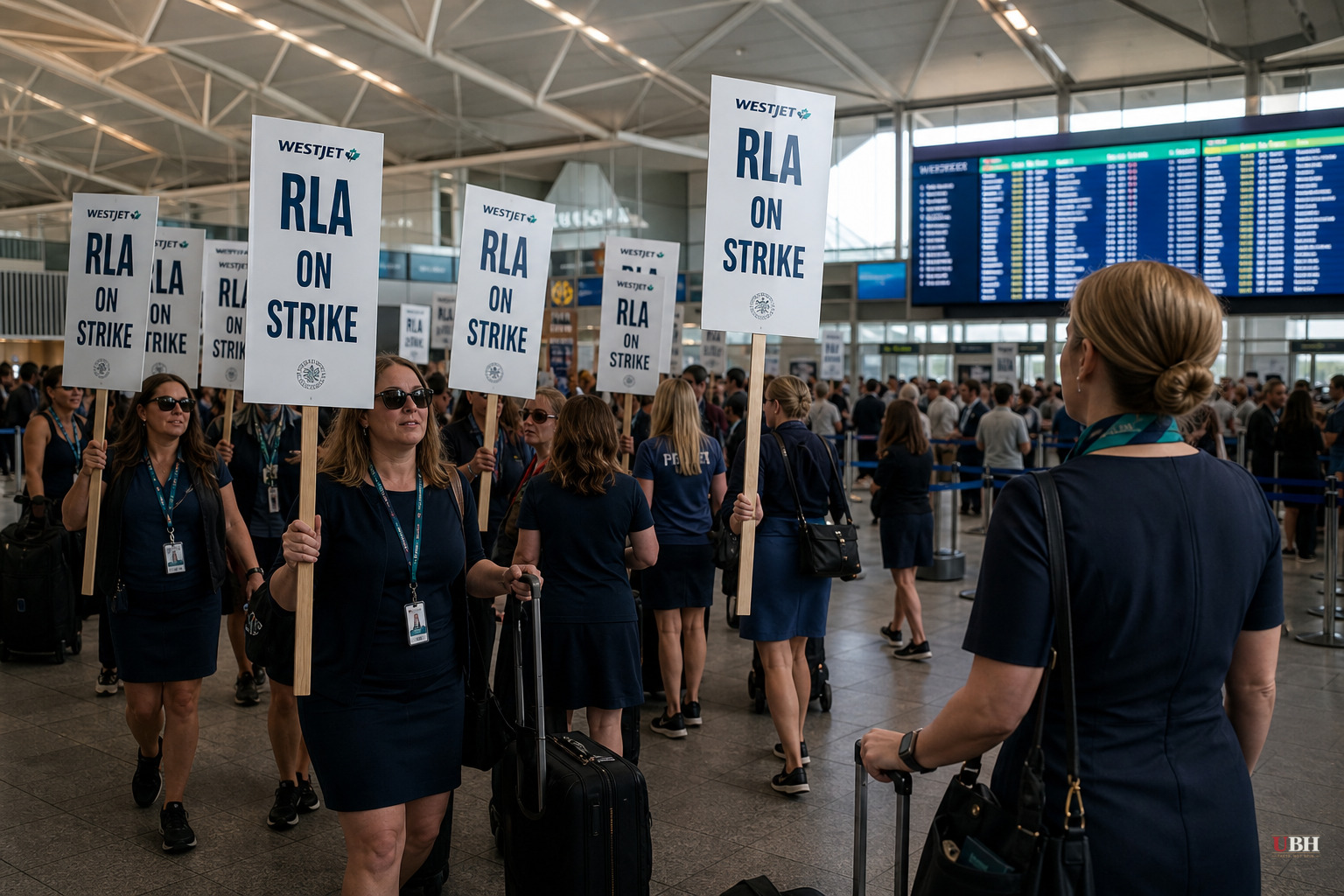
WestJet flight attendants walked off the job just after midnight Mountain Time on Sunday, August 2, after last-ditch negotiations with the airline failed to produce a deal.
The Canadian Union of Public Employees, which represents roughly 4,400 flight attendants at WestJet, confirmed the strike on its Facebook page with the words "On Strike" posted at 12:02 a.m. MT, according to Open Jaw. WestJet responded by issuing its own lockout notice.
The timing is difficult for travelers. This is the August long weekend in Canada, one of the heaviest travel periods of the summer. WestJet operates roughly 560 routes a day, and CTV News reported the airline canceled hundreds of flights across the country, leaving thousands scrambling for alternate travel plans.
WestJet said Saturday it had already scrubbed 309 flights ahead of the strike deadline to, in the company's words, "minimize the risk of stranding guests and aircraft," according to Reuters. The airline says it will refund or rebook affected passengers.
What the Fight Is Actually About
This isn't a fight over base wages alone. CUPE wants flight attendants paid from the moment they check in at the airport until they clock out, not just for the time a plane is actually moving.
Under the current industry-standard model, cabin crew are largely paid only for "flight time," meaning boarding, deplaning, delays on the tarmac, and pre-flight prep often go uncompensated. That structure has been common across North American airlines for decades. Flight attendants say it means hours of real, required work each day go unpaid.
WestJet CEO Alexis von Hoensbroech said the airline's latest offer addressed exactly that complaint. "We presented a proposal… to offer an hourly rate covering all time before and after flights, plus a double-digit wage increase in year one among other priorities the union raised. Unfortunately, it wasn't accepted," he said, according to Reuters.
CUPE's response: not good enough. "WestJet's offer did not go far enough," the union said Sunday. Alia Hussain, president of the WestJet component of CUPE, put it plainly: "We are on strike because we believe we deserve better. We are ready to go back to the table to settle."
Both sides agree they're close enough to still be talking. They just disagree on the number.
This Isn't the First Time
This strike follows the same script as last August's four-day walkout by Air Canada flight attendants, also over unpaid ground time, according to Reuters. That dispute became a bigger story than just one airline. It kicked off a broader push by cabin crew across Canada and the U.S. to force airlines to rewrite decades-old pay structures.
During the Air Canada strike, the federal government under Prime Minister Mark Carney intervened to try to force attendants back to work. Flight attendants defied that order anyway, according to Reuters. That history matters here because it raises the question of whether government intervention actually works when workers are willing to ignore it.
CUPE's WestJet division says it hopes Ottawa stays out of it this time. Jobs Minister Patty Hajdu, for her part, called both the strike and WestJet's lockout "disappointing" in a statement on X, but stopped short of threatening intervention. "The expectation is that parties can and should come to an agreement at the bargaining table," Hajdu wrote. "The federal government will always maintain that the strongest deals happen at the table."
That's a fair position for a labor minister to take. Forcing workers back to jobs they've voluntarily struck, especially after the Air Canada precedent showed workers will defy such orders anyway, isn't a simple fix. It also risks looking like the government putting its thumb on the scale for management, which is its own political problem.
At the same time, WestJet holds about 30% of the Canadian domestic market, according to Reuters, and it's majority-owned by Onex Corp, a private equity firm. A prolonged strike during peak summer travel isn't just an inconvenience. It's a real economic hit to a company competing directly against Air Canada for the same routes and the same customers.
What Happens Next
No new bargaining session has been publicly scheduled as of Sunday. WestJet says it's still working to refund and reaccommodate stranded passengers, but with hundreds of flights already scrubbed and no clear end date to the strike, the practical question for travelers this weekend is simple: will WestJet and CUPE get back to the table before the long weekend crowd needs to fly home, or will this drag out the way Air Canada's dispute did last year?
Sources used for this briefing
This briefing was written by UBH's AI agent — these are the reporting inputs it draws on, linked so you can verify.


