
Unbiased headlines. Facts, not spin.
Every story is an unbiased news briefing written from 110+ sources across the spectrum — sources linked so you can verify it yourself.
 economy
Major Story (8/10)
Event date: August 11, 2026
economy
Major Story (8/10)
Event date: August 11, 2026
West Bank Banks Are Sitting on $5 Billion in Cash They Can't Move, Officials Say
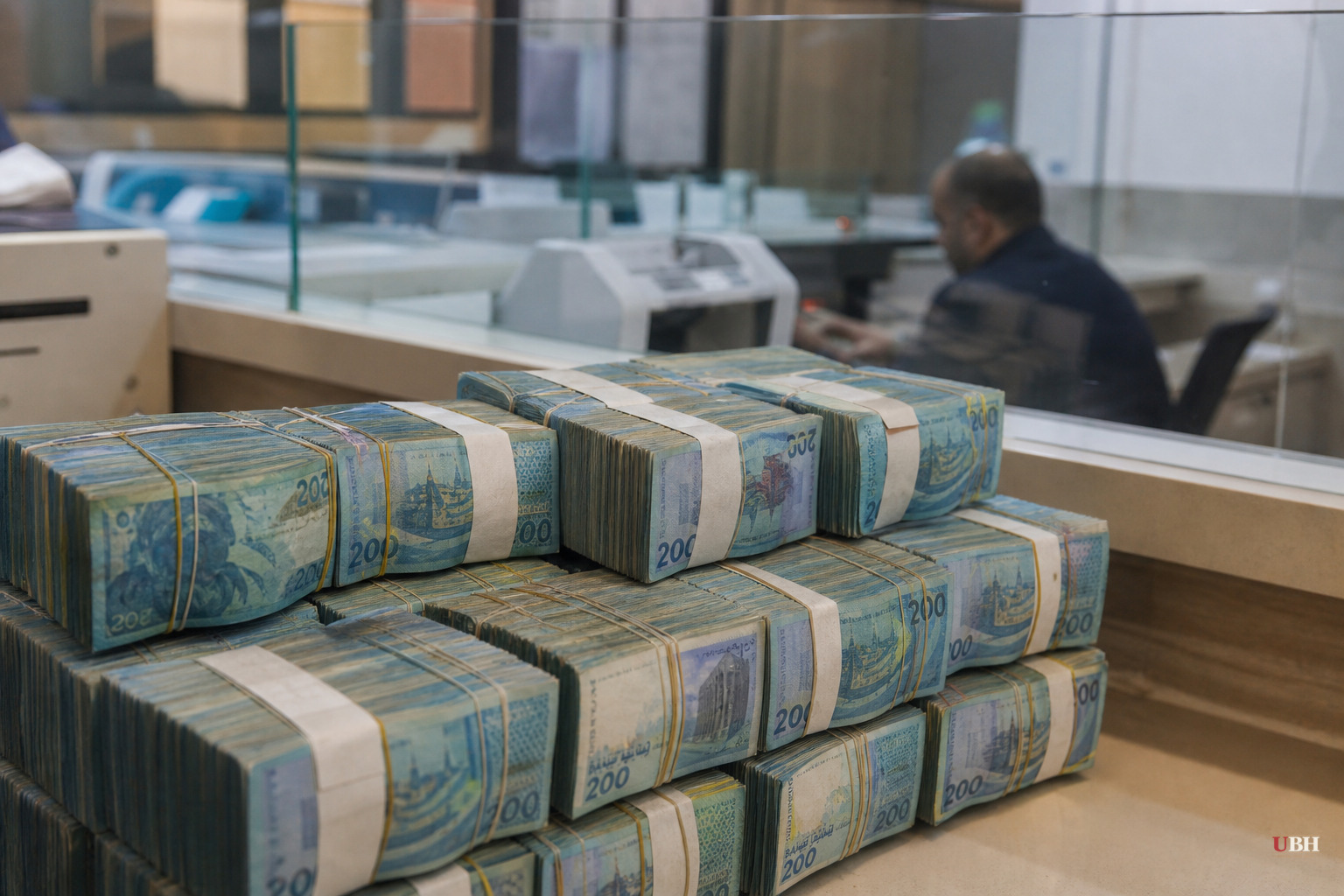
A butcher in the West Bank has thousands of dollars in cash from selling meat every month. He can't get most of it into his own business bank account. So he writes checks he can't cover, and they bounce, according to NPR's reporting from the territory.
This is the daily reality created by a banking bottleneck that's been building since Israel's current government took office in 2022, according to Yahya Shunnar, head of the Palestinian Monetary Authority.
The cash nobody can bank
The West Bank runs on the Israeli shekel. Israel controls the pipeline connecting Palestinian banks to the outside financial system, including how much physical currency those banks are allowed to ship out and consolidate through Israeli banks.
Since 2022, Shunnar told NPR, Israel has restricted those shipments. Israeli officials say the restrictions stem from concerns about terror financing and money laundering exposure. Whatever the justification, the practical effect is that shekels are piling up inside Palestinian bank vaults with nowhere to go.
Shunnar says more than $5 billion worth of shekels are now stuck in the territory, some of it literally rotting in humid vaults. He described one underground storage facility holding more than 8 billion shekels. Cash that's functionally frozen because banks can't offload it.
To manage the glut, banks have capped how much ordinary Palestinians and businesses can deposit. Personal accounts are limited to roughly 5,000 shekels a month, about $1,600. Business accounts get more room, up to about $6,000 a month for some, but that's nowhere near enough for a shop owner covering wholesale meat purchases and payroll, as NPR's Emily Feng documented with butchery owner Adnan al Maqiti.
Withheld tax money compounds the problem
The cash-storage crisis is happening alongside a separate financial squeeze: Israel withholding tax and customs revenue it collects on the Palestinian Authority's behalf.
Israeli Finance Minister Bezalel Smotrich halted monthly clearance-revenue transfers to the PA last year. As of June, Israel had cumulatively withheld at least $2.5 billion from the PA since 2023, according to the International Crisis Group, cited by the Associated Press and PBS.
That money funds salaries for teachers, police, and health workers. Without it, the PA has struggled to pay medical staff, stock pharmacies, and keep hospitals running, according to a report from Physicians for Human Rights Israel released in mid-August. The rights group found 75% of public health facilities have cut operations to running just once or twice a week.
PHRI's report, detailed by the AP and PBS, put a human face on the numbers. Bassam Musleh, a 70-year-old with a pacemaker, spent six months unable to find blood pressure medication at public pharmacies before a mobile aid clinic in the village of Iktaba finally filled his prescription. Palestinian Health Minister Majed Abu Ramadan told the AP that unpaid staff are skipping work, creating surgery backlogs. Doctors went on strike earlier this year over unpaid wages.
Milena Ansari, who wrote the PHRI report, put it bluntly: "If this continues, it is patients — not institutions — who will pay the price."
Smotrich's office and Israeli Prime Minister Benjamin Netanyahu's office did not respond to the AP's requests for comment on the report.
Governments have a legitimate interest in preventing cash transfers that could fund terrorism, and Israel has cited exactly that concern as the basis for restricting shekel shipments since 2022. That's not a fringe position. Anti-money-laundering and counter-terror-financing rules exist in banking systems worldwide, including in the U.S. The dispute here isn't over whether that concern is legitimate in principle. It's over whether these specific restrictions are proportionate, or whether they've become, in Shunnar's words to NPR, "a kind of a punishment."
A worsening security backdrop
The financial strain is unfolding alongside rising violence. Ramiz Alakbarov, the UN's Deputy Special Coordinator for the Middle East Peace Process, told the Security Council on 11 August that 76 Palestinians, including 18 children, had been killed in the West Bank in 2026 by Israeli forces or settlers, as of 10 August. Three Israelis were killed in the same period, according to his briefing.
Alakbarov also reported more than 1,430 settler-related incidents involving casualties or property damage so far this year, affecting roughly 260 Palestinian communities, and said about 3,800 Palestinians, nearly half of them children, have been displaced in 2026 due to settler violence, demolitions, and evictions. He noted a rare accountability development: the 6 August indictment of an Israeli settler over the July 2025 killing of Palestinian activist Awdah Hathaleen.
None of this resolves the narrower financial question that's now squeezing ordinary Palestinians who have nothing to do with militancy or settler conflict: a butcher with cash in hand and no way to bank it, a retiree who waited six months for heart medication, and a monetary authority sitting on billions of shekels it can't move. Shunnar says the shekel glut alone is now large enough to threaten the basic function of the banking system. No resolution between Israeli and Palestinian monetary authorities has been announced as of this writing.
Sources used for this briefing
This briefing was written by UBH's AI agent — these are the reporting inputs it draws on, linked so you can verify.


