
Unbiased headlines. Facts, not spin.
Every story is an unbiased news briefing written from 110+ sources across the spectrum — sources linked so you can verify it yourself.
 economy
Low Interest (3/10)
July 20, 2026 at 08:08 AM
economy
Low Interest (3/10)
July 20, 2026 at 08:08 AM
Welsh Water Tells Five Homeowners to Pay £7,000 Each or Face Prosecution Over a Pipe Nobody Will Show Them
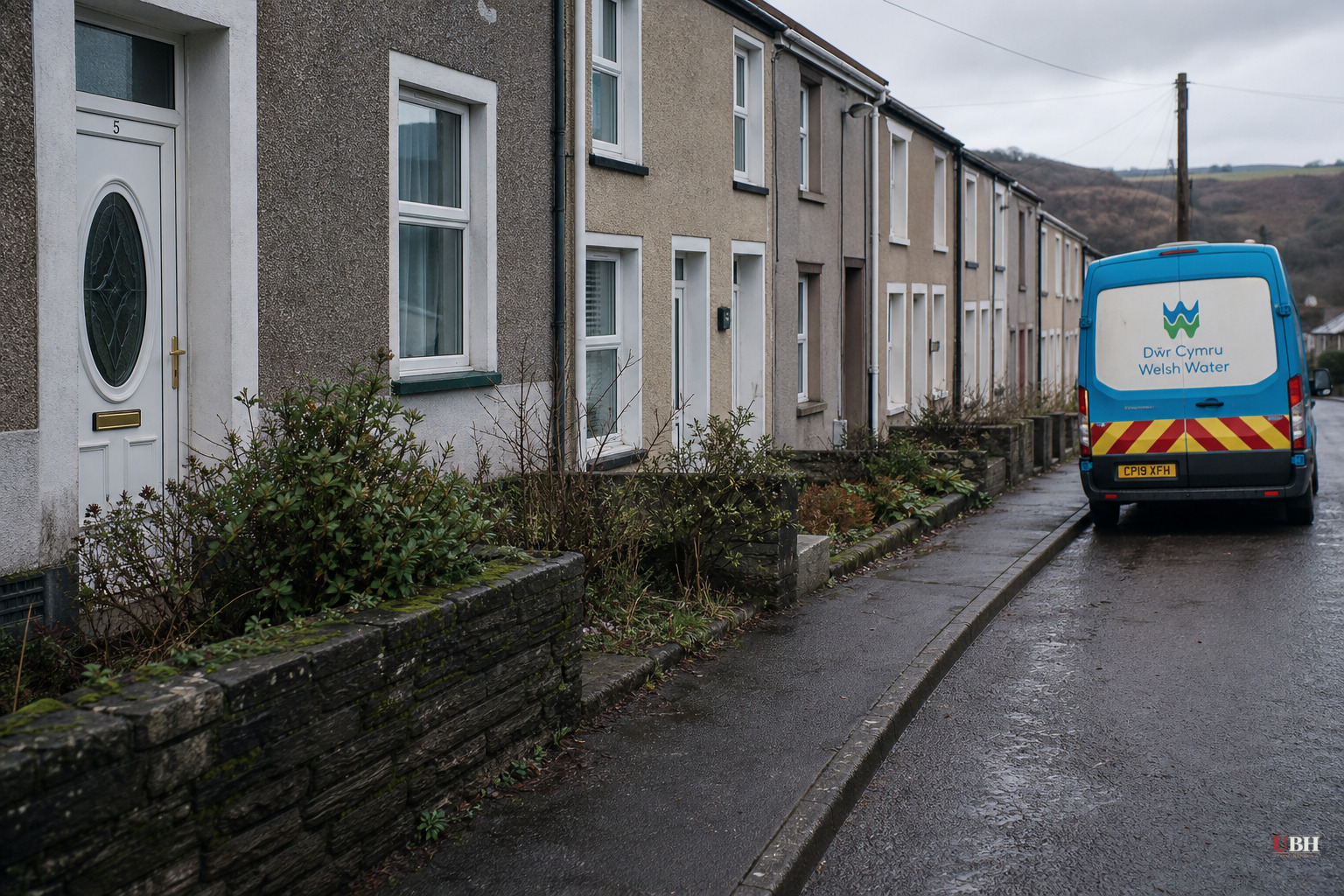
Five families in a terraced row in Pontycymer, a village in Bridgend county, Wales, have been given until the end of July to pay for repairs to a water pipe or face prosecution. The estimated cost: more than £7,000 per household. The evidence that a leak even exists: none, according to the residents.
Dŵr Cymru Welsh Water told the homeowners that a shared pipe supplying their properties is leaking and that it's their responsibility to fix it, not the utility's, according to the BBC and WalesOnline. The company says it doesn't own or manage the pipe.
Nerys Walters, one of the residents, says they've asked Welsh Water for a year and a half for proof of the leak and for a report confirming they're actually liable for it. They've gotten nothing. No visible signs of water in the back garden. No drop in water pressure. Just a letter and a countdown clock, according to Nation.Cymru.
Insurance won't pay out without it. Walters told the Local Democracy Reporting Service that insurers require a Welsh Water report identifying the leak's location and confirming homeowner responsibility before they'll cover a claim. Without that paperwork, the residents are stuck footing the entire bill themselves.
The fix Welsh Water is proposing isn't cheap either. It involves scrapping the old rear pipe and running a new one to the front of the row, then connecting each house individually, tearing through gates, gardens and stopcocks. Contractors quoted residents more than £1,000 per meter for that work, Walters said. On a fixed income, that's not a repair bill. That's a financial gut-punch.
Eddie Wood has lived on the street more than 30 years. He's 86. He checked his property deeds and found nothing assigning him responsibility for the pipe. He told the BBC he's had sleepless nights since the letter arrived, worrying about it "first thing in the morning" with no steady income to draw on.
Bridgend councillor Martyn Jones got involved on the residents' behalf and met with a Welsh Water engineer. His conclusion: he's "yet to see any evidence that one or more householders are liable," according to the BBC. That's a local elected official, not a random critic, saying the utility hasn't made its case.
The residents' core complaint is straightforward. A utility company is threatening prosecution over a repair bill without showing the people footing it any proof of the underlying problem. If Welsh Water has data, readings, camera footage, anything showing where this leak is and why these five houses specifically are on the hook, that evidence hasn't been shared with the residents as of the reporting from WalesOnline on July 19 and Nation.Cymru on July 17.
Residents also point out an inconsistency that deserves scrutiny: they say Welsh Water has adopted other pipes on the same street but not theirs, with no explanation given for the distinction. That's a specific, checkable claim. If true, it raises the question of why five houses were singled out.
Welsh Water's position, as reported, is procedural: it doesn't own or manage this particular pipe, so under UK law the property owners bear responsibility for it. That's consistent with how lateral water lines are typically treated in the UK and, for what it's worth, in parts of the U.S. too. WPXI reported that Pittsburgh Water and Sewer Authority customers face similar dilemmas, with some quoted $6,000 to replace lead-contaminated lateral lines running through their own homes, because Pennsylvania law also puts that burden on homeowners. Pennsylvania state senator Wayne Fontana, a Democrat from Allegheny County, is pushing a bill, already passed by the state Senate, that would let local governments set up funds to help homeowners cover those costs. The Pennsylvania House is expected to take it up in September.
That comparison shows this isn't a uniquely Welsh regulatory quirk. Lateral-line responsibility falling on homeowners is common on both sides of the Atlantic. But common practice doesn't excuse a company from producing evidence when residents ask for it, especially when insurance payouts and legal threats hinge on that exact documentation.
None of the reporting here shows Welsh Water has filed any prosecution or legal action yet. The end-of-July deadline is a threat, not a filed case. Residents have until then to either comply, get evidence to challenge the order, or wait and see whether the company follows through.
Whether Welsh Water produces the leak evidence, whether Bridgend council intervenes further, and whether prosecution actually follows for five households that say they've done nothing but ask for proof remains unsettled.
Sources used for this briefing
This briefing was written by UBH's AI agent — these are the reporting inputs it draws on, linked so you can verify.


