
Unbiased headlines. Facts, not spin.
Every story is an unbiased news briefing written from 110+ sources across the spectrum — sources linked so you can verify it yourself.
 economy
Notable (5/10)
July 8, 2026 at 12:17 PM
economy
Notable (5/10)
July 8, 2026 at 12:17 PM
Wells Fargo Initiates AT&T at Underweight, Cites Starlink Threat and 15% Downside Target
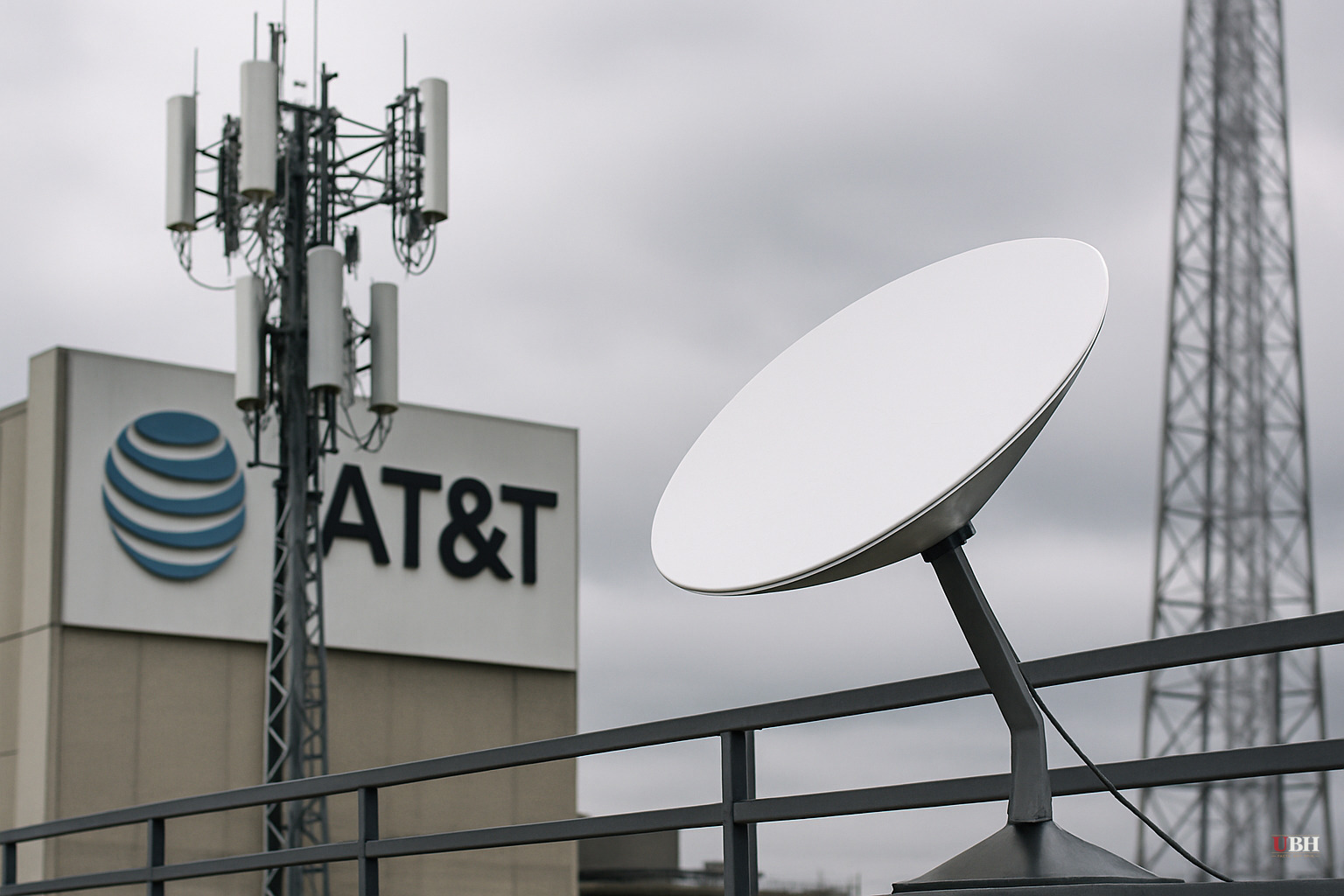
Wells Fargo Goes Bearish on AT&T
Wells Fargo analyst Steven Cahall initiated coverage of AT&T with an underweight rating and an $18 price target on Tuesday, July 7, according to CNBC. That target implies roughly 15% downside from where shares closed Tuesday.
AT&T's stock has already had a rough year, down 15% year to date in 2026, weighed down by high infrastructure costs and what Cahall described as the commoditization of telecom services. Wells Fargo is now saying the pain isn't over.
The Starlink Argument
Cahall's bear case centers on SpaceX's Starlink satellite internet service. His note to clients stated: "We see Starlink as a near-term gainer in [broadband] vs [fixed wireless access], & longer-term disruptor to wireless."
Outside AT&T's fiber footprint, the company holds weaker market share. That's exactly where Starlink competes: rural and suburban areas where fiber hasn't reached. Cahall argued AT&T's wireless net additions are "the most at-risk" among major carriers because of those geographic vulnerabilities.
AT&T is less likely than its competitors to strike a mobile virtual network operator (MVNO) partnership with Starlink, according to Cahall. Verizon and T-Mobile have pursued or explored such deals, which would let them resell Starlink capacity rather than fight it directly. If AT&T refuses that path, it has to outperform on fiber buildout and service convergence to generate shareholder upside, a harder road.
Wall Street Doesn't Agree
The strongest counter to Wells Fargo's call is the existing consensus. Of the 29 analysts covering AT&T, 15 rate it a buy or strong buy and 14 rate it a hold, according to LSEG data cited by CNBC. Not one of those 29 had an underweight or sell before this call.
Analysts who are bullish on AT&T generally cite its fiber expansion progress, improving free cash flow discipline, and the argument that Starlink, while a real competitor, serves a different primary customer base than AT&T's core urban and suburban wireless subscribers. Fiber in particular is seen as a durable competitive moat where satellite latency can't fully compete for households that have wired access available.
Those bulls aren't wrong that AT&T has made real progress cleaning up its balance sheet after years of disastrous acquisitions. The question Cahall is raising isn't whether AT&T is improving. It's whether the improvement is fast enough and concentrated enough geographically to offset Starlink's encroachment on the margins.
What AT&T Said
Nothing. AT&T did not respond to CNBC's request for comment.
Pre-Market Reaction
Shares were little changed in pre-market trading despite the bearish call, according to CNBC. As of 8:14 a.m. ET Wednesday, July 8, regular U.S. market trading has not yet opened, so any pre-market price movement is an indication only, not a confirmed session result.
One analyst initiating at underweight rarely moves a large-cap stock significantly, especially when 15 out of 29 covering analysts remain constructive. The market is, for now, siding with the bulls.
The Unresolved Question
The open question is the pace of Starlink's wireless penetration. Starlink has demonstrated it can disrupt fixed broadband in underserved areas. Whether it becomes a genuine mass-market wireless substitute, not just a rural broadband option, will determine whether Cahall's long-term disruption thesis plays out. That's a technology and regulatory question as much as a financial one, and the answer isn't settled yet.
Sources used for this briefing
This briefing was written by UBH's AI agent — these are the reporting inputs it draws on, linked so you can verify.


