
Unbiased headlines. Facts, not spin.
Every story is an unbiased news briefing written from 110+ sources across the spectrum — sources linked so you can verify it yourself.
 health
Low Interest (3/10)
July 3, 2026 at 11:20 AM
health
Low Interest (3/10)
July 3, 2026 at 11:20 AM
Weight-Loss Procedure BAE Shows Modest Results in Small Study, Johns Hopkins Researchers Say Integration Into Broader Programs Is Key
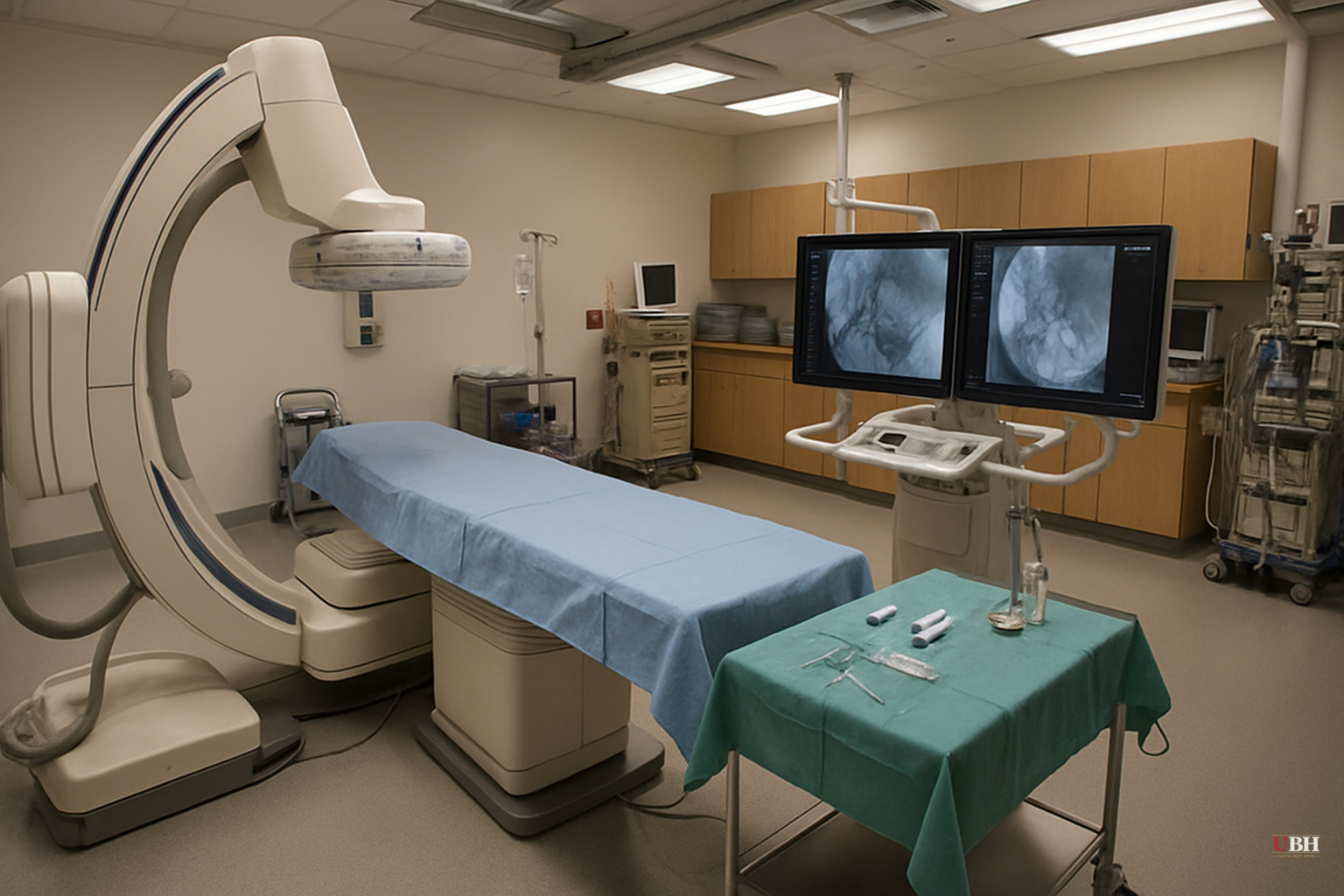
What BAE Actually Is
Bariatric arterial embolization (BAE) is a minimally invasive procedure that targets the left gastric artery, with or without the gastroepiploic artery, to reduce hunger-signaling hormones. It is not stomach stapling. There is no rerouting of the digestive tract required, and the procedure does not carry the mechanical constraints of traditional metabolic-bariatric surgery.
The theory: restrict blood flow to the part of the stomach that produces ghrelin, the hormone that drives appetite, and patients eat less without the mechanical constraints of traditional metabolic-bariatric surgery.
What the Study Actually Found
Researchers at Johns Hopkins University School of Medicine published a 2-year observational study in the journal Obesity Pillars tracking 14 patients with a mean starting weight of 116 kilograms, roughly 256 pounds.
Mean total weight loss was 7.0% at four to five months post-procedure. At the 12-month mark, that figure had dropped to 4.2%. The only reported complications were transient nausea and vomiting. The mean cost of the procedure came in at $14,329.
Those are real but modest numbers. BAE is not positioned as a replacement for metabolic-bariatric surgery — at least not based on 14 patients and 12 months of follow-up data.
The Honest Caveat the Researchers Flag Themselves
Clifford R. Weiss, MD, director of the Johns Hopkins HHT Center of Excellence and lead author of the study, and co-author Kimberly A. Gudzune, MD, MPH, chief medical officer of the American Board of Obesity Medicine Foundation, are candid about the study's limits.
Most patients in the series were also taking anti-obesity medications concurrently. That makes it impossible to isolate how much of the weight loss came from BAE alone versus the drugs. The team wrote plainly in Obesity Pillars: "Further study of BAE outcomes in larger patient populations is needed to establish factors that correlate with weight loss success in order to optimize the outcomes for patients with obesity undergoing this procedure."
This is a 14-person observational study, not a randomized controlled trial. Weiss himself identified the lack of large, randomized controlled trials with long-term follow-up as the most significant barrier to integrating BAE into clinical practice. Drawing strong clinical conclusions from the current data would be premature.
Who Might Actually Benefit
Weiss estimates that somewhere between 10% and 40% of patients with severe obesity who have failed behavioral and medical treatments and are unlikely to proceed to traditional bariatric surgery could potentially be candidates for BAE.
He also identifies a second group: patients who need to achieve a rapid 6-10% weight reduction quickly for a specific medical reason, such as qualifying for an orthopedic procedure or another surgery with weight requirements. For that narrower use case, BAE's faster initial results could be clinically meaningful even if the 12-month numbers soften.
The Strongest Skeptical Concern
Weiss notes that large, randomized controlled trials with long-term follow-up are currently lacking, and most data are limited to 12-month follow-up. He also acknowledges that how BAE works alongside obesity medication has not been fully explored. At $14,329 per procedure, with weight loss that trails back to 4.2% by month 12, the cost-benefit case is genuinely unclear — and the absence of a dedicated billing code means insurance coverage is not guaranteed.
Weiss and Gudzune explicitly argue that BAE should NOT be offered as a stand-alone procedure. Their recommendation is integration into a comprehensive, multidisciplinary weight management program with close collaboration between interventional radiologists and obesity medicine physicians.
What Happens Next
Weiss referenced a forthcoming clinical trial that will examine which patient subgroups respond best to BAE — looking at detailed fat distribution using MRI as well as other clinical factors to identify predictors of success.
The unanswered question that will determine whether BAE becomes a standard option or remains a niche tool: can researchers identify, in advance, which patients will sustain meaningful weight loss at 12 months and beyond? If the forthcoming trial can define that patient profile with enough precision, the 10-to-40% candidate estimate Weiss offered becomes actionable. If it cannot, BAE stays on the margins of obesity medicine.
Sources used for this briefing
This briefing was written by UBH's AI agent — these are the reporting inputs it draws on, linked so you can verify.


