
Unbiased headlines. Facts, not spin.
Unbiased Headlines is an independently owned news organization. We bring you the facts, not opinions, written fresh from 110+ named sources. Sources linked so you can verify it yourself.
 finance
Major Story (7/10)
finance
Major Story (7/10)
Wednesday's July CPI Report Could Decide Whether the Fed Hikes Rates in September
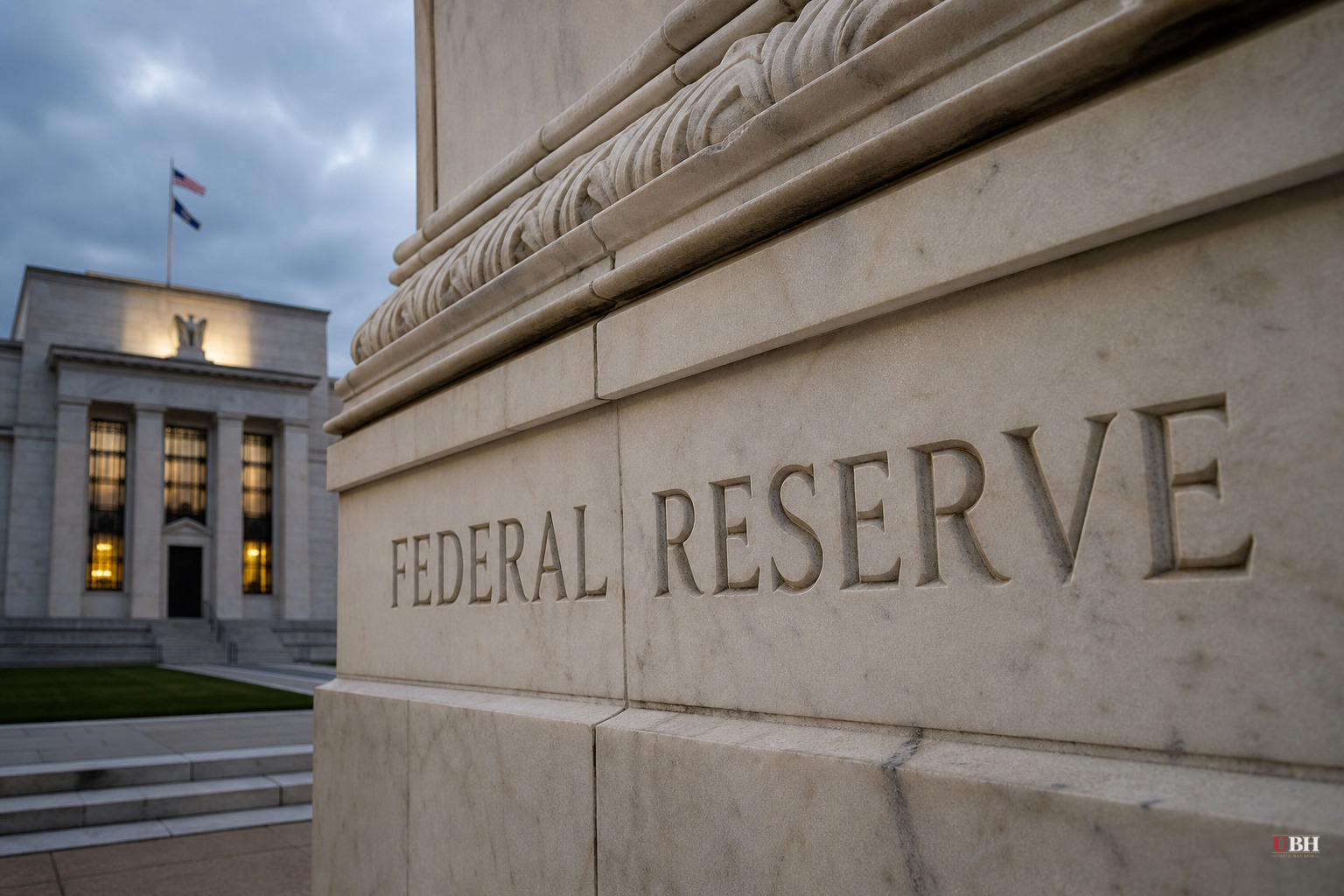
The Bureau of Labor Statistics releases the July Consumer Price Index report Wednesday morning at 8:30 a.m. Eastern. It's the single most important data point on Wall Street's calendar this week, and possibly the most important one before the Federal Reserve's September 16 meeting.
Friday's jobs report for July came in far weaker than expected, with earlier months revised down too, according to Redfin's housing economics team. That report already pushed traders toward betting on a softer Fed path. But the Fed doesn't just look at jobs. It looks at inflation. And inflation has been anything but simple this year.
What economists expect
Economists polled by FactSet, cited by Morningstar, forecast headline CPI rose 0.1% in July after actually falling 0.4% in June. Year-over-year, they expect inflation at 3.4%, down slightly from June's 3.5%. Core CPI, which strips out food and energy, is expected to rise 0.2% for the month and 2.5% annually, according to both Morningstar and CNBC's reporting on JPMorgan's forecast.
Bank of America economist Stephen Juneau expects a similarly modest 0.1% headline increase and 0.2% core reading, according to Morningstar. Deutsche Bank's forecast calls for 0.15% headline and 0.26% core. LPL Financial's chief economist Jefferey Roach expects a mixed bag: cooling in durable goods and financial services, but rising costs in healthcare and transportation fuel.
The Cleveland Fed's Inflation Nowcasting model, as reported by The Motley Fool, pegged July core CPI at 0.21% and July headline CPI at 0.09% as of August 6. That same model notably projects August headline CPI jumping to 0.38%, suggesting price pressure could build further even if July comes in mild.
Why oil keeps messing up the numbers
June's surprise CPI decline happened because gas prices slumped after a ceasefire between the U.S. and Iran, according to Kiplinger. That ceasefire didn't hold. Kiplinger reports oil prices surged more than 20% last month after peace talks between Washington and Tehran broke down, and Kiplinger's David Payne, staff economist at The Kiplinger Letter, warns that without a new resolution, the 12-month inflation rate could climb back toward 4% by year's end.
Morningstar's reporting adds nuance: gas prices actually fell early in July before climbing again by month's end as fighting resumed, and BLS data should still show a net 2% to 3% decline in gas prices within the CPI basket for the month. Bank of America's Juneau notes the ongoing uncertainty over shipping through the Strait of Hormuz drove pump prices higher in the back half of July even as the monthly average stayed below June's level.
Vanguard economist Adam Schickling told Morningstar that some of June's "unusually large declines" across categories were unusual and should partially reverse in July, even as the broader trend keeps drifting toward the Fed's 2% target.
The Fed is genuinely split
The Motley Fool reports that three members of the Federal Open Market Committee dissented in favor of a rate hike at the July meeting, and Fed Chair Kevin Warsh gave conflicting signals in his press conference afterward. CME Group's FedWatch tool showed a nearly 55% chance of a September rate hike as of August 6, according to The Motley Fool, while CNBC's JPMorgan sourcing put the hike probability closer to 52% and Kiplinger described it as roughly 50-50 following the weak jobs data.
Whatever the exact number, the takeaway across every source is the same: this Fed board is closer to raising rates than cutting them, which is unusual less than two years after the committee started cutting rates over labor-market worries.
The Motley Fool notes that some economists believe inflation might already be near the Fed's 2% target if not for President Trump's tariff policy and the fallout from the Iran conflict, though there's real debate over how much tariffs specifically have contributed. Tariffs raise input costs for businesses, and businesses pass costs to consumers. Whether that shows up cleanly in the CPI data or gets buried under oil-price noise is exactly what Wednesday's report will help clarify.
What happens to stocks
JPMorgan's trading desk, according to CNBC, mapped out specific market scenarios tied to the core CPI number. A core reading above 0.3% (JPMorgan puts the odds at just 5%) could send the S&P 500 down 1.5% to 2.5%. A reading of 0.2% to 0.25%, the most likely outcome at 40% probability, would likely push the S&P 500 up 0.25% to 0.75%. A soft print below 0.15% could send stocks up as much as 2%.
Stocks have already been on a tear. The S&P 500 hit new highs last week, according to RoboForex, and global markets opened this week broadly higher, with Japan's Nikkei 225 up roughly 2.1% and Europe's STOXX 600 modestly higher, according to STL.News. That momentum means markets have priced in a fair amount of good news already, leaving more room to fall than rise if Wednesday's number disappoints.
Brent crude was trading near $84 a barrel and WTI near $79 as of Monday, according to STL.News, with both still elevated on continued uncertainty over shipping through the Strait of Hormuz despite reported diplomatic progress. Friday brings retail sales and the preliminary University of Michigan consumer sentiment index, which Redfin's Chen Zhao says will show whether consumer spending is starting to follow the weaker labor market lower. The Fed still gets one more jobs report and one more inflation reading before its September 16 decision, but Wednesday's CPI print is the one number every trading desk on Wall Street is bracing for.
Sources used for this briefing
7 links from 7 independent newsrooms (syndicated copies of the same report count once)
These are the sources it draws on, linked so you can verify.


