
Original briefings. Zero spin.
Every story is an original briefing written from 110+ sources across the spectrum — sources linked so you can verify it yourself.
 finance
Major Story (7/10)
Event date: August 16, 2026
finance
Major Story (7/10)
Event date: August 16, 2026
Stocks Wobble, Canada Tariffs Hit 50%, and Wall Street Braces for Nvidia and Warsh's Jackson Hole Debut
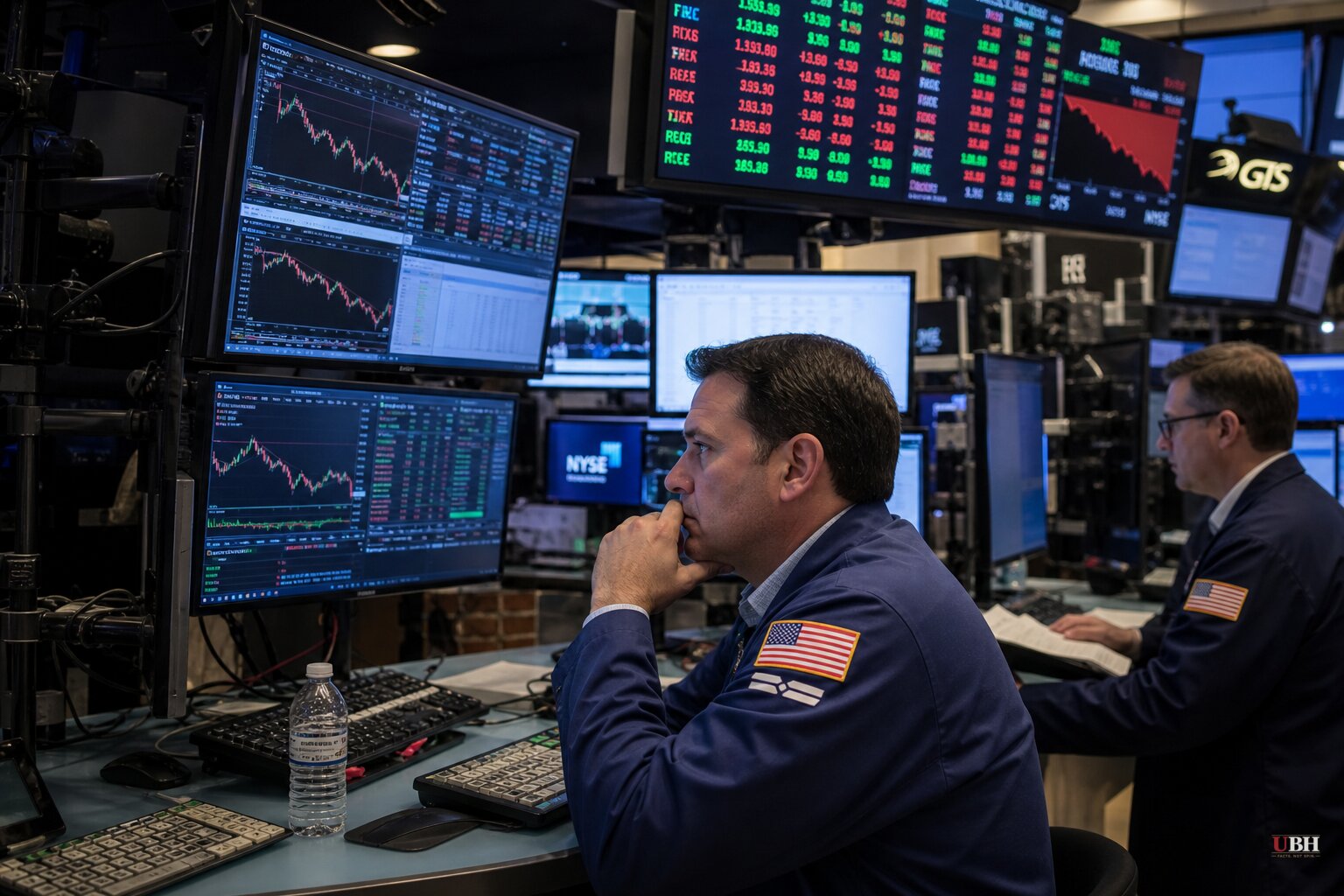
Wall Street closed out a rough week. The Dow Jones Industrial Average fell 0.85%, the S&P 500 dropped 1.4%, and the Nasdaq composite tumbled 2.05%, according to data reported by PrimeXBT sourced from Investor's Business Daily. The small-cap Russell 2000 lost 1.65%, and the Nasdaq-100 fell below its 50-day moving average, down 2.45% on the week.
Thursday was the worst of it. The Dow dropped 703.84 points, or 1.3%, to 52,759.21. The Nasdaq fell 263.92 points, or 1%, to 26,067.17, according to figures reported by investorshub.advfn. Friday brought a partial rebound, with most major indexes climbing back above their 21-day moving averages, though the Nasdaq stayed below that mark.
Semiconductor and AI hardware stocks led the damage. Yahoo Finance reported that Vital Knowledge analysts tied the sector's weakness to profit-taking and growing concern about a "tidal wave" of debt issuance tied to the AI infrastructure buildout. Deutsche Bank analysts, also cited by Yahoo Finance, said those worries combined with fiscal deficit concerns and rising oil prices linked to the ongoing Iran conflict to push global bond yields to fresh highs.
The 10-year Treasury yield rose four basis points to 4.74% last week, matching a 19-month high of 4.75% intraday on Tuesday, according to PrimeXBT. The 30-year Treasury yield climbed above 5.30% earlier in the month, which Breitbart's John Carney called "a testament to the perceived strength of the U.S. economy, although you would never know that reading the financial press." Carney also noted the Treasury Department expanded a bond buyback program this month, letting the market trade in old bonds for new ones, and pointed to a 30-year bond auction that cleared at its highest yield in 25 years even as stocks hit a record high.
Money rotated out of chips and into hard assets. Gold, copper, and bitcoin-related plays advanced last week even as AI hardware names struggled, PrimeXBT reported. That rotation, plus wavering investor confidence, is what Investor's Business Daily described as a market "struggling against industry rotation" heading into the final full week of August.
Canada Tariffs Hit 50% After Talks Collapse
On the trade front, U.S.-Canada negotiations fell apart late Friday. Canadian Prime Minister Mark Carney suspended talks, accusing Washington of making "unfair" last-minute changes to proposed terms, according to Fox News. New 50% tariffs on roughly $20 billion of Canadian imports took effect Saturday.
Carney said Canada would match the tariffs "dollar for dollar to protect our workers and businesses." He added: "We have recognized from the beginning that America has changed, and that we will not return to our old relationship. Canada has what the world wants. And we will not allow any nation to determine our future."
U.S. Trade Representative Jamieson Greer pushed back hard on Fox & Friends Weekend, saying Canada "walked away from the best deal" it could have gotten. "Our interest is in protecting American workers and protecting American supply chains," Greer said. "We've been offering to bring the Canadians along on that path, really to cut the tariffs on them on steel, on autos, even lumber, things that are sensitive for them. And they've always had the best deal, and they still would have an even better deal, but they didn't want that."
Greer said no further talks are currently scheduled and it's "hard to say" when negotiations might resume. PrimeXBT noted a deal that would have avoided the tariffs and lowered existing duties on steel, aluminum, autos and lumber had seemed likely earlier in the week before talks fell apart.
Carney says Washington changed terms at the last minute. Greer says Canada refused a better deal than it already had. Neither side's version is independently verified in these reports.
What's Next: Nvidia, Warsh, and Jackson Hole
The coming week could reset the narrative. Nvidia and Marvell Technology report earnings, alongside cybersecurity names CrowdStrike, Okta, Rubrik and SentinelOne, plus Salesforce and Workday, according to PrimeXBT. Nvidia's results in particular will test whether Wall Street's enthusiasm for AI spending still holds after last week's chip-led selloff.
Federal Reserve Chairman Kevin Warsh is scheduled to deliver his first Jackson Hole speech as chair. AJ Bell's head of markets, Dan Coatsworth, told investorshub.advfn that "investors will be looking for a comfort blanket when Federal Reserve chair Kevin Warsh addresses the Jackson Hole meeting." Warsh has so far avoided forward guidance. At the Fed's July meeting he said only that the central bank would "not waver" in its commitment to the 2% inflation target, and described that meeting as a "good family fight" after three policymakers dissented in favor of a 25-basis-point rate hike, per Yahoo Finance.
Carney (Breitbart's John Carney, not the Canadian prime minister) pointed to S&P survey data suggesting economic growth is approaching a 3% annual rate in the third quarter, and noted a capital-spending boom is lifting American manufacturing output, up 0.8% in July and 6.6% over the prior year in business equipment production. He also flagged a weaker spot for the economy: single-family housing starts fell 9.9% in July to a seasonally adjusted annual rate of 808,000 units, the slowest pace since 2022, according to Census Bureau data.
Investors will find out this week whether Nvidia's numbers and Warsh's tone at Jackson Hole calm the market down or add another leg to the selloff. The Fed's next policy meeting is September 15-16, and traders are watching for any signal on whether a rate move is coming.
Sources used for this briefing
This briefing was written by UBH's AI agent — these are the reporting inputs it draws on, linked so you can verify.


