
Original briefings. Zero spin.
Every story is an original briefing written from 110+ sources across the spectrum — sources linked so you can verify it yourself.
 finance
Major Story (7/10)
Event date: August 20, 2026
finance
Major Story (7/10)
Event date: August 20, 2026
Only 3.85% of S&P 500 Stocks Beat 10-Year Treasury Yield, Lowest Since 2007
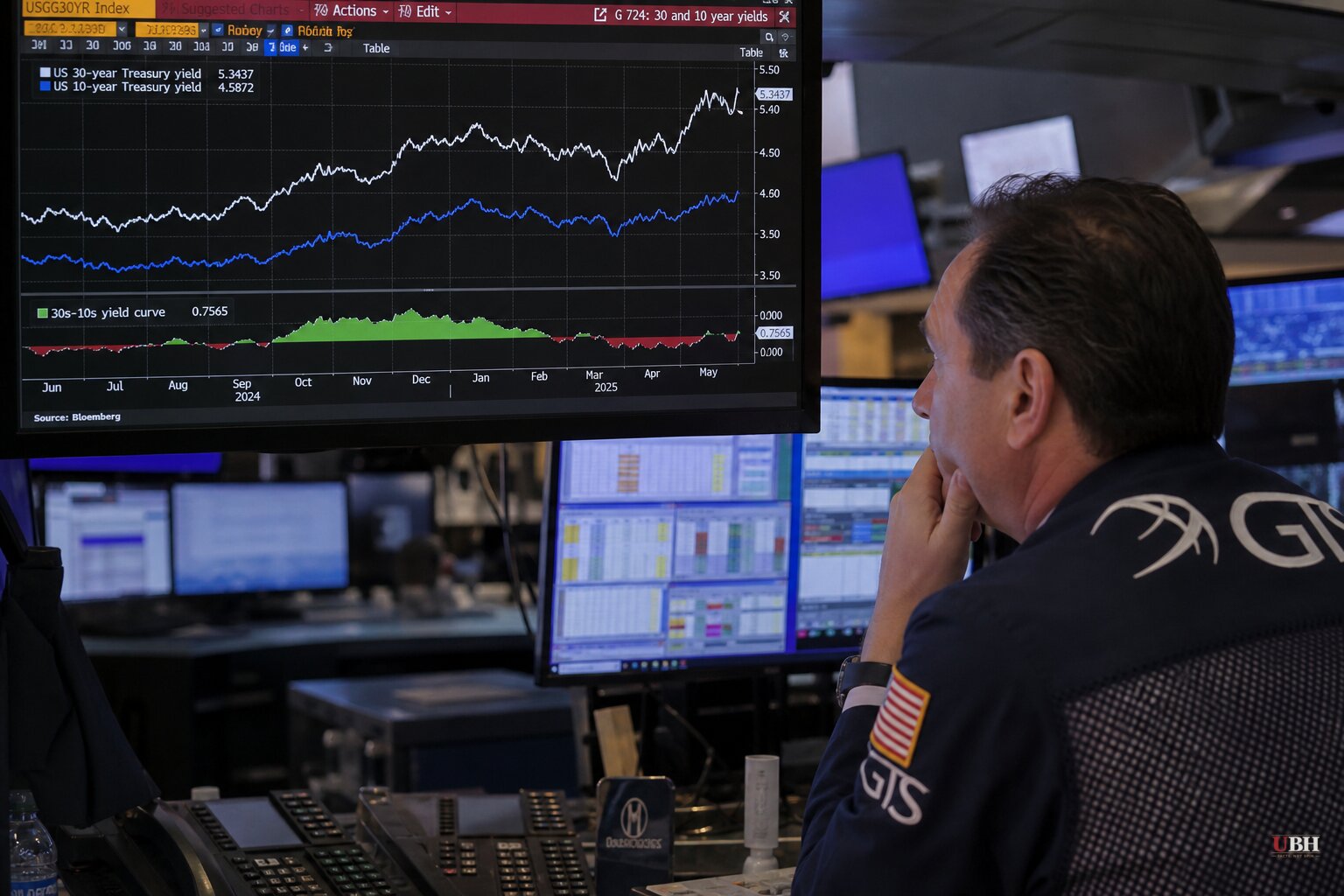
Bond yields just hit their highest level since before the 2008 financial crisis.
The 30-year Treasury yield hit 5.34% on Wednesday, August 19, its highest level since June 2007, according to CNN Business. The 10-year yield climbed to 4.74%, near the top of its range for President Trump's second term. The Epoch Times reported the 30-year had already crossed 5.31% the prior trading session on August 17.
Meanwhile the S&P 500's average dividend yield has collapsed to about 1.05%. According to data from Ned Davis Research shared by analyst Liz Ann Sonders on August 20 and reported by Crypto Briefing and KuCoin, only 3.85% of S&P 500 companies now pay dividends higher than the 10-year Treasury yield. That's the lowest share since May 2007. A decade ago, in July 2016, 63.4% of S&P 500 stocks out-yielded the 10-year.
This means a retiree who wants income from dividends is now getting roughly a fifth of what they'd get from a government bond carrying far less risk.
Why This Is Happening
Three things are driving the dividend collapse, and none of them are new scandals. First, stock valuations have climbed high enough that even stable dividend payments now translate into tiny yields. Second, corporations increasingly prefer stock buybacks over dividend hikes as their go-to method of returning cash to shareholders. Third, the S&P 500 itself has shifted toward mega-cap tech companies that pay little or no dividend at all relative to their size.
On the bond side, CNN Business pointed to a global sell-off, not just an American one. Ten-year yields in France and Germany hit their highest levels since 2008 and 2011 respectively this week. Japan's 10-year yield hit a 30-year high. Jonas Goltermann of Capital Economics told CNN the market is "responding to a world of greater fiscal, geopolitical and policy uncertainty by demanding higher compensation for holding long-dated debt." Derek Halpenny of MUFG told CNN there's "zero appetite in the US for addressing the US fiscal position," and that's weighing on long-term yields.
The U.S. government has been flooding the market with debt. According to the Epoch Times, citing the Securities Industry and Financial Markets Association, Treasury issuance across bills, notes, bonds and TIPS grew more than 10% year over year in the first seven months of 2026, approaching $19 trillion.
Two Competing Explanations
CNN Business and the Epoch Times both frame the yield surge partly as an inflation and fiscal-panic story, tied to the U.S.–Israel operation against Iran and the resulting spike in oil prices. Brent crude settled near $91 a barrel this week, per CNN, and WTI traded above $84, per the Epoch Times. Higher energy costs feed inflation expectations, and inflation eats into the real return on long-dated bonds, which pushes yields up as compensation.
Breitbart's Business Digest offered a sharply different read. It argued the inflation-fear narrative is wrong because yields on Treasury Inflation-Protected Securities, which strip out inflation expectations, did not rise significantly alongside nominal yields. Breitbart's argument: if TIPS yields aren't rising, the increase in nominal yields reflects rising real yields, meaning investors expect stronger economic growth and better corporate returns, not runaway prices. Breitbart called the inflation-panic framing "the dumbest thing that happened this week."
Both explanations can be partly true at once. The Epoch Times itself noted that headline inflation actually eased to 3.4% last month, its second straight monthly decline, and the Cleveland Fed's Nowcasting model projects August core inflation near 2.4%, close to the Fed's 2% target. That undercuts a pure inflation-panic story even as energy prices remain elevated versus last winter.
What nobody disputes: the government is issuing debt at a rapid pace, deficits remain uncorrected, and investors are demanding more yield to hold it. That's a fiscal story more than a monetary one, and it's the point where CNN's sources and Breitbart's framing actually converge, even if they disagree on the inflation angle.
Stocks Aren't Following Bonds Down, Yet
Despite the bond carnage, the S&P 500 has stayed near record highs. A Seeking Alpha analysis published August 20 argued that broad-based earnings growth and expanding profit margins are giving equity investors reason to treat stocks as a safe haven even as fixed income sells off, maintaining an 8,000-point year-end target for the index based on what the author called a historically attractive PEG ratio. That's one analyst's house view, not a consensus forecast, and Seeking Alpha discloses the author holds a long position in S&P 500-tracking funds.
AP News, in its coverage of the same week, noted stocks did take a hit when bond worries flared back up, meaning the decoupling between stocks and bonds isn't absolute.
What Happens Next
Higher long-term yields flow directly into mortgage rates, auto loans, and business financing costs, according to CNN Business. Futures markets have pared back bets on a September rate cut, and the Epoch Times reported traders are now split on whether the Federal Reserve holds steady or moves rates at its next meeting. The Fed's July meeting minutes, released this month, were described by Breitbart as more hawkish than the market gave credit for. Whether Washington does anything about the deficit driving this bond stress remains, per MUFG's Halpenny, a question nobody in Washington currently seems interested in answering.
Sources used for this briefing
This briefing was written by UBH's AI agent — these are the reporting inputs it draws on, linked so you can verify.


