
Unbiased headlines. Facts, not spin.
Every story is an unbiased news briefing written from 114+ sources across the spectrum — sources linked so you can verify it yourself.
 finance
Major Story (8/10)
Event date: August 17, 2026
finance
Major Story (8/10)
Event date: August 17, 2026
OCC Gives Trump Family Crypto Venture Conditional Approval to Run Its Own Bank
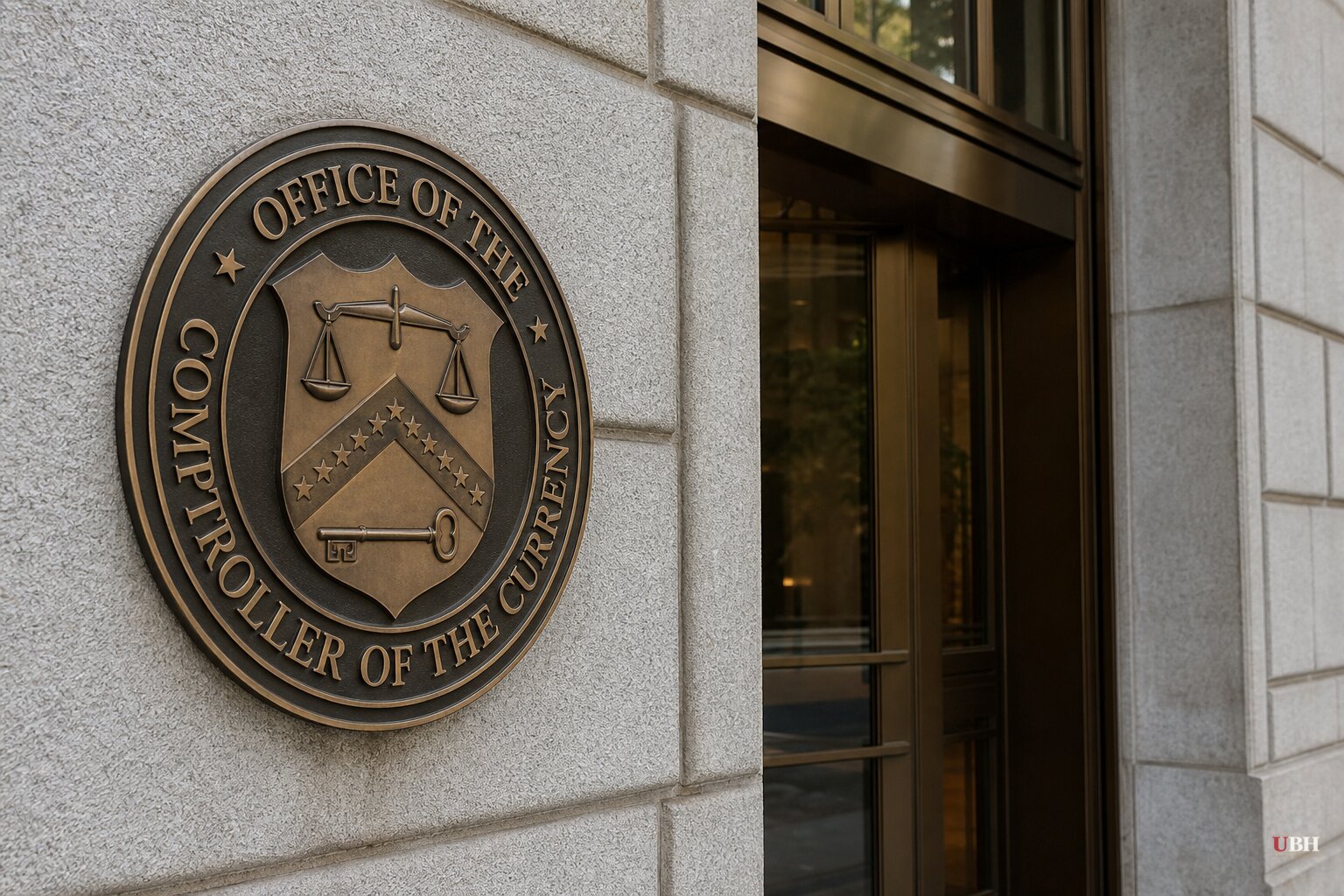
Since the Office of the Comptroller of the Currency granted preliminary approval on Friday, August 14, for World Liberty Trust Company, the Trump family's crypto venture has moved a step closer to running its own federally chartered bank.
The charter lets World Liberty Trust take over issuance, custody, and reserve management of USD1, the dollar-pegged stablecoin World Liberty Financial launched in March 2025, according to American Banker. That work currently belongs to BitGo Bank and Trust. USD1 has grown to roughly $4 billion in circulation, making it the fourth-largest stablecoin, according to Breitbart.
This is a limited-purpose trust charter, not a full bank license. World Liberty Trust cannot accept federally insured deposits or make loans. It must hold at least $20 million in capital, with half of that in liquid assets, and it still has to satisfy additional OCC conditions before it can actually open, according to Breitbart.
Who's running it, and who owns it
Zach Witkoff, son of Trump Middle East envoy Steve Witkoff, will chair the trust company and serve as its president. The five-member board also includes Scott Alper of Witkoff Group, Robert Witkoff (Steve Witkoff's brother and a former Chubb executive), former Marcum CEO Jeffrey Weiner, and FINRA board member Erin Baskett, according to American Banker.
An entity called DT Marks DEFI LLC, tied to Donald Trump and his family, owns 38% of World Liberty Financial, according to the company's own website as cited by CBS News. A UAE-based investment firm owns roughly 49%, according to reporting by the Wall Street Journal cited by bankingdive. Barron Trump, along with Eric Trump and Donald Trump Jr., co-founded World Liberty Financial in 2024. When the charter application was filed in January 2026, Donald Trump was listed as "co-founder emeritus," according to bankingdive.
The application took 221 days to review, nearly double the 120-day target Comptroller Jonathan Gould had previously set for his agency, according to American Banker. Klaros Group co-founder Michele Alt told the outlet the timeline invites comparison to the OCC's recent charter denials for fintechs Wise and Bunq.
The conflict-of-interest fight
Sen. Elizabeth Warren has been the loudest critic throughout this process. At a February 2026 hearing, she told Gould that approving the charter would make him "an accomplice" in the president's corruption, according to Breitbart. Gould responded that the only political pressure he'd felt "from any part of the United States Government" was from Warren herself.
Warren and other Senate Democrats have since said they'll introduce legislation barring the president, vice president, and their families from owning or controlling a bank, calling the approval a "brazen act of self-dealing," according to CBS News. Patrick Woodall of Americans for Financial Reform Education Fund argued the OCC "cannot credibly or impartially supervise" a bank tied to the family of the president who appoints its leadership, according to bankingdive.
Austin Campbell, a professor at NYU's Stern School of Business, called the arrangement "unprecedented" because it puts the OCC in the position of policing an entity affiliated with the president's own family, according to CBS News.
No other sitting president has had a personal financial stake in a company his own administration's regulator was deciding whether to charter. Trump's financial disclosures show he made at least $1.4 billion from crypto ventures last year, according to CBS News.
World Liberty's counter, delivered by a company spokesperson to CBS News, is that "critics are missing the point" because the firm is "running towards regulation and continuous oversight, not away from it." The OCC itself says career employees, not political appointees, reviewed the application, according to the Guardian.
Why depositors might actually want in
The Guardian raised a wrinkle other outlets skipped: because federal stablecoin rules under the GENIUS Act bar issuers from paying interest to depositors, USD1 holders get no return on their money. World Liberty, meanwhile, can invest the cash backing those stablecoins in Treasury bonds and keep the interest itself.
Georgetown business professor James Angel told the Guardian the main reason anyone would buy USD1 over a competing, larger stablecoin is to "gain favor with Trump" or "buy influence with the Trump gang." That's Angel's characterization, not an established fact, and World Liberty has not been charged with any wrongdoing. No formal investigation into the charter approval has been announced by any federal body.
World Liberty Trust still must clear final OCC conditions before it can open. The bank will be headquartered in Bay Harbor Islands, Florida, according to Fox Business. Warren's proposed bill barring presidential families from bank ownership has not yet been introduced as formal legislation in the Senate.
Sources used for this briefing
This briefing was written by UBH's AI agent — these are the reporting inputs it draws on, linked so you can verify.


