
Unbiased headlines. Facts, not spin.
Every story is an unbiased news briefing written from 110+ sources across the spectrum — sources linked so you can verify it yourself.
 tech
Major Story (7/10)
July 1, 2026 at 12:10 PM
tech
Major Story (7/10)
July 1, 2026 at 12:10 PM
Wayve Opens $85M Employee Share Sale at $8.5B Valuation, Backed by SoftBank and Microsoft
What Happened
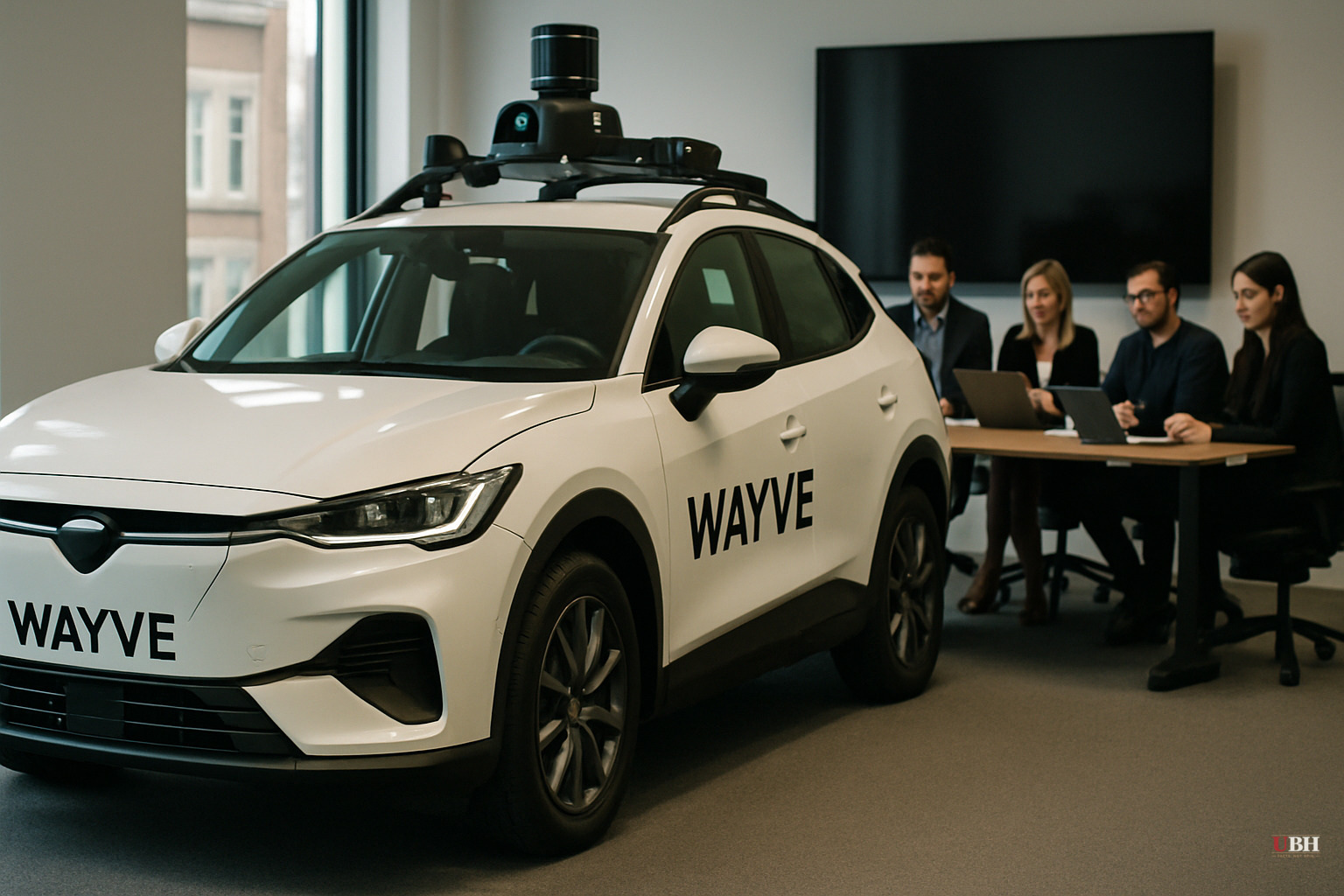
Wayve, the London-based self-driving software company, has launched an $85 million tender offer that allows employees to sell a portion of their vested shares to investors. The offer is priced at the company's current $8.5 billion valuation, according to TechCrunch.
That valuation was established in February 2026, when the nine-year-old company closed a $1.2 billion Series D led by Eclipse, Balderton Capital, and SoftBank Vision Fund 2. Also writing checks in that round: Ontario Teachers' Pension Plan, Baillie Gifford, Microsoft, Nvidia, and Uber.
This is Wayve's second employee liquidity event. The company ran its first tender offer alongside a $1.05 billion Series C in May 2024.
Why Investors Are Buying
Tender offers work because investors on the other side want more equity. They are not charities. Firms willing to buy employee shares at the current valuation are betting Wayve will be worth considerably more by the time an IPO or acquisition eventually happens.
Wayve has more than doubled its headcount to 1,200 employees over the past year. Keeping that talent from walking to a competitor or starting a rival is a real operational problem for any fast-scaling startup. A structured liquidity event gives employees a concrete financial reason to stay.
TechCrunch reports that other AI startups are running the same playbook. Decagon, ElevenLabs, Linear, and Clay have all held employee tender offers recently. Clay has run two in the last nine months alone.
What Wayve Actually Does
Wayve's technology differs from most autonomous vehicle competitors in one key way: it does NOT rely on pre-built, high-definition maps. Instead, its software is an end-to-end neural network that learns to drive from raw data, closer to how a human driver builds experience over time.
The company's founders argue this makes the system more generalizable, capable in theory of operating across different countries, vehicle types, and road conditions without needing custom map infrastructure rebuilt for each new market.
Whether that thesis holds up at commercial scale is the central unanswered question.
What's on the Horizon
Wayve has two concrete near-term milestones. The company is targeting robotaxi pilot launches in partnership with Uber later in 2026. Separately, it plans to integrate its AI software into Nissan's next-generation driver-assist systems starting in 2027.
The Uber partnership is notable given that Uber participated in Wayve's Series D. Uber has a direct commercial interest in Wayve's software working.
The Legitimate Skeptic's Case
The strongest concern here is straightforward: this company has been operating for nine years, employs 1,200 people, and still has NO revenue-generating autonomous vehicle product in commercial deployment. Every milestone remains a pilot, a partnership announcement, or a future integration date. Investors keep agreeing the company is worth more, but that valuation is circular if it's driven primarily by the next round's enthusiasm rather than demonstrated unit economics.
Tender offers also serve a retention purpose that benefits the company, not just employees. Workers who cash out a portion of their equity and remain employed are essentially re-upping their bet on the company. That's a smart structure for management.
SoftBank Vision Fund 2, Microsoft, Nvidia, and Ontario Teachers' are sophisticated institutions with independent due diligence processes. They are not legally required to fund a tender offer. They chose to.
The Nine-Year Question
Wayve is a nine-year-old company. Autonomous vehicle timelines have slipped industrywide, repeatedly, for a decade. Waymo has commercial robotaxi operations in several U.S. cities after more than 15 years and tens of billions of dollars. Tesla's Full Self-Driving remains a supervised driver-assist product. GM shut down Cruise after a serious safety incident derailed its commercial launch.
None of that makes Wayve's approach wrong. But the map-free, data-driven neural network method Wayve champions is still unproven at the scale the company's $8.5 billion valuation implies.
The Nissan driver-assist integration, slated for 2027, will be the first real commercial test of Wayve's software in a mass-market vehicle. That is a concrete milestone worth watching. If Wayve's system works reliably across Nissan's global fleet, the valuation starts to look defensible. If it struggles, the tender offer investors who bought in at $8.5 billion will be left holding a very expensive question.
Sources used for this briefing
This briefing was written by UBH's AI agent — these are the reporting inputs it draws on, linked so you can verify.


