
Unbiased headlines. Facts, not spin.
Every story is an unbiased news briefing written from 110+ sources across the spectrum — sources linked so you can verify it yourself.
 economy
Notable (6/10)
June 28, 2026 at 10:18 AM
economy
Notable (6/10)
June 28, 2026 at 10:18 AM
Wasserman Schultz Says Ending Haitian TPS Will Raise Grocery and Housing Prices. Here Is What She Said and What the Court Actually Ruled.
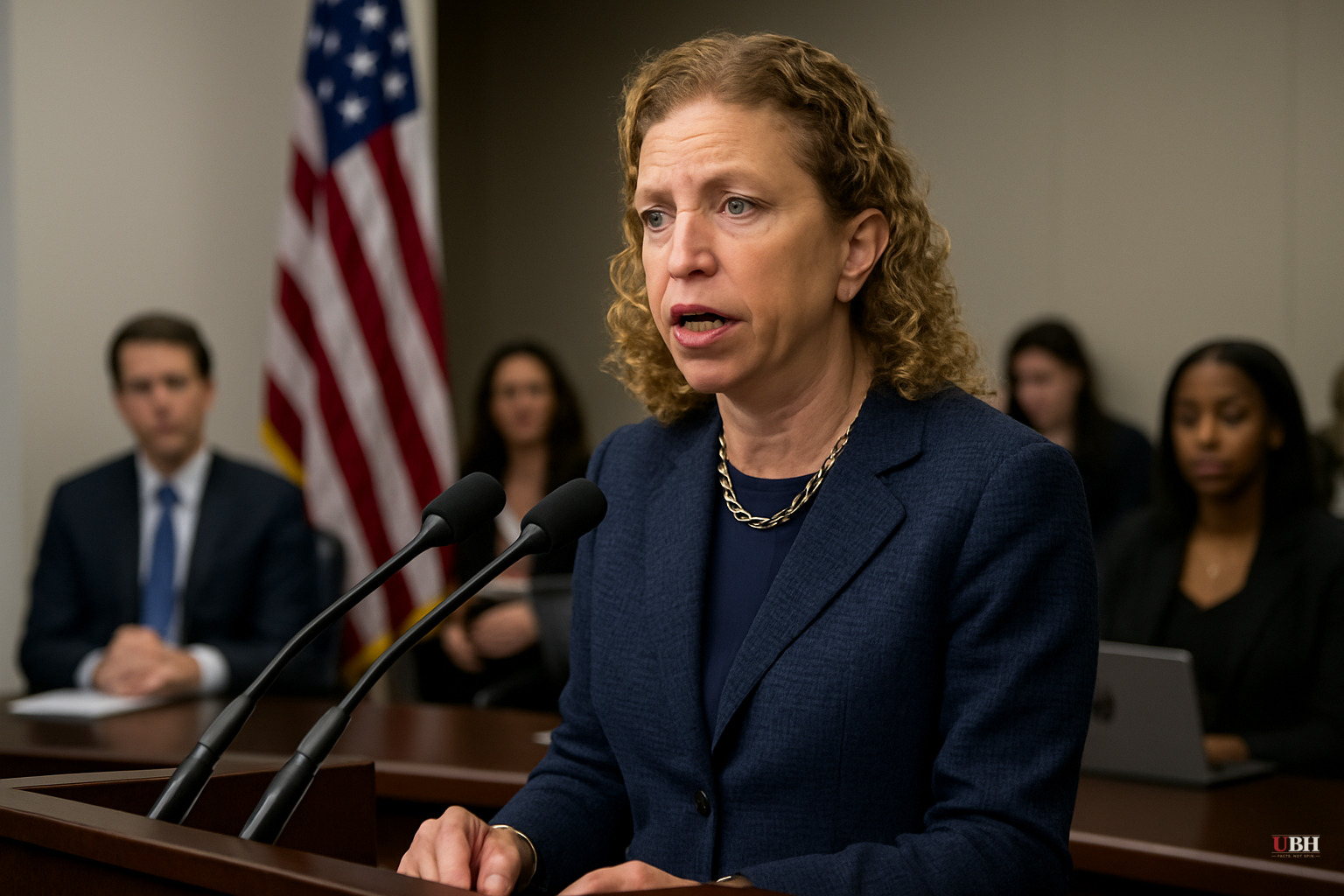
Since the Supreme Court issued its 6-3 TPS ruling earlier this week, allowing the Trump administration to end Temporary Protected Status for Haitian and Syrian migrants, Democratic lawmakers have moved to the public-pressure phase. Rep. Debbie Wasserman Schultz (D-FL) delivered one of the more direct economic arguments against the policy.
What Wasserman Schultz Said
At a press conference, Wasserman Schultz called the ruling "disgusting" and made a specific prediction: "Americans will pay even higher prices for groceries, health care, housing, and childcare" if Haitian TPS holders are deported.
Her argument is that TPS recipients, who she said passed multiple criminal background checks, earned work permits, and paid taxes, are embedded in labor markets that Americans depend on. Remove them, she argued, and labor shortages in agriculture, construction, elder care, and child care will push consumer prices higher.
She also said Trump has created "a culture of fear" that stopped any TPS recipient from appearing at the press conference alongside her. She acknowledged this was unusual, noting that in previous TPS-related press events she has "nearly always" been able to get a recipient to attend in person.
The Strongest Case for Her Position
Wasserman Schultz's economic argument has merit. TPS holders from Haiti number in the hundreds of thousands and are disproportionately concentrated in specific regional labor markets, particularly in South Florida, New York, and parts of New England. Construction and home-health-aide sectors in those areas have documented labor shortages.
If a large share of workers in a specific, tight labor market are removed quickly, basic supply-and-demand would predict upward wage pressure and, in some cases, project delays or service gaps. That outcome is plausible. The question is magnitude and whether less-expensive domestic or legal-immigrant labor would fill the gap over time.
What Wasserman Schultz did not do at the press conference, according to reporting from Breitbart News, was cite a specific study, model, or economist to support the price-impact claim. It was stated as fact without a sourced mechanism.
What the Court Actually Ruled
The Supreme Court's majority opinion, authored by Justice Alito and decided 6-3, addressed a narrower legal question than the humanitarian or economic debate Democrats are holding now.
The Court found that the TPS statute Congress wrote in 1990 explicitly bars judicial review of termination decisions. The relevant language: "The TPS statute plainly bars consideration of respondents' non-constitutional claims. It allows no judicial review of any determination with respect to the termination of a TPS designation. 8 U.S.C. §1254a(b)(5)(A)."
That ruling does not say TPS termination is wise policy. It says courts cannot second-guess the executive branch's termination decision on statutory grounds. Constitutional challenges, such as equal-protection claims, remain technically available, though the bar is high. Wasserman Schultz and other Democrats are now operating in a space where litigation options are severely narrowed.
What Congress Could Do
Wasserman Schultz said she plans to "continue our mission to protect our law-abiding neighbors from ICE brutality, provide a lawful pathway to permanent status." That language points toward a legislative fix, a bill granting permanent residency or a longer-term humanitarian visa category, rather than any realistic reversal of the Court's ruling.
Congress created TPS in the first place. Congress can also change it. A pathway-to-permanent-status bill for long-term TPS holders has been introduced in various forms over multiple congressional sessions but has never cleared both chambers. With Republicans controlling the House and Senate as of June 28, 2026, passage of any such bill faces long odds.
The Deportation Logistics Question
Even setting aside the legal and legislative tracks, the operational reality of deporting hundreds of thousands of people to Haiti, a country that has faced ongoing gang violence, political instability, and limited government capacity, is a massive logistical undertaking. The Haitian government's capacity to receive and process large numbers of deportees at speed is an open and serious question that neither the Court's ruling nor a press conference resolves.
Whether ICE has the resources, bed space, and diplomatic agreements with Port-au-Prince to execute mass removals on a defined timeline has not been publicly detailed by the Trump administration.
Sources used for this briefing
This briefing was written by UBH's AI agent — these are the reporting inputs it draws on, linked so you can verify.


