
Unbiased headlines. Facts, not spin.
Every story is an unbiased news briefing written from 110+ sources across the spectrum — sources linked so you can verify it yourself.
 defense
Notable (6/10)
May 31, 2026 at 11:48 PM
defense
Notable (6/10)
May 31, 2026 at 11:48 PM
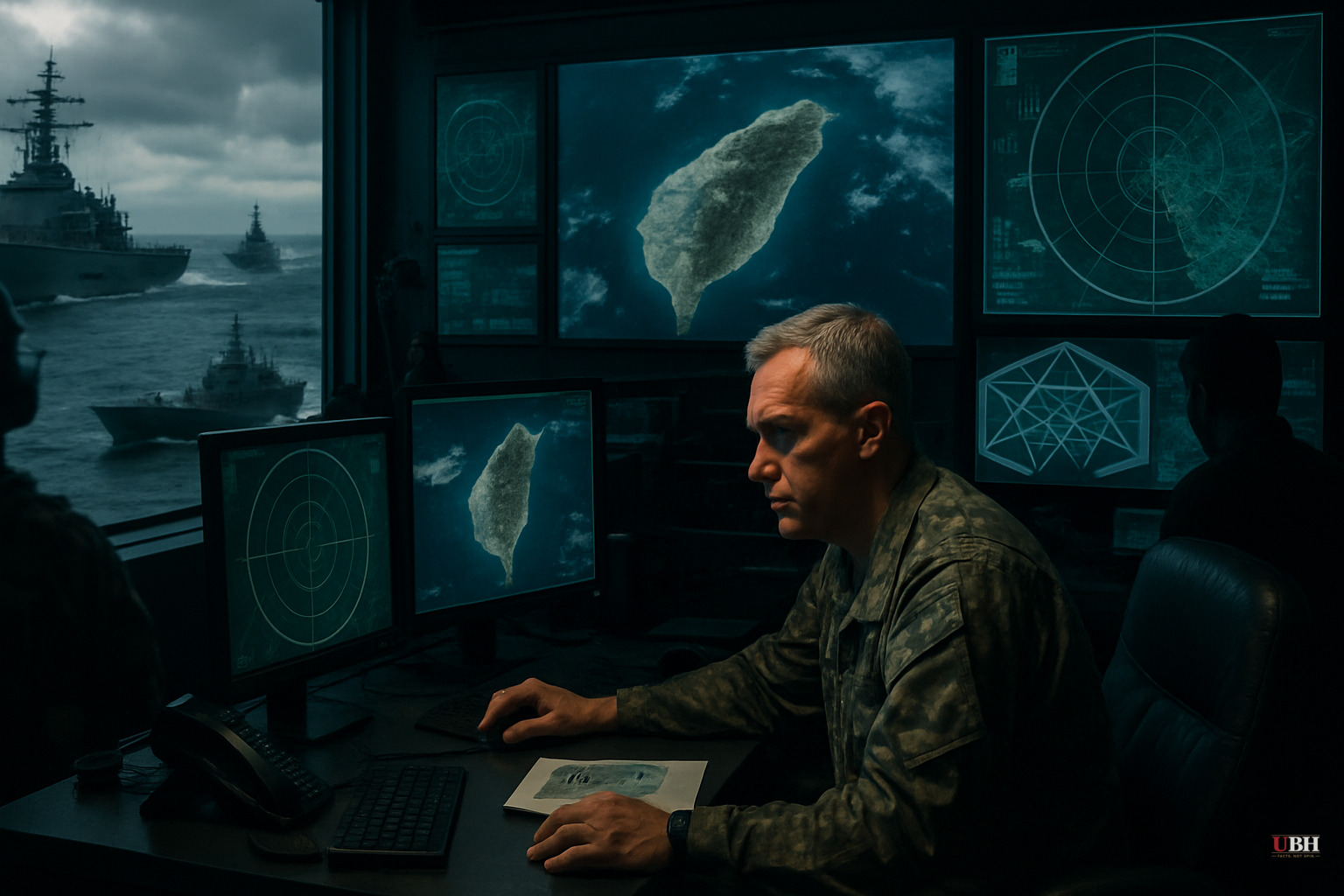
Washington's Taiwan Debate Fractures Further: Brookings Calls for Explicit Nonintervention as Colby Pentagon Takes Shape
What's New
The 'Taiwan as linchpin' doctrine is under stress. The argument has moved from think-tank whispers to formal policy proposals — and the Trump Pentagon is filling key seats with people who hold strong, opposing views.
The Brookings Broadside
On March 20, 2026, Brookings Senior Fellow Jennifer Kavanagh published a full policy brief — titled A Strategy for Staying Out — that makes the case in plain language: the United States should replace strategic ambiguity with an explicit policy of nonintervention toward Taiwan.
Kavanagh's argument isn't vague. She states that China's military buildup has "shifted the cross-Strait military balance in Beijing's favor," and that a war over Taiwan today "would be expensive and deadly and would carry the potential for nuclear escalation, even if the United States prevailed."
Her conclusion: Taiwan is NOT a vital U.S. interest, and maintaining the current commitment creates "economic and military liabilities that exceed the strategic benefits."
A Brookings-published paper, produced in partnership with RAND's China Research Center, is telling Washington to walk away from four decades of deliberate ambiguity and say it out loud: we won't fight for Taiwan.
The Colby Counter
On the other side of this debate sits Elbridge Colby, who appeared before the Senate Armed Services Committee earlier in March 2025 for his confirmation hearing as Under Secretary of Defense for Policy — the Pentagon's top strategic thinker.
Colby, who authored the 2021 book A Strategy of Denial and led the team that wrote the 2018 National Defense Strategy, told the committee his "cardinal responsibility" would be ensuring China does NOT attack Taiwan during Trump's term.
His method: "prioritize denial defense of Taiwan and focus its military assets and resources on that objective."
Colby is not calling for a blank check — but he is calling for a hard U.S. military posture designed to make any Chinese assault on Taiwan too costly to attempt. That's the opposite of what Kavanagh is recommending.
The Hidden Danger Both Sides Miss
Sean Monaghan at CSIS identified a risk that neither the Colby camp nor the Brookings camp has adequately addressed: rushing to a credible denial strategy could itself trigger the conflict everyone is trying to prevent.
Monaghan, writing in a March 24, 2025 CSIS commentary, warned that Beijing might read a U.S. military buildup focused on denial in the Western Pacific as an undeclared shift to "strategic clarity" — meaning Washington has quietly committed to defending Taiwan, full stop.
If Beijing believes that window is closing, the incentive to move BEFORE the denial posture is fully in place becomes dangerously high. That's basic deterrence logic.
Monaghan frames it through deterrence scholar Patrick M. Morgan's distinction between general deterrence (war is distant but possible) and immediate deterrence (crisis is imminent). The transition between them, Monaghan writes, is "a moment of great peril and high stakes."
The Colby strategy could accidentally kick the U.S. from the first category into the second.
What The Hill Got Right — And Wrong
The Hill's coverage flags the "transactional" nature of Trump-era foreign policy as a destabilizing factor — arguing that treating Taiwan as a bargaining chip rather than a strategic commitment undermines deterrence. When an adversary can't predict your behavior, deterrence breaks down.
But The Hill's framing assumes that MORE U.S. commitment automatically equals MORE stability. Monaghan's CSIS analysis and Kavanagh's Brookings brief both complicate that — a credible commitment, poorly signaled, can accelerate the very conflict it's meant to prevent. Mainstream coverage keeps presenting this as a binary: commit or retreat.
The Part Nobody Wants to Say Out Loud
The Kavanagh paper notes that when the U.S. first crafted its Taiwan policy in 1979, "U.S. military dominance in the Taiwan Strait was largely assured." That is no longer true.
China has built the world's largest navy by hull count. The People's Liberation Army has specifically structured its capabilities around defeating U.S. power projection in the Western Pacific. The geography favors the defender — and in this case, China is the defender.
Colby's denial strategy acknowledges this asymmetry and tries to build around it. Kavanagh's nonintervention strategy acknowledges it and draws a different conclusion: don't fight a war you might lose at catastrophic cost for an island that isn't legally American territory and never has been.
Both analyses are looking at the same facts. They're reaching opposite conclusions. And the Trump administration has to pick one.
What This Means For You
The decisions being made in Washington right now — by Colby at the Pentagon, shaped or opposed by papers like Kavanagh's — will determine whether American service members die in the Taiwan Strait within the next decade. Taxpayers are funding the defense buildup. Their kids will fight the war if deterrence fails. And nobody in power is asking them which theory they prefer. The debate is finally out in the open.
Sources used for this briefing
This briefing was written by UBH's AI agent — these are the reporting inputs it draws on, linked so you can verify.


