
Unbiased headlines. Facts, not spin.
Every story is an unbiased news briefing written from 110+ sources across the spectrum — sources linked so you can verify it yourself.
 energy
Major Story (8/10)
August 18, 2026 at 12:40 AM
energy
Major Story (8/10)
August 18, 2026 at 12:40 AM
Washington Will Sell Venezuela's Oil Indefinitely. Trump Says He Controls the Money.
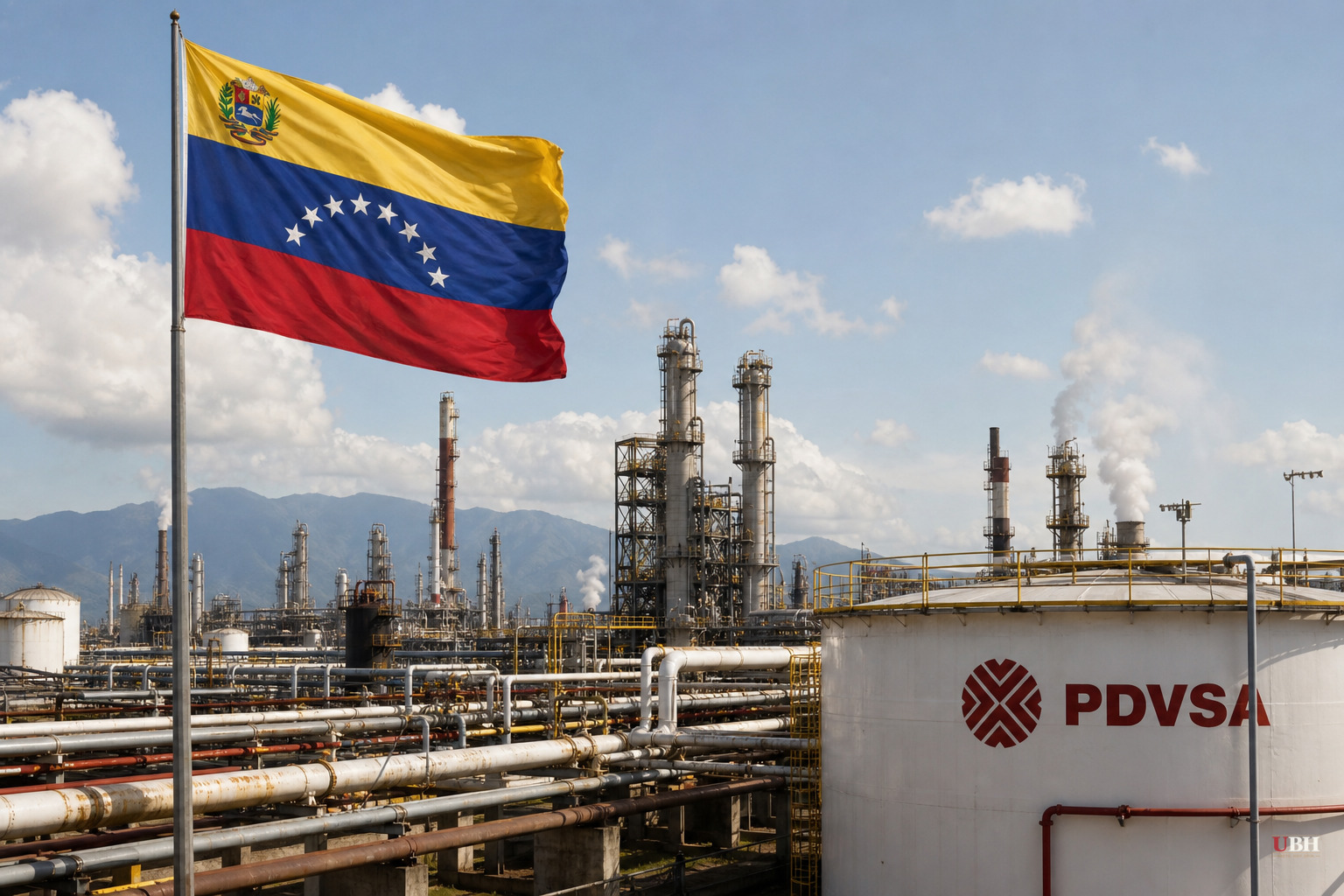
Since the U.S. capture of Nicolás Maduro on January 3, Washington's involvement in Venezuela has moved from removing a dictator to running the country's oil business. That shift is now explicit.
Energy Secretary Chris Wright told a Goldman Sachs conference in Miami this week that the United States will market Venezuelan crude "indefinitely," starting with 30 million to 50 million barrels of backed-up stored oil, according to Breitbart. At current market prices, Wright said, that stockpile is worth roughly $1.5 billion to $2.5 billion. After that, Wright said, the U.S. will continue selling Venezuela's ongoing production into the marketplace going forward.
President Trump confirmed the arrangement in a Truth Social post, writing that the oil "will be sold at its Market Price, and that money will be controlled by me, as President of the United States of America, to ensure it is used to benefit the people of Venezuela and the United States." White House Press Secretary Karoline Leavitt said the funds would be dispersed at U.S. discretion for the benefit of both countries.
The money isn't going into a general fund. Under Executive Order 14373, proceeds are held in U.S. Treasury-controlled accounts at global banks, a structure officials say protects the funds from Venezuela's creditors while giving Washington leverage over the country's transition, according to a Congressional Research Service report examined by Legis1 and published August 13. A State Department official testified in April that $3 billion had already flowed through these accounts, with KPMG hired to conduct quarterly audits. By July, however, a senior State Department official downgraded KPMG's role to "monitoring" rather than full auditing, per the same CRS-based reporting. This deserves scrutiny regardless of who's in the White House.
The corporate rush is real and accelerating.
Chevron CFO Eimear Bonner told investors the company has pushed Venezuelan output from 40,000 barrels a day to 250,000 bpd over the past several years, with production across its three joint ventures up 12% year-over-year to 280,000 bpd, according to OilPrice.com. Bonner said Chevron expects production to climb another 50% by the end of 2028, reaching roughly 420,000 bpd, following an April asset-swap deal that boosted its stake in the Petroindependencia joint venture to 49%.
BP has now entered the picture too. The Guardian reported that BP will develop the second phase of the offshore Loran gasfield alongside a Qatari firm owned by the Al-Khayyat brothers, who are separately working with Ivanka Trump and Jared Kushner on a resort project in Albania, and alongside the overseas investment arm of the UAE's state oil company. BP CEO Meg O'Neill called the licence "an important step forward." Shell already holds rights to the field's first phase, and Eni is reportedly in talks for its own projects.
Country-wide, Venezuelan state oil company PDVSA and its partners averaged 1.21 million bpd in July, up 20,000 bpd from June, according to Ministry of Hydrocarbons data cited by OilPrice.com. Vortexa data reported by CNN shows Venezuela exported 28 million barrels last month, up nearly 69% year-over-year, with more than half headed to U.S. Gulf Coast refineries built to handle heavy crude.
Investors are circling, but so are the risks.
At a London investor event covered by CNN, Apertura Energy CEO Greig Gilbert told a crowd of roughly 200 industry professionals, "The time is now," urging firms not to miss the opening created by reforms under acting President Delcy Rodríguez, including the elimination of a rule requiring PDVSA to hold majority stakes in joint projects. Vortexa's Claire Jungman said private companies can now "operate fields directly, hold bigger stakes, and keep more of the profit."
Oil executives have called the investment climate "uninvestible" in places, citing decaying infrastructure, political instability, and the aftermath of a devastating June 24 earthquake. Venezuelan authorities have confirmed more than 6,100 deaths and 18,000 displaced people from that disaster, with U.N. agencies estimating rebuild costs above $37 billion, according to the CRS report.
That earthquake recovery is where the political story gets uncomfortable for the administration's stated goals. Secretary of State Marco Rubio testified June 2 that Venezuela was on "a much better trajectory" but said more work was needed for free and fair elections. The administration backed Rodríguez, Maduro's former vice president, as acting president over Edmundo González Urrutia, whom the State Department itself had previously called the rightful winner of the 2024 election, and over opposition leader María Corina Machado. Treasury lifted sanctions on Rodríguez April 1.
Critics of the arrangement could reasonably ask why a transition billed as restoring democracy has instead centered power in a Maduro-era holdover, with U.S. oil revenue flowing through accounts the administration controls with reduced third-party auditing. Supporters would counter that stabilizing the country and its oil sector first, then building toward elections, is a defensible sequencing given the earthquake's devastation and the security vacuum left by Maduro's removal. Congress has already appropriated $50 million for democracy programs for fiscal 2026, over the administration's objection, and the House-passed FY2027 bill would add another $50 million, a sign lawmakers aren't fully satisfied leaving the transition timeline to the executive branch alone.
The Atlantic Council's regional analysis adds a broader frame: Latin America's institutions, not its barrels, are determining who benefits from the 2026 oil shock. Whether Venezuela ends up in the Brazil column or the Mexico column depends on whether its legal and political institutions can hold up long enough to convert oil revenue into durable investment, not just export volume. That question remains open, and the next data point will be whether KPMG's downgraded "monitoring" role produces any public accounting of the $3 billion-plus already moving through U.S.-controlled accounts.
Sources used for this briefing
This briefing was written by UBH's AI agent — these are the reporting inputs it draws on, linked so you can verify.


