
Unbiased headlines. Facts, not spin.
Every story is an unbiased news briefing written from 110+ sources across the spectrum — sources linked so you can verify it yourself.
 economy
Major Story (8/10)
July 14, 2026 at 05:54 PM
economy
Major Story (8/10)
July 14, 2026 at 05:54 PM
Warsh Tells House Panel the Fed Has 'No Tolerance' for Inflation, Even as June CPI Cools to 3.5%
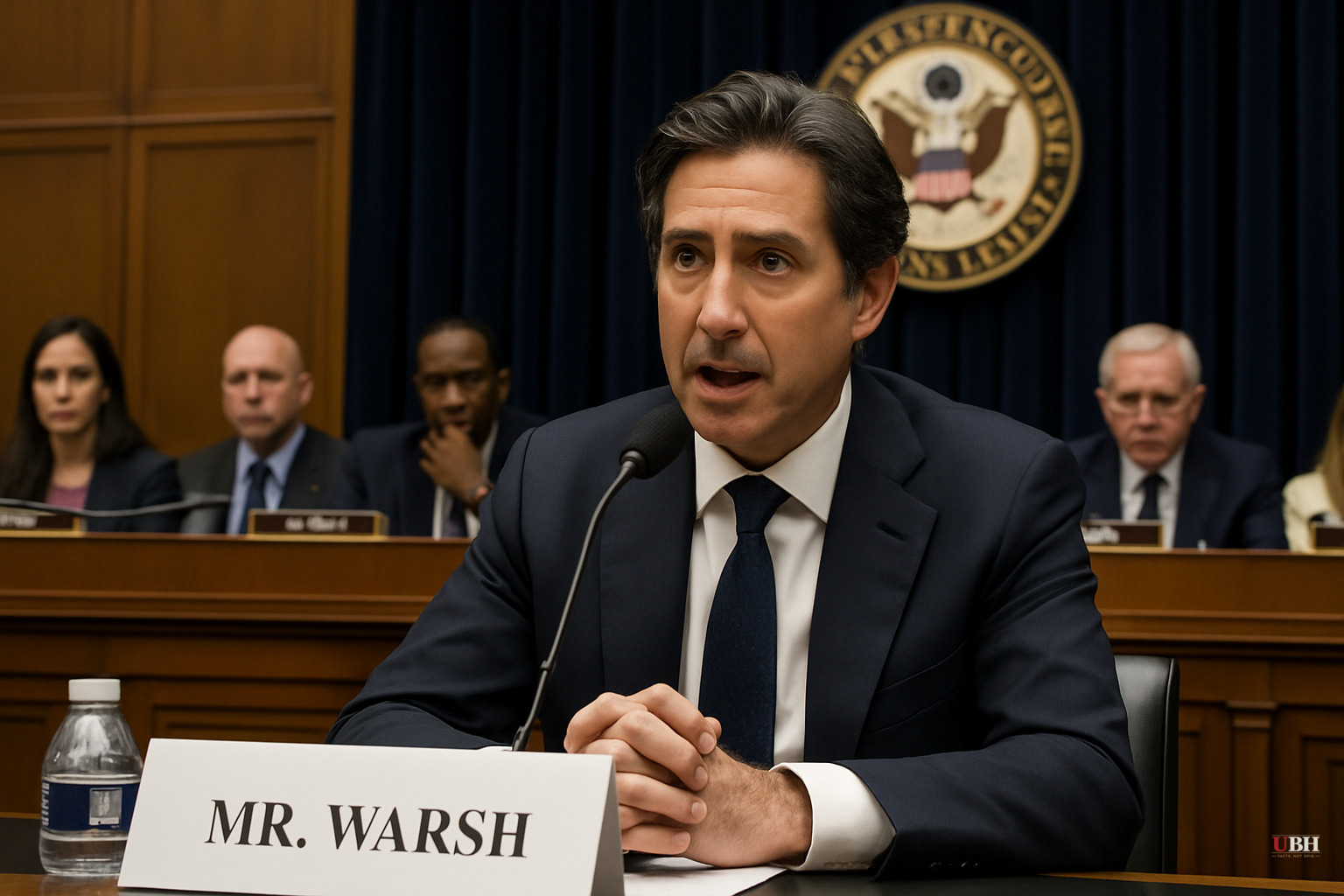
Warsh Won't Take the Victory Lap
Kevin Warsh sat before the House Financial Services Committee Tuesday and heard the same question every reporter in the room was thinking: doesn't 3.5% annual inflation mean the job's basically done?
His answer was no.
"There might be some that look at this morning's data and say, 'Oh, mission accomplished, everything is swell,'" Warsh said, according to CNBC. "That is not my view."
The June Consumer Price Index, released Tuesday morning by the Bureau of Labor Statistics, showed prices fell a seasonally adjusted 0.4% for the month, the sharpest monthly drop since April 2020, according to CNBC and ZeroHedge. That pulled annual inflation down to 3.5% from May's 4.2%. Core CPI, which strips out food and energy, came in flat for the month and 2.6% year-over-year, below the 2.9% consensus forecast from economists surveyed by Dow Jones.
Energy did most of the work. The energy index dropped 5.7% in June, the biggest one-month decline since August 2022, even though it's still up 15.7% over the past year, driven by gasoline. Shelter costs rose just 0.1% for the month. Apparel prices, sensitive to tariffs, fell 0.6%.
Warsh's Message: Don't Get Comfortable
None of that changed Warsh's tone. In prepared remarks released ahead of his testimony, Warsh said the Fed has "no tolerance for persistently elevated inflation" and that policymakers share "a resolute commitment to restoring price stability," according to ZeroHedge's account of his written statement.
Warsh called inflation "a tax on the American people and businesses" and said the Fed intends to get rid of it. He's pushing what he's repeatedly called a "regime change" in how the central bank operates, an idea he first floated in a CNBC interview last summer and has hammered on since taking the chairmanship in May.
To make that happen, Warsh told the committee he's created five internal task forces examining Fed communications, technology, the balance sheet, the economic data it relies on, and how it measures inflation itself. "In six weeks, we have caused, I think, a sea change in new thinking," Warsh said, according to CNBC, framing the panels as the start of reforms across at least five dimensions of monetary policy.
He also took a direct shot at a 2020-era Fed policy called flexible average inflation targeting, which let inflation run above target for stretches to offset periods of weaker price growth and address labor market imbalances. Warsh called it a mistake, arguing the Fed strayed outside its lane by trying to manage employment outcomes through inflation tolerance. "That central bank wasn't the first central bank to ask for a little more inflation and end up with a lot more," he said.
Markets Read It as Dovish Anyway
Traders didn't fully buy Warsh's hawkish framing. Following the CPI release, the CME's FedWatch tool showed the odds of a September hike slipping to 63% from better than 75% the day before, per CNBC. Treasury yields fell sharply and stock futures turned mostly positive.
Warsh is publicly refusing to declare victory, but the bond market is pricing in less urgency for further tightening, not more. An economy in disinflation can coexist with a Fed chair unwilling to say so out loud two months into the job, aware that a premature declaration cost his predecessors credibility during the run-up that pushed inflation above the Fed's 2% target every year since 2021.
Heather Long, chief economist at Navy Federal Credit Union, told CNBC that "the concern is that this relief will be short-lived as the war in Iran re-starts. It's too uncertain to know how the inflation story ends." Fed Governor Christopher Waller said Monday it would take several months of positive readings before he's convinced inflation is genuinely heading back to 2%, according to CNBC.
Wednesday's Senate Hearing Won't Just Be About Rates
Warsh moves to the Senate Banking Committee Wednesday, and Chairman Tim Scott, R-S.C., signaled Tuesday on CNBC's Squawk Box that he wants the conversation to go beyond the standard monetary policy script.
Scott said he wants Warsh to address data centers and artificial intelligence, specifically whether AI infrastructure is paying its own way on electricity and water use, an issue he says is fueling local moratorium fights in South Carolina and elsewhere as utility bills climb. "The real question we should ask is how do we make sure that these data centers pay their own way," Scott said.
Warsh has already signaled he sees AI investment as a genuine wildcard for policy. In his prepared remarks, he said the Fed doesn't yet know how much the economy will benefit from the AI build-out, calling it inevitable that "AI investment" will soon just be called "investment," while acknowledging it introduces new inflation and labor market variables the Fed is still trying to monitor.
Whether one cooler CPI print changes the Fed's actual rate path won't be clear until officials weigh in after their next meeting. Warsh's testimony gave no indication a rate cut is imminent, and Waller's comments Monday suggest at least one sitting governor wants more than a single month of data before shifting course.
Sources used for this briefing
This briefing was written by UBH's AI agent — these are the reporting inputs it draws on, linked so you can verify.


