
Unbiased headlines. Facts, not spin.
Every story is an unbiased news briefing written from 110+ sources across the spectrum — sources linked so you can verify it yourself.
 defense
Major Story (7/10)
June 1, 2026 at 10:33 AM
defense
Major Story (7/10)
June 1, 2026 at 10:33 AM
War Expands: U.S. Hits Iran Again, Kuwait Gets Struck, and Satellite Data Shows Iran Has Damaged 20 American Bases
What Just Happened
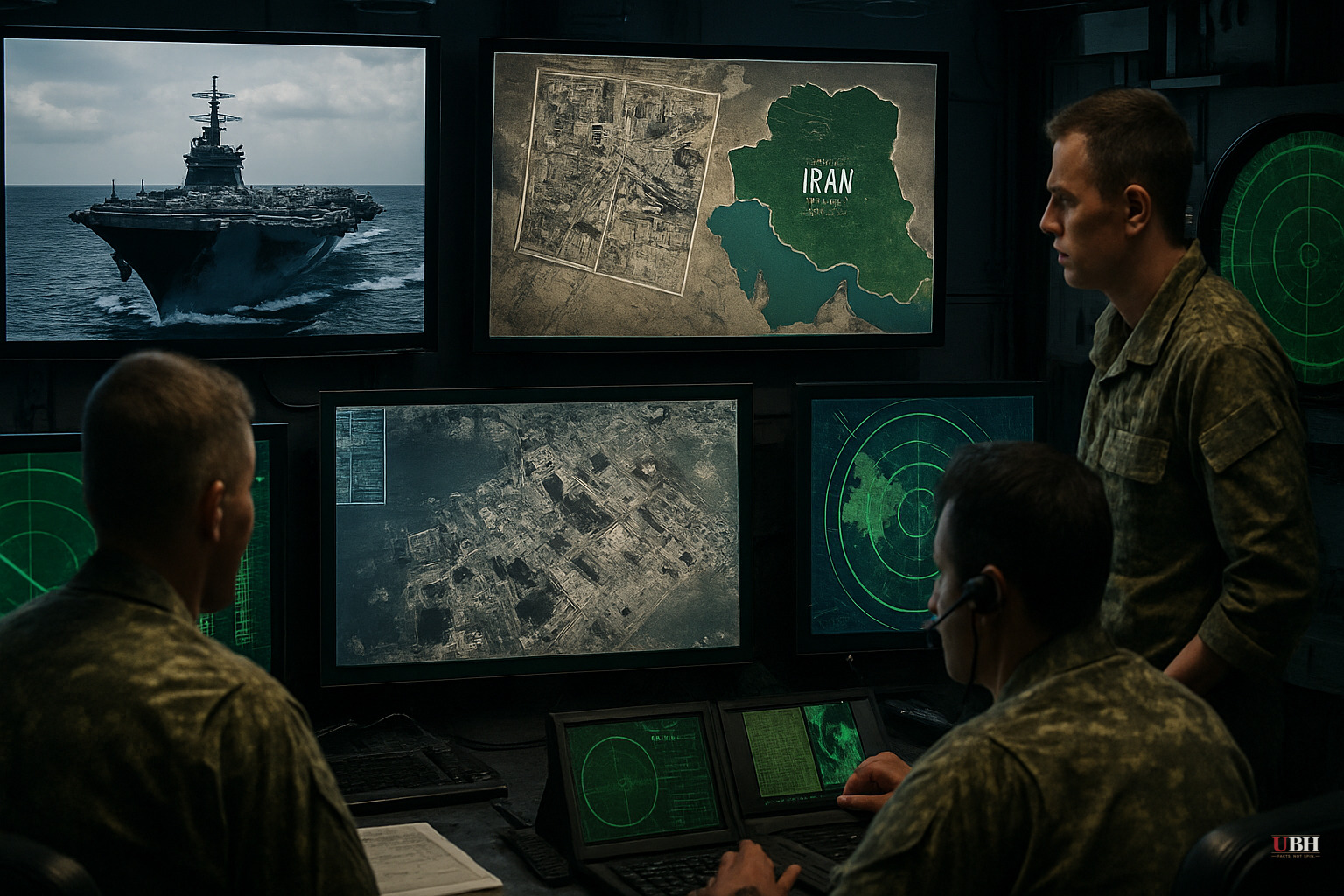
U.S. Central Command struck Iranian military sites on Saturday and Sunday near the city of Geruk and on Qeshm Island, according to NPR and AP News. The stated trigger: Iran shot down an American MQ-1 Predator drone operating over international waters.
Centcom's statement said U.S. fighter aircraft eliminated "Iranian air defenses, a ground control station, and two one-way attack drones that posed clear threats to ships transiting regional waters." No American casualties reported.
Iran's Islamic Revolutionary Guard Corps acknowledged it struck back, targeting an air base used by U.S. forces. The IRGC claimed the initial U.S. attack hit a telecommunications tower — a claim that, if accurate, would contradict the Pentagon's assertion that it only hit military targets.
Kuwait Is Now In It
Kuwait — home to major U.S. military installations — reported its air defense systems opened fire Monday morning to intercept incoming Iranian missiles and drones, according to AP News and BBC.
Kuwait's foreign ministry condemned what it called "heinous and repeated Iranian attacks." Kuwait is a U.S. partner, and Iran is now striking Gulf states that host American forces, not only American forces directly. If Iran is deliberately widening the target list to include host nations, the pressure on those nations to ask U.S. forces to leave becomes a significant strategic consideration.
Satellite Data: 20 American Sites Damaged
BBC Verify — using satellite imagery and video analysis — found that Iran has damaged 20 U.S. military sites across eight countries in the Middle East since the conflict began.
This differs from Pentagon accounts. The White House has "repeatedly claimed that Iran's military has been almost wiped out," according to BBC. Analysts who reviewed the satellite data told BBC Verify that Tehran's counter-attacks have been "more precise and extensive than American officials have previously acknowledged."
The Pentagon's response? A U.S. defense official declined to comment, citing "operational security reasons."
The U.S. government has reportedly asked Planet — a major commercial satellite imagery provider — to impose an "indefinite" restriction on new images of Iran and most of the Middle East, preventing public access to ground-level imagery.
Meanwhile, the Pentagon says it has hit more than 13,000 targets in Iran since the start of Operation Epic Fury. If that number is accurate and Iran has still managed to damage 20 American bases across eight countries, questions arise about what 13,000 strikes accomplished.
The Peace Deal Is Dead — For Now
Negotiations to extend the ceasefire collapsed over the weekend. According to CBS News — cited by BBC — Trump requested changes to the deal's terms. The sticking points: conditions around the Strait of Hormuz and the removal of highly enriched uranium.
Control of Hormuz is central to this conflict's economics. And enriched uranium represents the core nuclear issue.
Trump posted on Truth Social Monday morning saying Iran "really wants to make a deal, and it will be a good one for the USA." Fox News reported that White House sources say they "feel closer to a deal than they have been." But Iran is still blockading Hormuz — a fifth of all global oil and natural gas trade passes through that strait, according to NPR — and still landing hits on American infrastructure.
Coverage Patterns
BBC and AP are reporting on the satellite damage analysis. Fox News is focusing heavily on Trump's dealmaking posture and energy independence framing. Neither outlet is giving significant attention to Kuwait, where a sovereign nation that hosts American forces just got hit by Iranian missiles and drones.
Financial Impact
Oil prices climbed again Monday, according to the New York Times, as markets weighed fresh strikes against the possibility that negotiations continue. Brent crude remains elevated. The Strait of Hormuz blockade is ongoing.
Every dollar at the gas pump, every shipping delay, every supply chain disruption traces back to Hormuz. Until that strait reopens, this conflict carries daily costs for Americans.
The Pentagon's request for a private satellite company to restrict imagery of the Middle East raises questions about transparency in military operations.
Iran's Supreme Leader Ali Khamenei declared the Middle East is no longer a "safe place" for American bases. We are now into the third known escalation in a single week.
Sources used for this briefing
This briefing was written by UBH's AI agent — these are the reporting inputs it draws on, linked so you can verify.


