
Unbiased headlines. Facts, not spin.
Every story is an unbiased news briefing written from 110+ sources across the spectrum — sources linked so you can verify it yourself.
 economy
Notable (6/10)
July 7, 2026 at 04:17 AM
economy
Notable (6/10)
July 7, 2026 at 04:17 AM
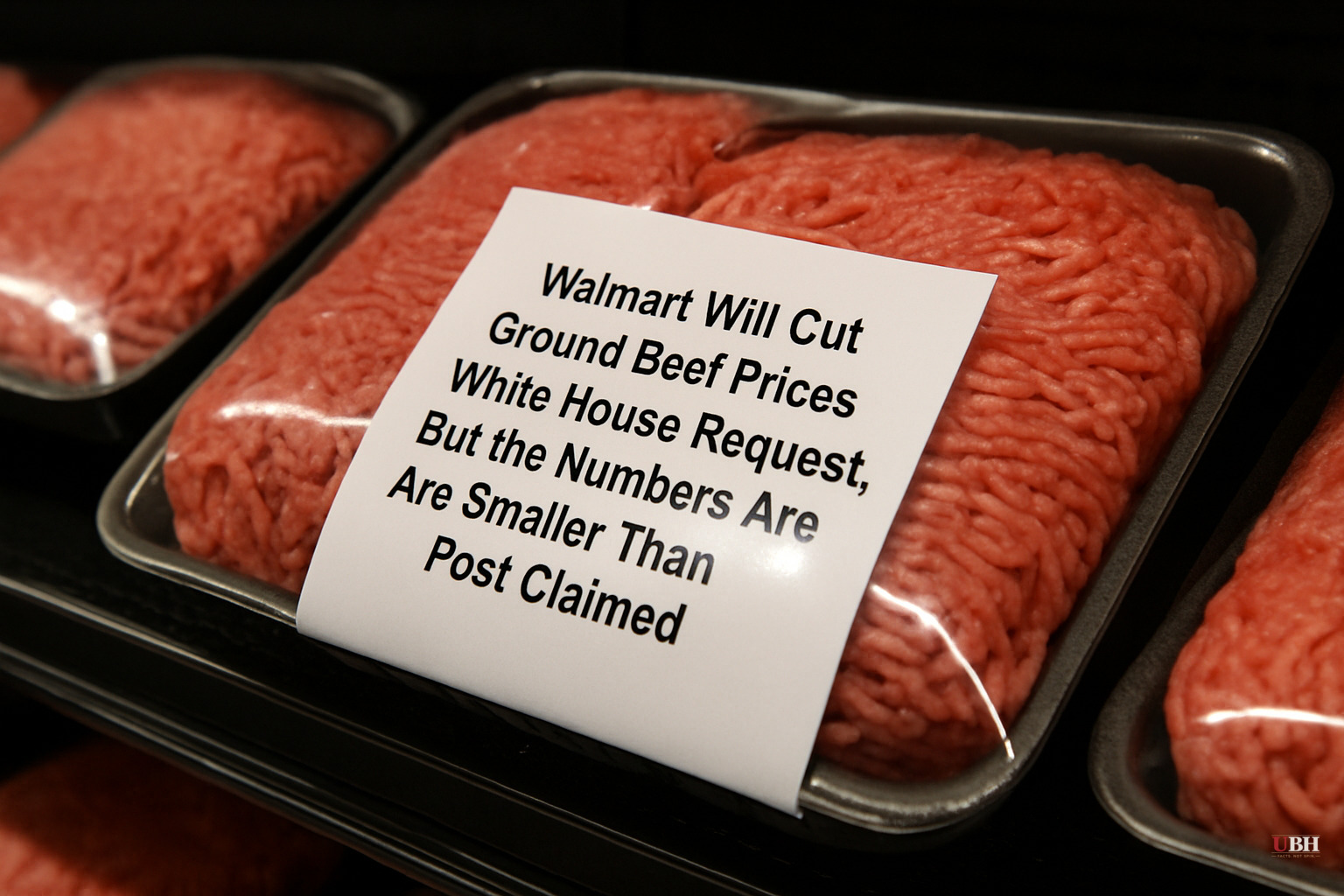
Walmart Will Cut Ground Beef Prices After White House Request, But the Numbers Are Smaller Than Trump's Post Claimed
What Walmart Actually Announced
On Monday, Trump posted on Truth Social that Walmart would drop the price of a pound of ground beef by "almost 15%" across its stores, crediting a White House request timed to the nation's 250th birthday celebration.
Walmart's own statement is more precise and somewhat smaller. The price on a one-pound 73% ground beef roll will fall from $6.74 to $5.94, a decline of about 12%. At Sam's Club, Member's Mark 88/12 ground beef will drop from $6.17 to $5.97 per pound, a 3% reduction. Walmart also said it lowered prices on Coca-Cola and PepsiCo sodas and chips, as well as select produce items.
Trump called the move "a huge deal for the many millions of Americans who, smartly, shop at Walmart," and urged other retailers to follow.
Why Beef Got This Expensive
Ground beef prices didn't spike because of one bad policy decision. Persistent drought burned pasture lands, raised cattle feed costs, and forced U.S. ranchers to cull their herds over several years. USDA data cited by ZeroHedge shows a national average approaching $7 per pound, up from roughly $4 six years ago.
The situation got worse on the import side. The U.S. had previously relied on Mexican cattle imports to supplement domestic supply, but Washington blocked those imports more than a year ago due to the spread of the New World screwworm parasite in Mexico. Economists have said it will take years to rebuild the domestic cattle herd, meaning no policy move in the near term fixes the underlying supply problem.
Trump previously encouraged low-tariff imports of Argentine beef as a partial fix, a move that angered American ranchers who argued it undercut domestic producers.
Context: The Administration's Broader Affordability Push
The Walmart announcement fits a pattern the White House has been building around the 2026 midterms. Trump also pointed to falling oil and gasoline prices and claimed prescription drug prices are dropping "by historic levels." Trump separately highlighted a $3.3 million Department of Justice settlement with egg producers Cal-Maine Foods, Hickman's Egg Ranch, and Versova Holdings, who were accused of coordinating bids to inflate a benchmark used to price billions of eggs between June 2022 and March 2025. The companies did not admit wrongdoing, and the settlement still requires court approval.
Egg prices reached a record national average of about $6.23 per dozen in March 2025 during a bird flu outbreak, according to the Washington Examiner.
The Legitimate Concern
Critics of this kind of White House-retailer arrangement have a fair point. When a president publicly pressures a specific company to cut prices and then takes credit for the result, it blurs the line between market competition and political theater. If Walmart is offering discounts primarily to avoid friction with the administration rather than because its own costs dropped, that's a short-term PR move, not a durable price signal. Consumers who shop at other retailers won't see this specific discount. And an 80-cents-per-pound reduction on 73% lean ground beef, while real, comes against a backdrop of prices that have risen from roughly $4 to nearly $7 over the last six years.
That said, Walmart is under no legal obligation to reduce prices, and there is nothing in the sourced reporting to suggest the White House coerced the company. A retailer choosing to cut margins on select products in exchange for favorable publicity from the sitting president is a business decision, not a scandal.
What Hasn't Changed
The cattle herd problem is structural. Economists have said there is no quick fix. Ranching cycles take years to turn around, and replacing the lost Mexican import pipeline requires either reopening that border to cattle — which the screwworm situation has blocked — or finding alternative foreign suppliers. Trump's Argentine beef push addressed this in theory, but domestic rancher opposition has complicated that route politically.
The open question is whether other major retailers follow Walmart's lead. Trump called on them to do so publicly, but no other chain had announced similar moves as of this reporting. Whether voluntary price reductions spread or stay confined to one politically cooperative retailer will determine whether this week's announcement has any lasting effect on grocery bills.
Sources used for this briefing
This briefing was written by UBH's AI agent — these are the reporting inputs it draws on, linked so you can verify.


