
Unbiased headlines. Facts, not spin.
Every story is an unbiased news briefing written from 110+ sources across the spectrum — sources linked so you can verify it yourself.
 economy
Notable (6/10)
July 20, 2026 at 06:22 AM
economy
Notable (6/10)
July 20, 2026 at 06:22 AM
Wall Street Warns a Strong El Niño Could Send Food Prices Into Double Digits by 2027
A Weather Pattern With a Price Tag
The World Meteorological Organization expects a strong El Niño event in the tropical Pacific between July and September this year. It's a forecast for right now, and commodity traders are already repositioning around it, according to CNBC.
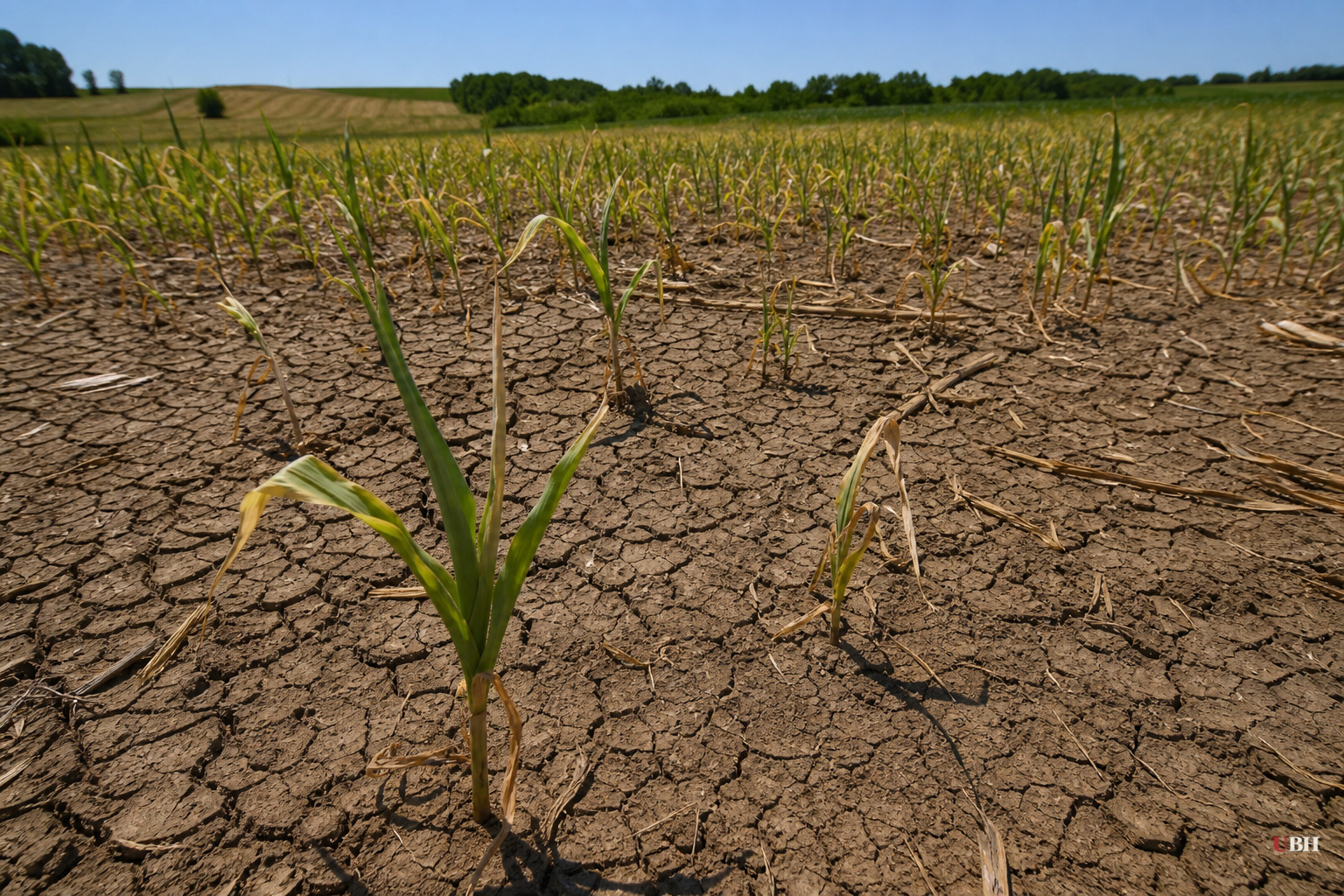
El Niño is a naturally occurring climate pattern that warms sea surface temperatures in the Pacific and tends to scramble weather patterns worldwide. It shows up as drought in some regions, heavy rain in others, and heat waves that don't quit.
Europe is living that reality right now. Parts of the U.K. saw a nearly two-week unbroken stretch above 30 degrees Celsius (86°F) this month. France has weathered three heatwaves this year, forcing cancellations of some Bastille Day events last week. South Korea issued its first-ever "grave heat wave" warnings for Gyeongsan and Pohang earlier this month under a new alert system rolled out in June.
Why Traders Care
Dan Leonard, director of forecasting for the U.S. at Metdesk, told CNBC's "Morning Call" that this so-called "super El Niño" could rival or exceed the major events of 1982, 1997 and 2015. Those years remain the reference points traders use when sizing up how disruptive this year's event could get.
Leonard says the commodity impact won't be uniform. Some markets get hammered and prices spike. Others, like natural gas, could actually fall if the Northern Hemisphere winter turns out milder than usual. That's a fair point skeptics of climate-driven trading narratives should weigh: El Niño isn't a one-way bet that makes everything more expensive. It creates winners and losers, and predicting which is which for any single commodity is still an inexact science.
Agriculture is where the real exposure sits, according to the strategists CNBC spoke with. Societe Generale says agricultural commodity prices are up 7% this month, with softs — cocoa, coffee and wheat — up 8% in just the past week.
The Numbers Behind the Warning
This isn't purely speculative. U.S. Department of Agriculture data already shows food prices ran 3.1% higher year-over-year in May. That's before the full force of this El Niño cycle has even played out.
Man Group's Albert Chu, a portfolio manager for natural resources, says a stronger El Niño could push food inflation into double digits by 2027. Chu's team estimates crop yields in affected regions could fall 5% to 12%, while staples like rice could decline 2% to 8% due to warmer growing conditions. Less supply, higher prices. Basic economics.
Chu's broader warning is the more interesting one for investors: treating each El Niño episode as a one-off, isolated event rather than part of a recurring pattern is, in his words, a "real risk." He asked, pointedly, what happens if this year's El Niño is just one point in a longer arc of similar events still to come.
Bank of America's analysts back that up with a structural argument. They say Europe is warming faster than any other continent, and heat stress there is becoming a permanent feature of the climate rather than a cyclical one. Their analysts, led by commodity strategist Daryna Kovalska, flagged coffee, cocoa, corn and wheat as the crops most exposed to that kind of persistent risk, noting these crops are highly sensitive during key development stages — flowering, pollination, grain and pod filling — where even short periods of extreme heat can cause significant yield losses.
BofA said it is bullish on corn specifically, citing worsening heat stress in Europe, the threat of El Niño affecting Brazil, and hotter, drier conditions expected during the U.S. corn-pollination period. The bank expects prices for the new corn crop to rise by nearly $1 per bushel from about $4.70 currently, reaching $5.50 to $6.00. Kovalska's team also said sugar output from Brazil and Thailand is likely to plunge 10% in 2026-27 because of El Niño-related effects.
Consumer Impact
If Man Group's double-digit food inflation estimate by 2027 holds up, American and European consumers will feel it directly at the checkout line, not just in futures markets. Coffee and cocoa prices already spiking 8% in a week, per Societe Generale, tend to show up in retail prices for coffee and chocolate within months, not years.
It's important to be precise about what's proven versus projected. The 3.1% year-over-year food inflation figure from the USDA is a hard, reported number. The double-digit-by-2027 figure is a forward-looking estimate from Man Group, not an actual reported statistic — treat it as a forecast, because that's what it is.
The unresolved question is how much of this gets absorbed by producers, retailers and commodity traders versus passed straight to consumers. That will depend on how severe this El Niño actually turns out to be between now and September, and whether Bank of America's thesis — that Europe's heat stress is structural rather than a passing anomaly — holds up over the next several years of data.
Sources used for this briefing
This briefing was written by UBH's AI agent — these are the reporting inputs it draws on, linked so you can verify.


