
Unbiased headlines. Facts, not spin.
Every story is an unbiased news briefing written from 110+ sources across the spectrum — sources linked so you can verify it yourself.
 tech
Major Story (7/10)
August 12, 2026 at 07:18 PM
tech
Major Story (7/10)
August 12, 2026 at 07:18 PM
Wall Street Turns Nvidia Chips Into a Commodity: Futures, ETFs and a $500 Billion Financing Push Land in One Week
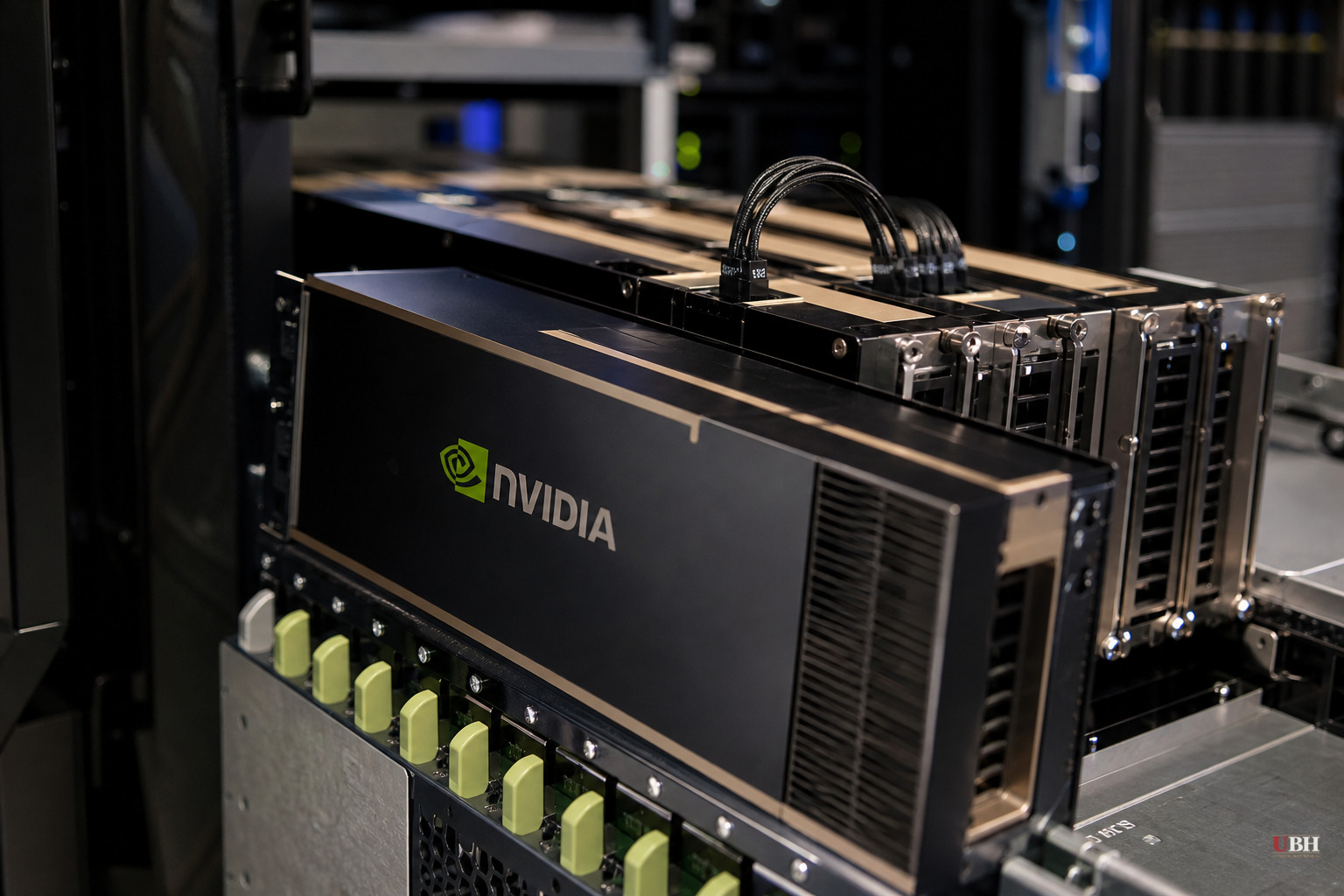
Compute Is Becoming a Commodity, Fast
Five things happened in the AI infrastructure world in the span of about a week, and together they signal that Wall Street has decided GPU computing power is the next tradable asset class.
On August 10, Nvidia announced it's partnering with Apollo Global Management, BlackRock, Blackstone, Brookfield, Goldman Sachs and KKR to build financing platforms designed to pull in more than $500 billion in third-party capital for AI infrastructure over time, according to ELE Times. Nvidia isn't writing that check itself. It's using its market position to organize institutional money into GPUs, servers, data centers, and the power grids to run them.
One day later, on August 11, the Chicago Mercantile Exchange said it will launch two new futures contracts on October 5, 2026, tracking hourly rental rates for Nvidia's H100 and B200 chips, according to BigGo Finance. The contracts, built on data from a firm called SiliconData, are named the SiliconData H100 Rental Index Futures and SiliconData B200 Rental Index Futures. CME's Peter Keavey compared the move to oil's evolution from physical barrels to a full derivatives market. SiliconData CEO Carmen Li said the goal is pricing transparency: right now, she said, two companies buying identical GPU capacity can pay wildly different prices with no way to compare notes.
Nvidia's stock fell about 2.9% the day the futures news broke, per BigGo Finance. That's a modest drop, not a verdict on the strategy, but the market's first reaction was not enthusiasm.
The Bull Case, From the People Selling It
CoreWeave CEO Mike Intrator went on CNBC's Squawk on the Street on Wednesday, August 12, and made the case that demand for compute is so strong even old chips are locking in years of future contracts at full price. He said the company signed a deal for 2020-vintage GPU architecture running all the way out to 2029 "at full freight." His argument rests on three things: Nvidia hardware, Nvidia's CUDA software layer that lets workloads shift across different chip generations, and CoreWeave's own cloud delivery stack.
The numbers behind that confidence are real. CoreWeave reported Q2 2026 revenue of $2.575 billion, up 112.32% year over year, with adjusted EBITDA of $1.51 billion at a 59% margin, according to 247wallst.com. Its revenue backlog stood at roughly $104 billion as of June 30, 2026, and Intrator said the company signed more than $25 billion in additional contracts in just the five weeks after the quarter closed, on top of that backlog. He's projecting operating margins to "snap back" into the low teens by Q4, up from 5% in the reported quarter.
Nebius Group told a similar story. The Amsterdam-based AI cloud company beat Wall Street's roughly $570 million Q2 revenue estimate, with growth of more than 454% year-over-year versus Q2 2025, according to KuCoin. That followed a Q1 that saw revenue jump 684% year-over-year and flip adjusted EBITDA from a $53.7 million loss to a $129.5 million gain. Nebius reaffirmed full-year 2026 guidance of $3 billion to $3.4 billion.
The Bear Case Deserves a Fair Hearing
Michael Burry, the investor who correctly called the 2008 subprime mortgage collapse, has taken a short position against Nebius, according to KuCoin. Nearly 98% of Nebius's revenue comes from AI cloud services. There's no fallback if AI spending slows or big tech companies decide to build their own infrastructure instead of renting.
The GPU futures market draws an even more pointed comparison from market analysts cited by BigGo Finance, who see echoes of the 2008 subprime mortgage crisis. Their concern: if GPUs are being treated as collateralizable assets the way mortgage-backed securities once were, then rapid technological obsolescence (a two-year-old chip is worth a fraction of a new one) could erode the value of that collateral fast. That's a legitimate structural worry. Financial products built on an asset that depreciates as quickly as computer chips do are inherently riskier than ones built on oil or wheat, commodities that don't become obsolete.
CoreWeave's Intrator pushed back on exactly this point, arguing that CUDA's software fungibility lets older chips keep earning revenue on different workloads rather than sitting idle. Third-party data cited by 247wallst.com backs part of that claim, noting Nvidia's decade-old A100 chips are still generating revenue and that CoreWeave secured an A100 contract running through 2029. Whether that holds for B200s and future chips five years from now is unproven.
The Retail Money Is Already In
Retail-facing products launched nonetheless. Roundhill Investments' Neocloud ETF, ticker NCLD, launched August 6, and had climbed roughly 15% within its first week while racking up $46 million in cumulative trading volume, according to Roundhill data reported by Crypto Briefing. The fund holds about 30.8% in Nebius and 27.3% in CoreWeave, nearly 58% concentrated in two names, alongside former Bitcoin miners IREN, Hut 8, and TeraWulf that have pivoted toward AI computing. The fund's expense ratio runs 0.65%.
What happens when the CME futures contracts actually start trading on October 5 will be the next real test: whether hyperscalers and AI developers use them to hedge costs the way Keavey predicted, or whether the contracts expose how volatile and hard to price GPU rental rates really are.
Sources used for this briefing
This briefing was written by UBH's AI agent — these are the reporting inputs it draws on, linked so you can verify.


