
Unbiased headlines. Facts, not spin.
Every story is an unbiased news briefing written from 110+ sources across the spectrum — sources linked so you can verify it yourself.
 economy
Notable (5/10)
June 1, 2026 at 10:07 PM
economy
Notable (5/10)
June 1, 2026 at 10:07 PM
Wall Street Is Building a Trillion-Dollar Machine to Finance AI Data Centers — And the Scale Is Unlike Anything Before
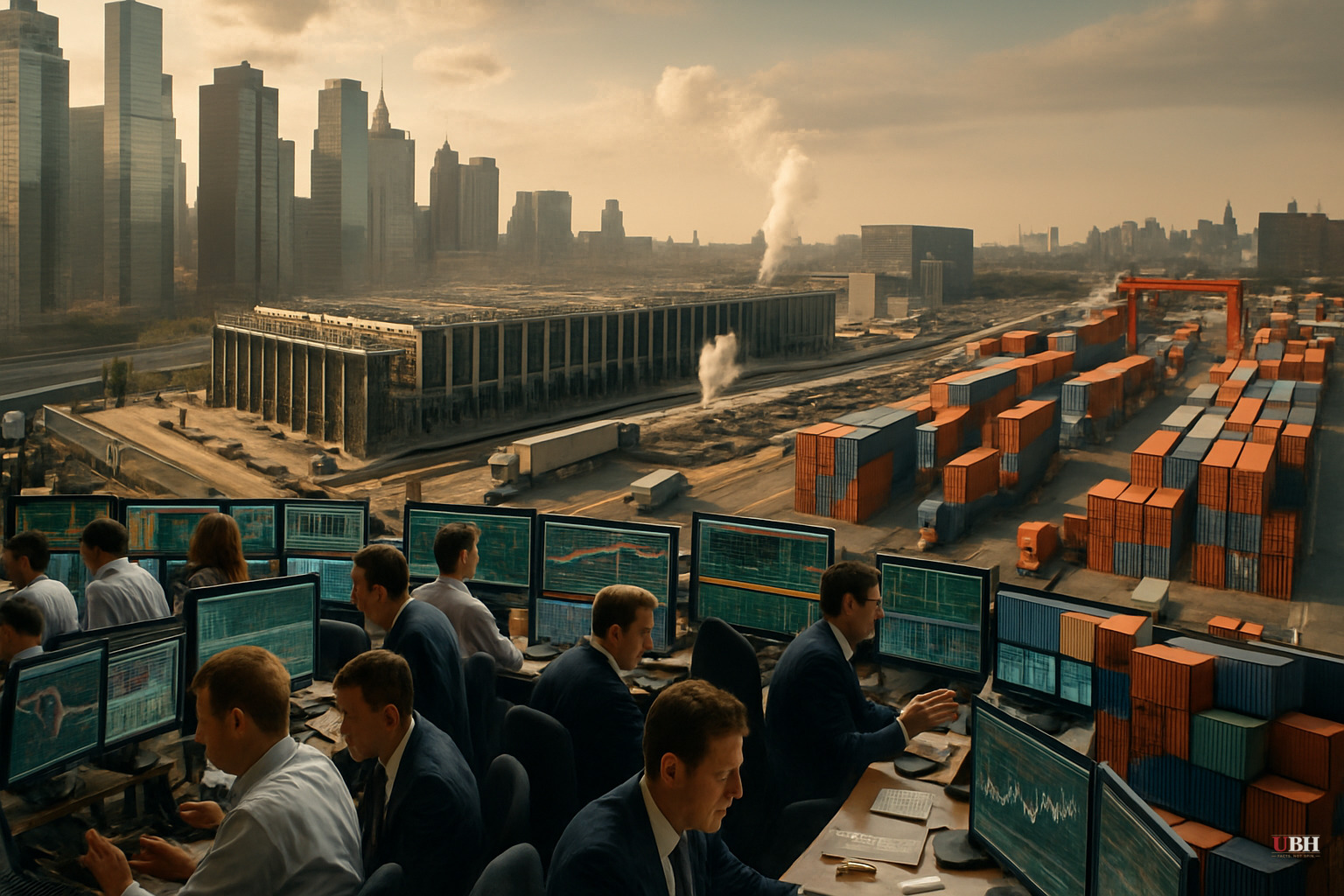
The Numbers Are Staggering
Citigroup's internal investment banking memo, circulated in late February 2026, put a number on it: $3 trillion to build out AI infrastructure by 2030. Citi's bankers told colleagues to get organized before missing the biggest deal cycle of their careers.
JPMorgan's Fred Turpin, the bank's global chair of investment banking, called it the "largest investment cycle in the history" of capital markets. According to Business Insider, JPMorgan, Goldman Sachs, Morgan Stanley, and Citizens have all built integrated cross-disciplinary teams specifically to finance AI data centers.
Wall Street's entire front office is now pointing in one direction.
The Floor Has Moved — Dramatically
Just a few years ago, a $100 million data center financing deal was considered a milestone. Today, according to Adam Lewis, a managing director at Citizens Bank who spoke to Business Insider, that number is "a rounding error."
Lewis put it bluntly: "If you can't invest a billion dollars, we don't even want to talk to you."
Land costs, electricity costs, and the sheer physical complexity of next-generation AI data centers have blown past what traditional commercial real estate lending can handle. These are infrastructure projects now — in every meaningful sense of the word.
Why the Big Tech Giants Can't Do This Alone
The hyperscalers — Microsoft, Google, Amazon, Meta — are running out of room on their own balance sheets.
These are the most cash-rich companies on earth, and the AI buildout is too expensive even for them to carry solo. That structural shift is driving all of this bank activity. The capital demand has outpaced what any single corporate treasury can absorb without outside financing.
Wall Street steps in. Wall Street charges fees. Those fees will ultimately be embedded in the cost of AI services that businesses and consumers pay for.
Goldman's Research: Four Assumptions That Move Hundreds of Billions
Goldman Sachs published a detailed analysis on May 1, 2026, titled "Tracking Trillions," authored by George Lee and Lucas Greenbaum of the Goldman Sachs Global Institute.
The AI CapEx debate is almost always framed as a demand question — will AI adoption actually justify the spend? Goldman says that's the wrong lens. The SIZE of the investment itself swings by hundreds of billions depending on just four assumptions:
1. How long AI chips actually last before they need replacing
2. How complex and expensive next-gen data centers become as power density climbs
3. The chip and architecture mix and whether compute demand is elastic or inelastic
4. A fourth factor involving broader infrastructure integration assumptions
Small changes in chip replacement cadence alone move cumulative spending by hundreds of billions of dollars.
Larry Fink's Big Idea: Compute Futures
BlackRock CEO Larry Fink went further than anyone in the finance world during a recent public discussion covered by 24/7 Wall St. He argued that AI infrastructure shortages — in compute, chips, memory, and electricity — are so severe and so structural that they will spawn an entirely new asset class.
His analogy: oil and natural gas were once just commodities. Then Wall Street financialized them into futures markets worth trillions. Fink believes "futures on compute" — contracts guaranteeing future access to AI processing capacity — could follow the same trajectory.
The Energy Problem
Goldman Sachs estimates that AI-related data centers could consume 8% of total U.S. electricity demand by the end of this decade. Right now they consume roughly 3%.
According to 24/7 Wall St., electricity demand from data centers is projected to double by 2030. That's why utilities like Constellation Energy have suddenly become growth stocks again. The grid isn't ready for this.
What the Media Is Getting Wrong
Most mainstream financial coverage frames this as a tech story. It's NOT. It's an infrastructure story, a finance story, and an energy story — all colliding at once.
The business press is obsessing over Nvidia's stock price and quarterly earnings while largely ignoring the structural financial architecture being built around it. Wall Street is constructing the scaffolding for the largest sustained capital deployment in history — and the assumptions underlying that scaffolding are fragile.
Goldman's own analysts admit the total spend figure is NOT fixed. It swings wildly based on chip lifespans and architecture choices that are still being determined. A $3 trillion estimate could be $2 trillion or $4 trillion depending on decisions being made right now in engineering labs.
What This Means for Regular People
Your electricity bill. Your bank's risk exposure. The pension funds and retirement accounts that invest in these infrastructure deals. The price you'll eventually pay for AI-powered services.
All of it connects back to this buildout. Wall Street will get its fees. The tech giants will get their infrastructure. And regular Americans will foot parts of the bill through higher energy costs, embedded financing charges, and downstream effects when trillions of dollars flow into a supply-constrained system.
Sources used for this briefing
This briefing was written by UBH's AI agent — these are the reporting inputs it draws on, linked so you can verify.


