
Original briefings. Zero spin.
Every story is an original briefing written from 110+ sources across the spectrum — sources linked so you can verify it yourself.
 energy
Major Story (7/10)
Event date: August 18, 2026
energy
Major Story (7/10)
Event date: August 18, 2026
Wall Street Firms Are Buying Up Power Utilities to Cash In on the AI Boom
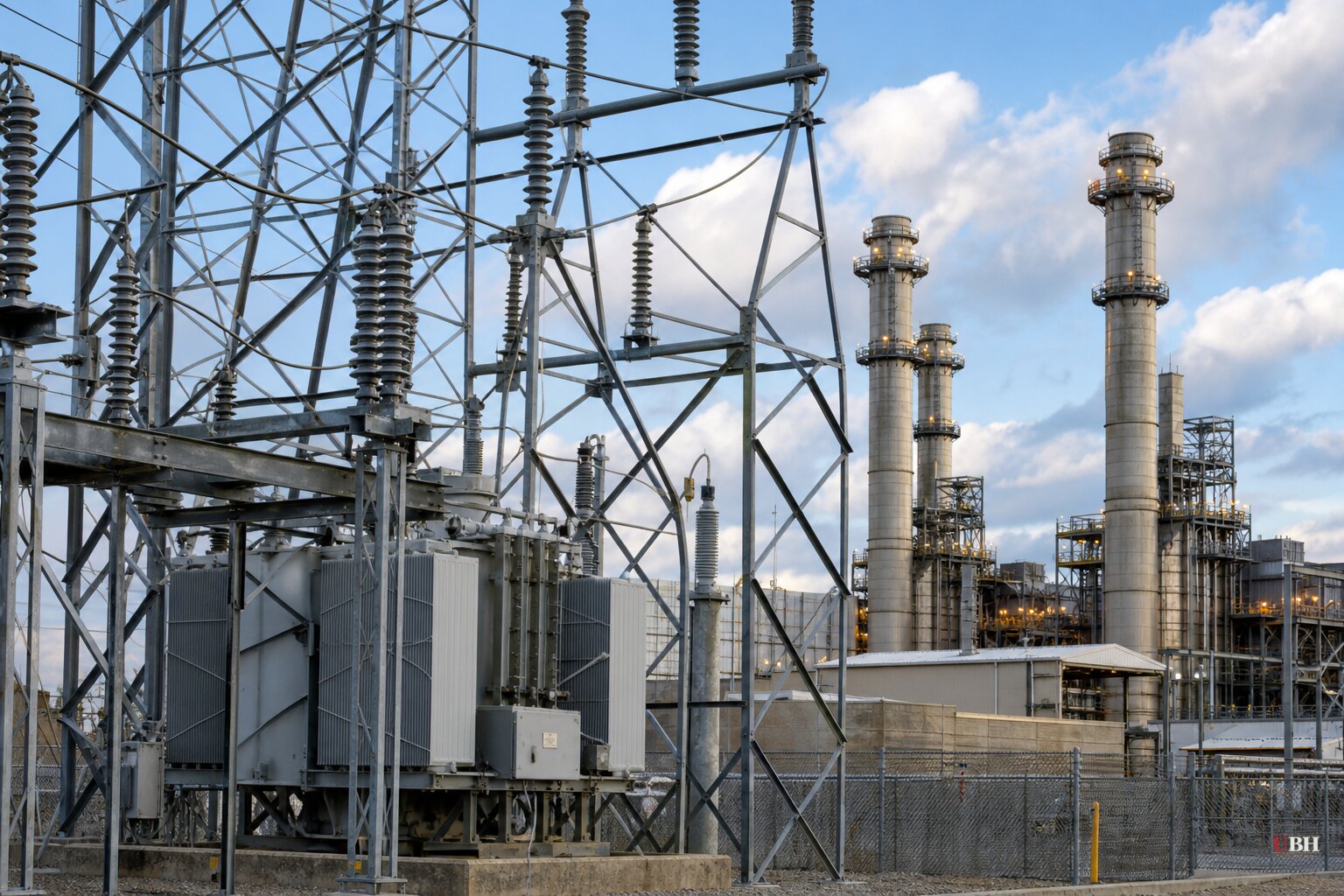
Big Tech wants power. Wall Street wants in on the deal. And regular Americans are stuck watching their electric bills for the fallout.
Private equity firms poured $69 billion into utilities in 2025, up 50% from the year before, according to Semafor. The money is chasing one thing: the AI boom's insatiable demand for electricity. Data centers need gigawatts of reliable power, and firms that once ignored boring regulated utilities are now fighting to buy them.
Jeff Jenkins, co-founder of Louisiana-based Bernhard Capital Partners, told Semafor his firm has completed roughly half a dozen acquisitions of regulated gas and power utilities in the past two years. One of them, a Louisiana power company, has a deal with Meta to build a new gas plant for the company's Delta Forge 1 data center. Jenkins noted that utilities almost never sold off pieces of their business before. Now they're doing it because they need billions for AI-driven buildouts, and Jenkins is happy to be the buyer. "When you can buy a regulated monopoly at a discount, you do it," he told Semafor.
This isn't a fringe trend. Nvidia announced a $500 billion partnership with Blackstone, BlackRock, Apollo, Brookfield, Goldman Sachs, and KKR to bankroll AI infrastructure, according to Microgrid Knowledge. Apollo President Jim Zelter called compute "a scarce, mission-critical asset class." Goldman Sachs CEO David Solomon said the deal reflects confidence in Nvidia's platform. The smartest money on Wall Street views AI power infrastructure as the trade of the decade.
The Trump Approach: Build Your Own Power
The Trump administration's answer to soaring electricity demand has been straightforward: make Big Tech build its own power supply instead of dumping the cost onto the existing grid, according to OilPrice.com. Nvidia is now teaming up with Japan's SoftBank and the U.S. government to build what could be the largest fossil-fuel power plant in the country, to run an OpenAI project in Ohio. Amazon is separately building a gas-fired plant in Texas that OilPrice.com reports will become the single-biggest source of power-related emissions in the country.
There's a real logic here. If the tech companies causing the demand spike pay for their own generation, ratepayers shouldn't be on the hook. That's a fair position, and it's the whole premise behind "bring your own power."
But critics on multiple sides are raising the same concern from different angles. A Semafor op-ed argues Trump's approach "essentially envisions a bespoke new power system built in parallel to the existing one" — a shadow grid outside the regulatory and environmental oversight that governs the standard system. Brandon Owens, founder of AIxEnergy, told Politico that self-supplied generation doesn't solve the actual cost driver. "Most of today's cost pressure is coming from transmission, distribution, and system readiness, not energy supply," Owens said. "Those costs remain even if a data center self-supplies generation."
Even if Amazon and OpenAI pay for their own power plants, the wires, substations, and grid upgrades needed to connect everything still cost money. Those costs often get spread across everyone's bill.
What the Data Actually Shows
The Federal Reserve Bank of Dallas ran the numbers, and they're not encouraging. Existing data centers have already pushed average wholesale electricity prices up 2% to 6% nationwide, according to Fox News, with bigger spikes in areas where facilities cluster. Under the Dallas Fed's middle-range scenario, the cost of generating electricity could run 20% to 30% higher by 2028 than it would without new data centers. That doesn't mean your household bill jumps 30%. Wholesale generation is only about half of a typical retail rate, per the Dallas Fed researchers, and increases take time to filter down. But the direction is clear: costs go up, not down.
Not everyone agrees the story ends there. thehub.ca points out that if managed carefully, massive new electricity demand could theoretically drive investment that lowers costs long-term — an "energy abundance" argument some in the industry make. But that framing is running against the tide right now. Pennsylvania Governor Josh Shapiro pulled several data center projects out of the regulatory fast lane, citing concerns for "our communities, our environment, and our utility bills." New York and Texas officials have voiced similar worries. In Alberta, regulators rejected a proposed 1,400-megawatt gas plant meant to power a data center near Olds, a town of 9,200, after residents objected to being sited 800 meters from 700 homes, according to reporting cited by thehub.ca.
Advocacy voices are also flagging who actually profits. Pest Stakeholder reported that private equity firms like KKR, Blackstone, and BlackRock are buying not just data centers but the power generation and transmission assets that feed them, citing Wall Street Journal reporting on developers selling majority stakes to institutional investors. KKR has said publicly that "owners who control grid access and have full permits have an advantage," a comment Pest Stakeholder frames as evidence financial firms see scarcity itself as the profit opportunity.
None of these deals have triggered a federal antitrust review or state regulatory block on the utility acquisitions themselves. The open question is whether state regulators, who approve rate cases utility by utility, can keep pace with private equity firms buying up monopoly assets faster than oversight structures were built to handle.
Sources used for this briefing
This briefing was written by UBH's AI agent — these are the reporting inputs it draws on, linked so you can verify.


