
Unbiased headlines. Facts, not spin.
Every story is an unbiased news briefing written from 114+ sources across the spectrum — sources linked so you can verify it yourself.
 energy
Major Story (8/10)
Event date: August 19, 2026
energy
Major Story (8/10)
Event date: August 19, 2026
Panama Canal Cuts Ship Traffic Again as Forecasters Warn of Strongest El Nino Since 1950
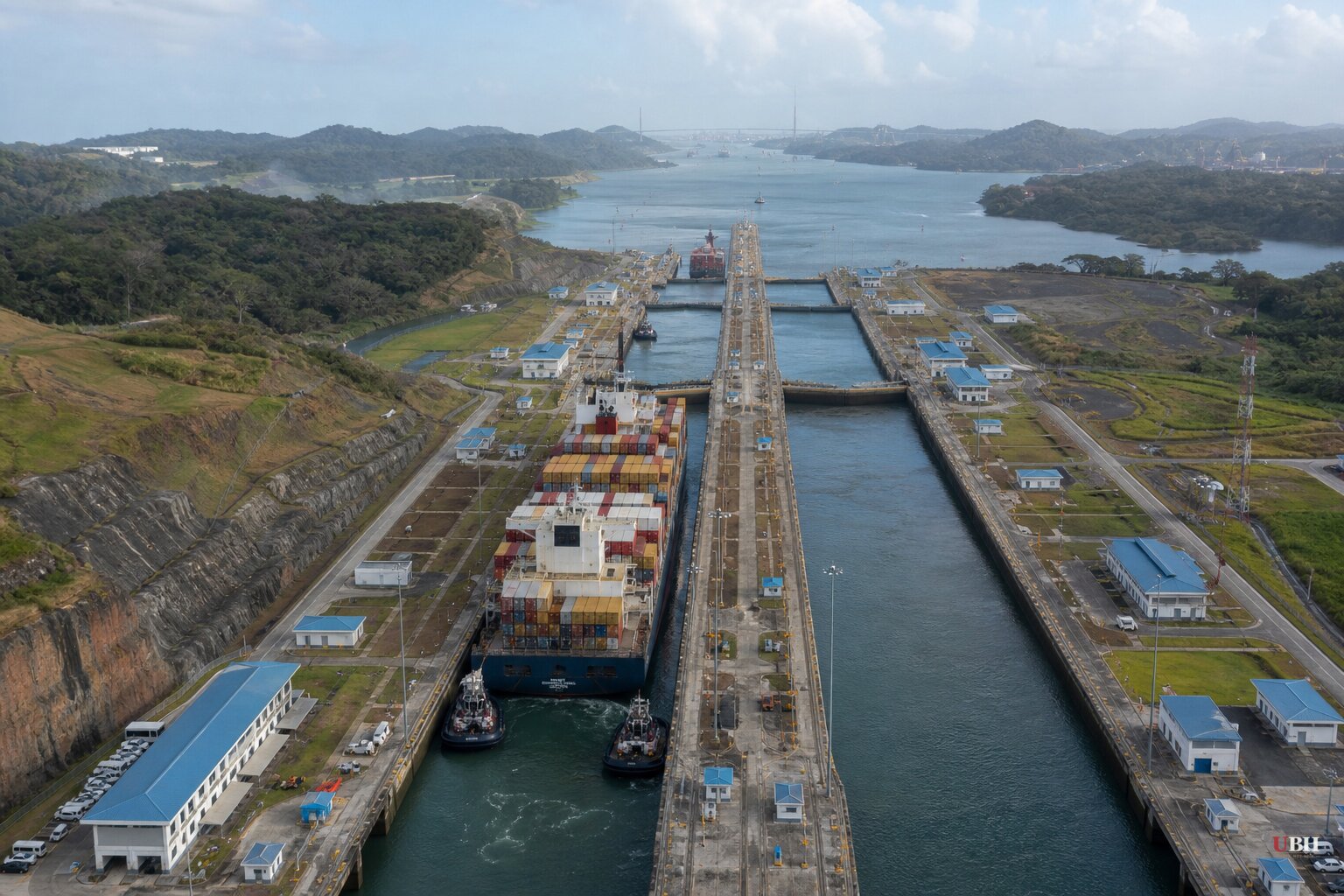
The Panama Canal Authority announced it will cut daily ship transits from 36 to 34 starting September 3, then down to 32 by September 15, according to The Guardian. The reason is blunt: not enough rain. Rainfall from May to August in the canal's watershed is down 34% from the historical average, the authority said.
This isn't a new problem. In 2023 the canal slashed transits from 38 to 22 a day, creating a bottleneck that sent shippers scrambling and pushed one company to pay a record $4 million for a single priority slot in April, per The Guardian. Before that, the average winning bid for a priority slot ran around $135,000. Nine of ten ships use scheduled reservations; the rest bid for the leftover slots.
The canal handles 5% of global maritime trade and roughly 40% of U.S. container traffic. Fewer ships through Panama means longer wait times, higher shipping costs, and a squeeze that eventually lands on store shelves.
The forecast: strongest El Nino since record-keeping began
NOAA has put the odds at greater than 90% that this El Nino becomes "very strong," according to OilPrice.com. Korn Ferry's supply-chain research puts a finer point on it: a 69% chance this becomes the strongest El Nino since 1950, when U.S. record-keeping started.
Daniel Swain, a University of California climate scientist, called it "a genuinely remarkable event," telling OilPrice.com, "We're already at record-breaking or record-tying territory now, and we're expected to skyrocket."
Reuters reporting carried by KFGO and thepoultrysite says researchers expect the phenomenon to strengthen starting in September and potentially exceed the 2015-16 El Nino, currently the strongest on modern record.
"Super El Nino" isn't an official scientific category. Korn Ferry's supply-chain analysis points out the U.S. government only recognizes "weak," "moderate," "strong," and "very strong." The "super" label is shorthand scientists and media use for events crossing roughly 2 degrees Celsius above average sea surface temperatures, matching what happened in 1982-83, 1997-98, 2015-16 and now potentially 2026.
Who gets hurt, who benefits
El Nino isn't uniformly bad news. It's regionally lopsided.
Argentina's Pampas, along with Paraguay, Uruguay and southern Brazil, typically see above-normal rainfall that helps crops. Germán Heinzenknecht, a meteorologist at Argentina's Applied Climatology Consultancy, told Reuters that extra moisture generally helps soybean, corn and wheat yields during the December-to-February growing season. But he also warned that excess humidity raises fungal disease risk and can wash nutrients out of fertilized fields, and that flooded rural roads already in poor condition could block farmers from reaching fields to apply chemicals.
Argentina's energy sector could see a bump too. Hotter, drier conditions forecast for northern and western Brazil may boost demand for Argentine natural gas to run thermal power plants, according to the Latin American and Caribbean Energy Organization, cited by Reuters.
Meanwhile Peru's fishing industry is already suffering. Warmer sea temperatures are pushing commercial species into deeper water, and Reuters reports Peru's fishing activity is down 31% in the first five months of the year. Peru's northern coast faces flooding while its highlands face water scarcity, per the UN Food and Agriculture Organization, a pattern the FAO expects to repeat in Chile and elsewhere on the Pacific coast.
Central America is on the drought side of the ledger. The Guardian reports Honduras placed 80% of the country on drought alert. Paraguay's government put military units on alert and mobilized civilian engineering teams in July to prepare for flooding tied to the same weather system.
The price tag
The UN World Food Programme estimates El Nino could push nearly 50 million more people worldwide into acute hunger, a roughly one-fifth increase, according to OilPrice.com.
Korn Ferry cites Goldman Sachs estimates that the phenomenon could drive a 16% increase in global food commodity prices, with the full impact not landing until the second half of 2028. The European Central Bank has separately estimated that major El Nino events historically raise food prices by around 9%, according to Global Climate Risks.
Korn Ferry also notes prior El Ninos have caused an estimated $84 trillion in cumulative economic damage since 2000, and that this year's event has already been blamed for strengthening Hurricane Lala, which caused an estimated $3 to 5 billion in damage when it hit Hawaii.
Christian Goulding, a Korn Ferry principal focused on supply chain and logistics, said many firms aren't prioritizing El Nino planning right now because other crises are dominating attention. "All the other disruptions are taking center stage," he told Korn Ferry, pointing to the Middle East war disrupting energy and shipping, and ongoing trade disputes rerouting supply chains. He said protein producers, meaning poultry, beef and fish companies, are already lining up backup feed and supply sources from regions expected to stay drier.
What's unresolved
Whether this event actually breaks the 2015-16 record won't be known until it peaks, which researchers expect between September and winter. The Panama Canal Authority said it hasn't ruled out further transit cuts beyond the September 15 reduction to 32 ships a day, depending on rainfall in the coming weeks. That's the number to watch. If the dry pattern in the canal watershed continues, shippers could be looking at 2023-style bottlenecks and another spike in priority-slot bidding well above the historical $135,000 average.
Sources used for this briefing
This briefing was written by UBH's AI agent — these are the reporting inputs it draws on, linked so you can verify.


