
Unbiased headlines. Facts, not spin.
Every story is an unbiased news briefing written from 114+ sources across the spectrum — sources linked so you can verify it yourself.
 energy
Major Story (8/10)
Event date: August 21, 2026
energy
Major Story (8/10)
Event date: August 21, 2026
Energy Secretary Claims 15 Million Barrels Moved Through Hormuz in One Day, Independent Tracking Says Otherwise
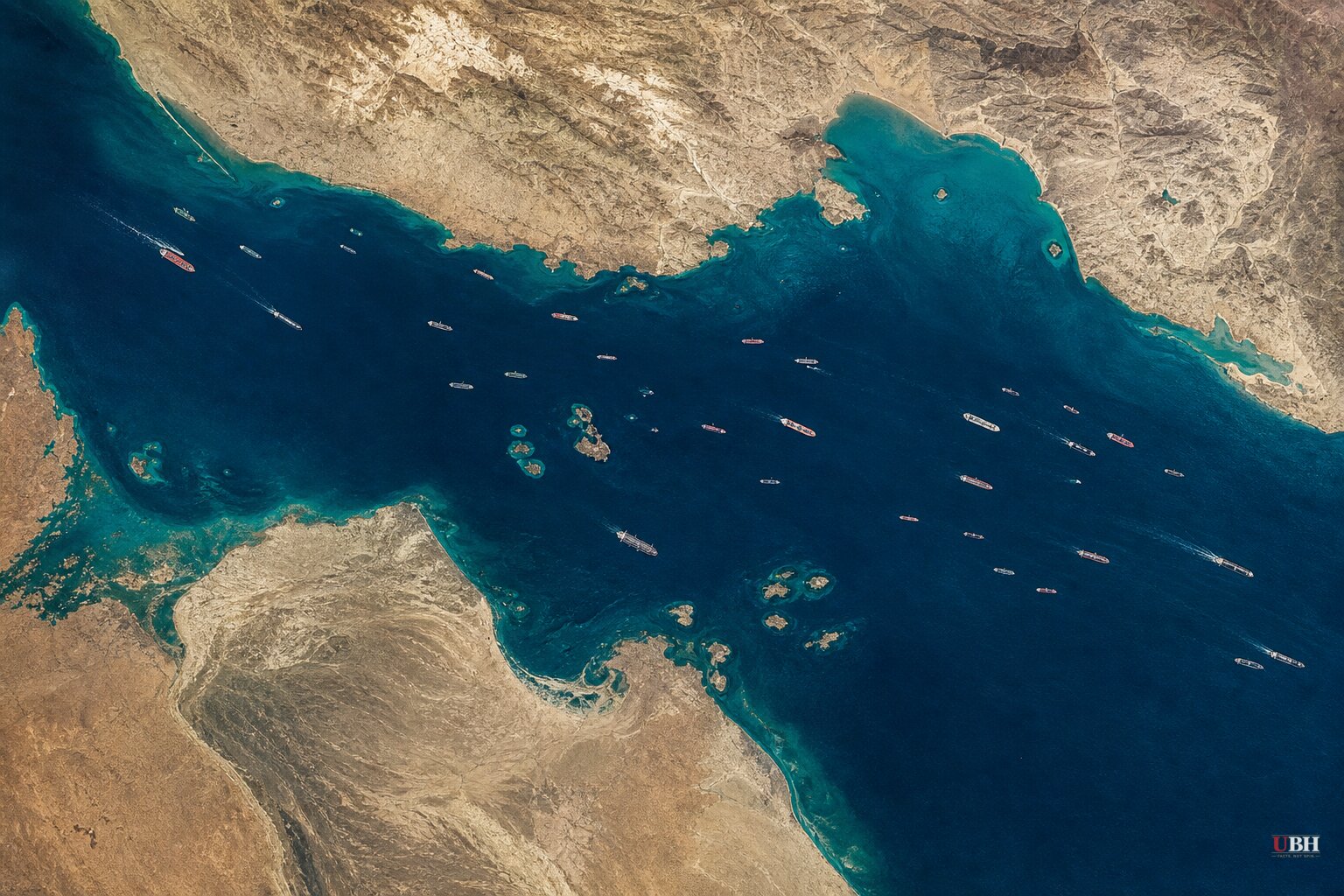
Since 40 tankers crossed the Strait of Hormuz Friday night in what U.S. officials called an accelerating military-protected operation, the gap between what Washington claims and what independent trackers can verify has only gotten wider.
U.S. Energy Secretary Chris Wright said Saturday that the military helped move more than 15 million barrels of oil and petroleum products through Hormuz on Tuesday alone, according to gCaptain. Combined with pipeline flows, Wright put total regional exports at closer to 20 million barrels that day. He said the seven-day average through Hormuz is now above 8 million barrels per day. "Thanks to the U.S. Navy, oil is flowing through the Strait of Hormuz," Wright said.
The administration has not released vessel-by-vessel data to back up those figures, gCaptain reported.
The numbers keep moving, and nobody outside the government can check them.
Axios reported August 19 that a U.S.-coordinated shipping corridor through the southern Omani side of Hormuz has been moving 15 to 20 tankers a night under military protection, with officials describing roughly 10 million barrels per day in normal conditions and 15 to 20 million barrels on the busiest nights. By Saturday, Axios reporter Barak Ravid was told by three U.S. officials that Friday night's operation alone moved approximately 16 million barrels, a sharp jump from earlier tanker-count estimates.
Independent commercial tracking tells a different story. The Joint Maritime Information Center said commercial traffic through Hormuz remains at "reduced levels," with independent tracking showing single-digit numbers of tankers transiting or none at all on some days, according to gCaptain. JMIC recorded 42 U.S.-facilitated vessel transits over August 18 and 19, about 21 per day, but that figure covers vessels generally, not confirmed tankers, and includes no breakdown of direction or cargo volume. JMIC's separate count of non-facilitated tanker traffic showed just three crossings per day on August 17, 18 and 19.
Kpler reported confirmed Hormuz crossings fell 19.5% last week to 95, with zero crossings recorded through the Omani route or the established Hormuz Traffic Separation Scheme, per gCaptain. TankerTrackers.com suggested U.S. officials may be describing 10 million barrels per convoy rather than per day, which would make the government's daily figures look inflated by a wide margin.
CNN's own analysis of UK Maritime Trade Operations data found Hormuz traffic rose 27% in the past week to 103 vessels entering and 89 leaving, but that's still only 20% of the pre-war seven-day average. CNN noted the U.S. Navy appears to be gaining ground, with more than 80% of liquids transiting the strait over the past two weeks taking the UN-authorized Omani route that Iran opposes.
Gulf News puts hard numbers on the gap: 2 to 3 Very Large Crude Carriers a day have crossed Hormuz on average since July 7, down from about 8 a day before the war. The outlet cites Kpler estimating that 72 of 84 tankers crossing since July 7, about 86%, likely used the Omani route.
While the tanker-count fight plays out, petroleum geologist Art Berman told Fox News Digital the more consequential story is underground, not on the water. Berman estimates 8 million barrels a day of Persian Gulf production remains shut in, calling it "potentially a kind of a world-changing event, even if we resolve the political issues." He warned some wells could take months to restart and others may never fully recover.
Berman's estimate lines up with the International Energy Agency's August 12 Oil Market Report, which found Gulf oil production rose 2.5 million barrels per day in July to 23.9 million barrels per day, still 8.3 million barrels per day below pre-war levels, according to Fox News. The IEA put global oil supply 6.3 million barrels per day below year-earlier levels. The U.S. Energy Information Administration estimated shut-in production averaged 5.5 million barrels per day in July, a lower figure than the IEA's, and said continuing Hormuz constraints forced it to raise its August forecast for shut-ins. EIA expects production and trade patterns to broadly normalize in early 2027, but says some Gulf producers may never regain their pre-war output during its forecast window.
Modern Diplomacy reported Kpler data cited by Reuters showing Hormuz flows falling to 4.8 million barrels per day in July and averaging only around 2 million barrels per day in early August, far below Wright's figures for individual days. Middle Eastern exports overall averaged 9.5 million barrels per day in August, less than half the 2025 average of 21 million barrels per day, per Kpler estimates cited by both Modern Diplomacy and The Times Australia.
Adding to the uncertainty, Modern Diplomacy reported that some Gulf producers are increasingly relying on tankers that disable tracking systems while transiting Hormuz and Bab el-Mandeb, with the UAE reportedly running a network of vessels that transfer cargo after crossing Hormuz. That opacity means even legitimate flows may be undercounted by trackers like Kpler and JMIC, not just overcounted by the administration.
Gulf News reported Brent crude near $94 a barrel after jumping 2.4% Thursday, and WTI around $86, up 2.5%, as markets reacted to President Trump's threatened economic campaign against Iran. Modern Diplomacy noted crude has settled around $90 a barrel, roughly 50% higher than at the start of the year despite giving back some of the initial war-shock premium.
None of the seven tracking organizations cited across these reports—Kpler, JMIC, TankerTrackers.com, UKMTO, IEA, EIA, or the U.S. government itself—agree on a single number for how much oil is actually leaving the Gulf right now. Until the administration releases the vessel-by-vessel data it says supports Wright's 15-million-barrel figure, that gap stays open, and so does the question of whether Berman's underground production problem, not the strait, is the bottleneck nobody can navigate around.
Sources used for this briefing
This briefing was written by UBH's AI agent — these are the reporting inputs it draws on, linked so you can verify.


