
Unbiased headlines. Facts, not spin.
Every story is an unbiased news briefing written from 110+ sources across the spectrum — sources linked so you can verify it yourself.
 tech
Notable (6/10)
July 28, 2026 at 05:25 PM
tech
Notable (6/10)
July 28, 2026 at 05:25 PM
Wall Street Firms Are Building AI Agents That Trade Your Portfolio While You Sleep
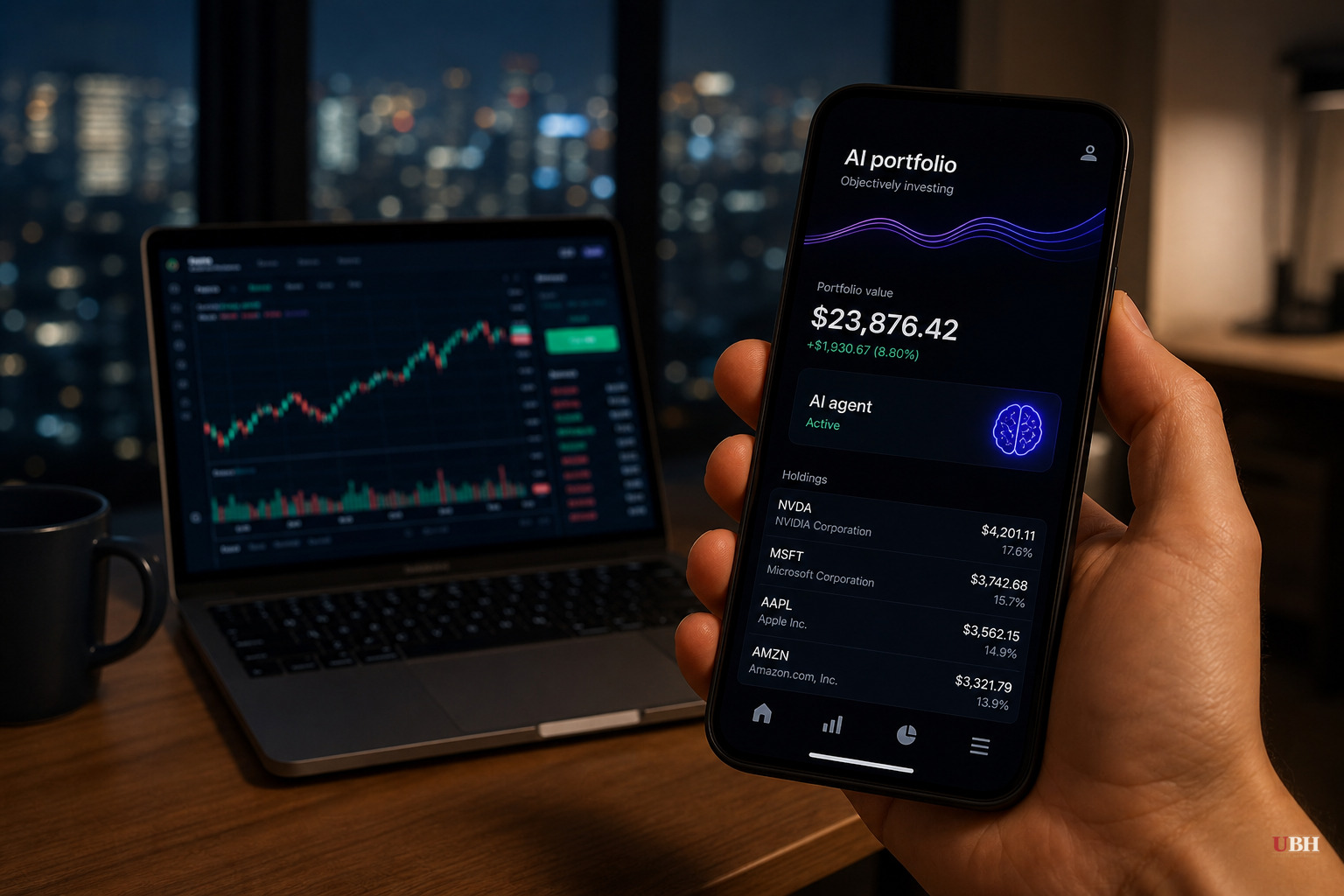
AI Agents Are Coming for Your Brokerage Account
Robinhood and Public are building AI agents that can manage retail investor portfolios with minimal human input, according to CNBC. The tools don't fully run on autopilot yet. But the industry is racing to get there.
Devin Ryan, head of financial technology research at Citizens, put it bluntly. "Effectively everybody has their own family office that is working 24/7 for them while they're awake or sleeping," he told CNBC. Ryan doesn't think this is a distant sci-fi scenario. "This isn't 10 years away. This is coming in the next few years," he said.
Ryan's vision goes beyond buying and selling stocks. He expects AI to eventually manage taxes, cash balances, borrowing, and mortgages, all tied to a person's stated financial goals, according to CNBC.
How It Works Right Now
Nobody's handing full control to a machine yet. Startup Podium Markets AI built an assistant called Ivy that scans a customer's accounts across multiple brokerages and spits out recommendations based on risk tolerance and goals. The user still has to pull the trigger.
"The AI informs, but the human decides," said Dirk Mueller-Ingrand, co-founder and CEO of Podium Markets AI, per CNBC. "The average investor still should be very much in charge of the final decision."
Robinhood took a different approach in May, opening its platform so third-party AI agents can connect directly to customer accounts, according to CNBC. Public is building similar tools in-house. Leif Abraham, Public's co-founder and co-CEO, described the shift as a break from investors researching stocks and forming their own ideas. Now, he said, "AI agents can actually execute investment strategies on your behalf."
The Volume Problem
Ryan estimates agentic finance could push transaction volumes up by at least tenfold. A retail investor trading twice a month today could end up trading 20 times a day once an agent takes over, he told CNBC. Ryan went further, predicting that by the end of 2027, the majority of trades by number on some platforms will be executed by agents rather than humans.
More trades isn't automatically good for the investor. It's good for brokerages collecting payment for order flow and for exchanges collecting fees. Whether it's good for the person whose 401(k) rollover is now getting traded 20 times a day is a separate question nobody in this reporting answered.
What Nobody's Asking Yet
Here's the obvious concern a common-sense skeptic should raise: who's liable when the AI screws up? If an agent misreads a market signal and blows up someone's retirement account overnight while they're asleep, as Ryan's own framing suggests will happen, is that the investor's fault for signing up, the brokerage's fault for building the tool, or the AI developer's fault for the model?
None of that liability structure is settled. The SEC hasn't issued specific rules governing autonomous trading agents acting on retail accounts. That's not a hypothetical gap. It's a real regulatory blind spot given how fast Robinhood and Public are moving. Firms building these tools have every incentive to downplay the risk since more automated trading likely means more revenue for the platform, not just the customer.
The fintech industry has a history of moving fast and figuring out the guardrails later, often after retail investors already got burned. High-frequency algorithmic trading on Wall Street desks has decades of institutional risk controls behind it. Handing similar tools to a random retail investor with a smartphone app is a different animal entirely.
Podium Markets AI's model, where a human still approves every trade, addresses much of that risk directly. Mueller-Ingrand's framing, that the AI should inform rather than act, is exactly the kind of guardrail a cautious build would include. If that model wins out over full autonomy, the tenfold-trading-volume prediction from Ryan may never materialize in the riskiest form people should worry about.
What's Actually Next
There's no ambiguity about the direction the industry is heading. Robinhood already opened its platform to third-party agents in May. Public is building similar tools internally. Ryan's prediction puts a real deadline on it: by the end of 2027, agent-driven trades could be the majority of activity on some platforms by trade count.
What remains unresolved is the regulatory side. No agency has published specific guardrails for AI agents executing trades on retail brokerage accounts, and CNBC's reporting doesn't mention any pending SEC rulemaking on the subject. Until that changes, the pace of adoption will be set by the brokerages themselves, not by regulators.
Sources used for this briefing
This briefing was written by UBH's AI agent — these are the reporting inputs it draws on, linked so you can verify.


