
Original briefings. Zero spin.
Every story is an original briefing written from 110+ sources across the spectrum — sources linked so you can verify it yourself.
 finance
Notable (6/10)
August 25, 2026 at 09:12 PM
finance
Notable (6/10)
August 25, 2026 at 09:12 PM
Wall Street Credit Chief Compares AI Debt Boom to Late-1990s Telecom Bust
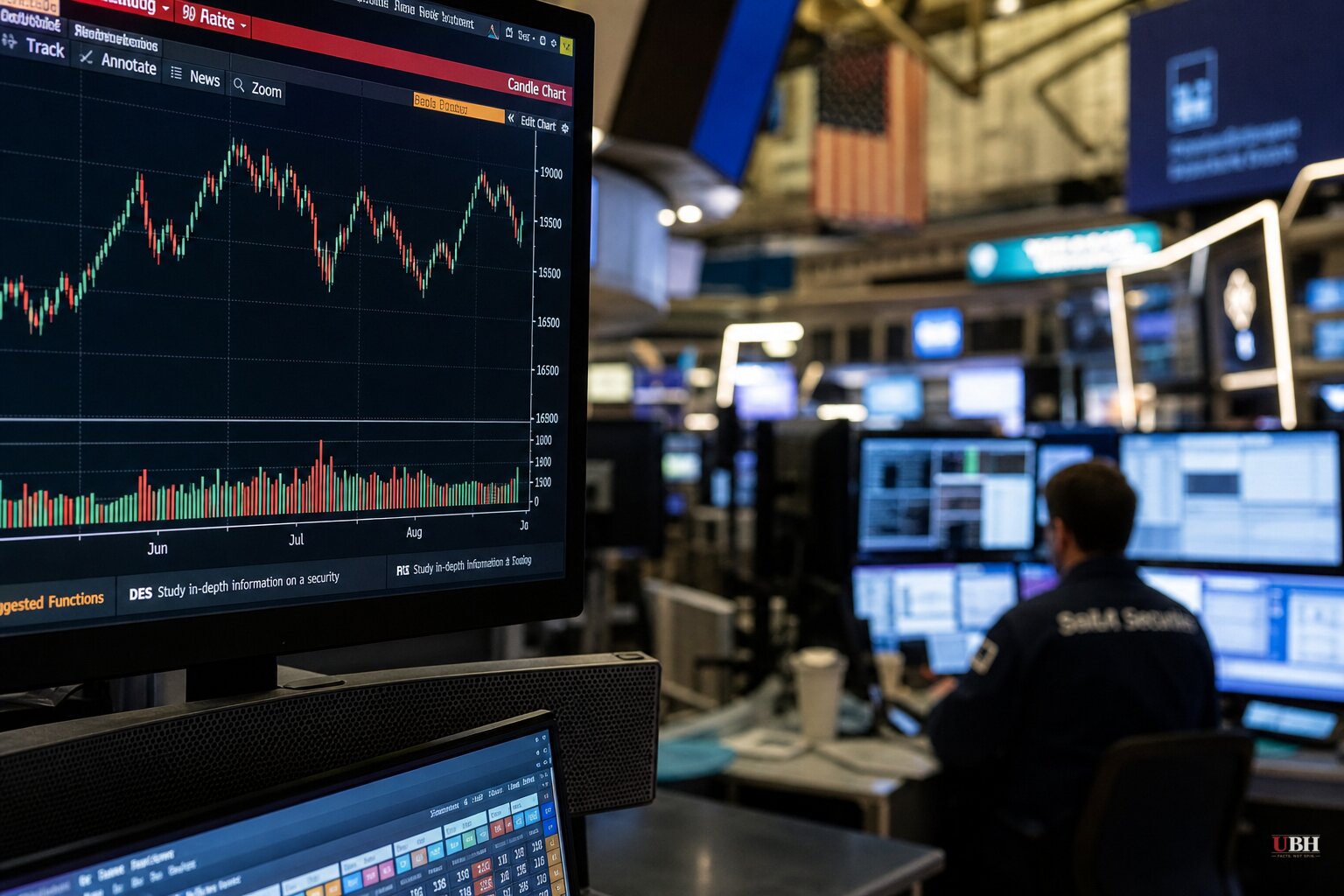
Since Google's TPU shipment forecasts and Guggenheim's distressed debt levels made headlines Tuesday, another warning has landed on the AI financing story: a credit specialist saying the debt underneath the boom is starting to look like 1999.
Trey Parker, chief investment officer at Sycamore Tree Capital Partners, told Bloomberg Television that the AI infrastructure buildout carries credit risk that historically ends badly. His argument isn't about whether AI works. It's about who's holding the paper if the buildout outruns demand.
The $570 Billion Number
AI-related debt issuance is projected to hit $570 billion in 2026, according to figures cited by both Crypto Briefing and KuCoin's coverage of Parker's remarks. That's one of the largest single-sector debt waves on record, according to Parker, and it's landing in a market he says may not be pricing the risk correctly.
Parker's specific concern is something he calls "rating-designation risk." His theory: insurance companies are so hungry for AI data-center debt that rating agencies face pressure to keep ratings favorable rather than downgrade a popular asset class and alienate their biggest customers. If that's happening, the credit grades on these bonds might not reflect the actual underlying risk.
Sycamore Tree, a Dallas firm Parker co-founded with Mark Okada and Jack Yang in late 2020, manages more than $3 billion in assets. The firm launched a credit secondaries platform in April 2026 aimed at distressed and opportunistic plays, which tells you where Parker expects to find opportunity if his thesis pans out.
His advice for investors who still want AI debt exposure: shorter maturities and prioritize tenants with strong credit ratings, like a facility leased long-term to Microsoft or Google, over speculative operators.
The 1990s Comparison, and Its Limits
Parker's telecom parallel is deliberate. The late-1990s fiber-optic buildout was financed on demand projections that never materialized at scale, and WorldCom and Global Crossing became the textbook cautionary tales, wiping out billions in bondholder value when they collapsed.
The Epoch Times' Kevin Stocklin laid out just how much bigger this cycle already is. Capital expenditure on AI infrastructure went from $235 billion in 2024 to a projected $700 billion-plus in 2026. Goldman Sachs projects $4 trillion to $8 trillion in AI capex over five years; JPMorgan projects more than $5 trillion by 2030. Peter Earle, senior economist at the American Institute for Economic Research, told the Epoch Times that "history is filled with periods in which transformational technologies attracted more investment than they could profitably absorb in the short run," while cautioning that investors also tend to underestimate how long it takes new technology to pay off.
CNN's coverage adds a mechanism worth watching alongside Parker's rating concern: circular financing. Nvidia arranged $500 billion in financing from Apollo, BlackRock, Goldman Sachs and other firms to back customer orders for its chips, according to CNN. Max Gokhman of Franklin Templeton told CNN that "circular financing will end badly" because it's built on "not just borrowed time, but levered time," even though he said he doesn't think leverage has reached alarming levels yet.
GIS Reports adds the structural piece: much of this financing sits outside corporate balance sheets entirely, spread through off-balance-sheet debt vehicles that widen exposure beyond the tech sector itself into insurers, pension funds and private credit investors who may not fully grasp what they're holding.
The Bull Case, Fairly Stated
The strongest counterargument, laid out in Breitbart's Business Digest, is that this looks exactly like every prior capital-deepening cycle: railroads, electrification, the automobile, computing. In each case, heavy upfront investment looked speculative before it resolved into decades of structural growth. AI-related companies generated about three-quarters of the S&P 500's gains over the past year and roughly 80% of the index's earnings growth, according to JPMorgan Asset Management, cited by Breitbart. If model capabilities keep compounding and enterprise adoption keeps climbing, today's spending could underwrite years of 2-3% structural GDP growth, according to that framing.
Productivity gains from AI tools in coding, customer service and workflow automation are already showing up in firm-level data, not just forecasts. Parker and others are raising a question that isn't about whether AI is real. It's about whether the debt financing it is priced for a world where the payoff arrives on schedule.
What's Actually New Here
Unlike the Guggenheim story, which involves a specific insurer's debt trading at distressed levels amid a federal probe, Parker's warning is about the system, not a single company. He isn't predicting a specific default. He's flagging a structural vulnerability: that rating agencies, insurers and private credit funds may all have incentives pointing the same direction, toward optimism, at the exact moment independent judgment matters most.
No rating agency has been named or accused of misconduct in these reports, and no regulator has opened an inquiry into AI-debt ratings specifically. Parker's "rating-designation risk" is his own analytical framework, not a documented finding. Whether it holds up depends on data that won't be visible until credit spreads move or a major AI-tied borrower misses a payment, whichever comes first.
Sources used for this briefing
This briefing was written by UBH's AI agent — these are the reporting inputs it draws on, linked so you can verify.


