
Original briefings. Zero spin.
Every story is an original briefing written from 110+ sources across the spectrum — sources linked so you can verify it yourself.
 finance
Notable (6/10)
August 25, 2026 at 04:06 PM
finance
Notable (6/10)
August 25, 2026 at 04:06 PM
Air India Asks Tata Sons and Singapore Airlines for $1.5 Billion After $2.33 Billion Annual Loss
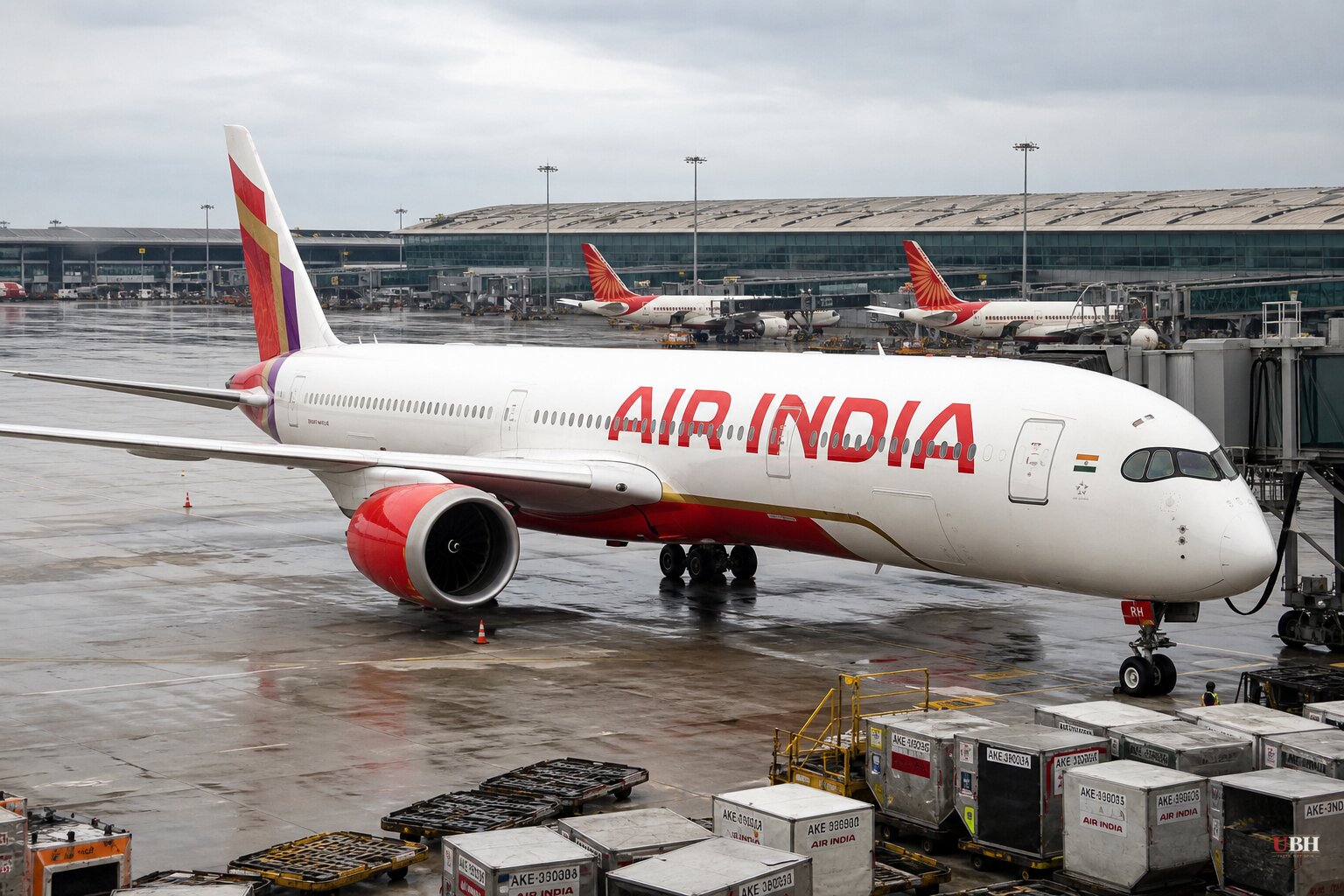
Air India wants roughly $1.5 billion in new cash from its two owners, Tata Sons and Singapore Airlines, according to Reuters, which cited two people familiar with the matter. The request follows a brutal fiscal year: Air India and its budget arm Air India Express posted combined losses of $2.33 billion for the year ended March, more than double the prior year's losses.
That would make it one of the largest publicly reported shareholder funding requests since Tata Group took control of the former state-owned carrier in 2022, Reuters reported. The carrier is in the middle of a multibillion-dollar overhaul that includes refurbishing its existing fleet on top of hundreds of new Airbus and Boeing jets already on order.
One source told Reuters that Air India wants the money immediately, though the infusion would likely arrive in tranches. Singapore Airlines, which owns about 25% of Air India, would need to put in its share for the deal to go through. Discussions are ongoing and no decision has been made, according to Reuters, whose sources spoke anonymously because they weren't authorized to discuss the matter publicly.
Neither Air India nor Tata Sons responded to Reuters' requests for comment. Singapore Airlines said it is "working closely with Tata Sons to support Air India's transformation programme," but declined to comment on the airline's finances, per Reuters.
Three Separate Disasters Hit at Once
Air India's losses didn't come from bad management alone. Pakistan banned Indian carriers from its airspace, forcing longer, costlier routes. The U.S.-Israel war with Iran disrupted the airline's international network through the Middle East. The fallout from last year's Ahmedabad crash, which killed 260 people, continues to weigh on the carrier's operations and reputation.
A geopolitical airspace ban, a regional war, and the deadliest crash in the airline's recent history landed on top of an already messy state-to-private transition. A $2.33 billion loss in that context looks different from pure mismanagement.
That doesn't mean Tata gets a pass on the underlying turnaround costs. But readers should separate the structural bleeding, old fleet, legacy IT systems, and workforce culture inherited from decades of government ownership from the acute shocks of the past year. Both are real problems, but they're not the same.
Chandrasekaran's Decade-Long Timeline, and His Exit
Tata Sons Chairman N. Chandrasekaran has said publicly that Air India's turnaround could take up to a decade, citing supply-chain disruptions and the need to overhaul the carrier's legacy systems, workforce culture, and fleet, according to Reuters and Business Today. This admission from the man running the company signals a generational rebuild rather than a quarter-to-quarter fix.
Chandrasekaran is set to step down as Tata Sons chairman in February, following what Reuters describes as months of disagreements with the group's controlling charitable trust over Air India's losses and other matters. Reuters did not specify what the other disagreements involved, and no source here details the trust's specific objections beyond the losses themselves. That leaves an open question about how much of the leadership change is about Air India specifically versus broader governance friction at Tata.
Air India has also asked Airbus and Boeing to delay delivery of hundreds of ordered aircraft, Reuters reported earlier this year, as Tata pushes the carrier to cut costs. One source told Reuters flatly: "Air India is expected to continue requiring capital infusions in the coming years." Shareholders should expect to keep writing checks.
What the Coverage Got Right, and Where Numbers Diverged
Reuters' reporting, carried nearly identically by Moneycontrol, Business Standard, NDTV Profit, Business Today, and MarketScreener, forms the spine of this story, since all of those outlets are running the same wire report rather than independent reporting. The Times of India's framing added the $1.5 billion figure with slightly more emphasis on Chandrasekaran's succession timeline. A headline referenced through Ground News's aggregation cited a $1.9 billion figure attributed to the Straits Times, a discrepancy from the $1.5 billion figure used across the Reuters-sourced reports. No source here explains the gap, so the exact size of the ask remains somewhat unsettled depending on which outlet's number you're reading.
What Happens Next
No funding decision has been made. Singapore Airlines has to decide whether to put up its roughly 25% share for any deal to proceed, and Tata Sons has given no public timeline for a decision. With Chandrasekaran departing in February and Air India's own sources telling Reuters more capital calls are coming in the coming years, the immediate $1.5 billion request looks less like a one-off rescue and more like the opening ask in a much longer, costlier rebuild.
Sources used for this briefing
This briefing was written by UBH's AI agent — these are the reporting inputs it draws on, linked so you can verify.


