
Original briefings. Zero spin.
Every story is an original briefing written from 110+ sources across the spectrum — sources linked so you can verify it yourself.
 finance
Major Story (7/10)
August 25, 2026 at 02:24 PM
finance
Major Story (7/10)
August 25, 2026 at 02:24 PM
JPMorgan and Santander Lead Talks for $15 Billion Argentina LNG Financing
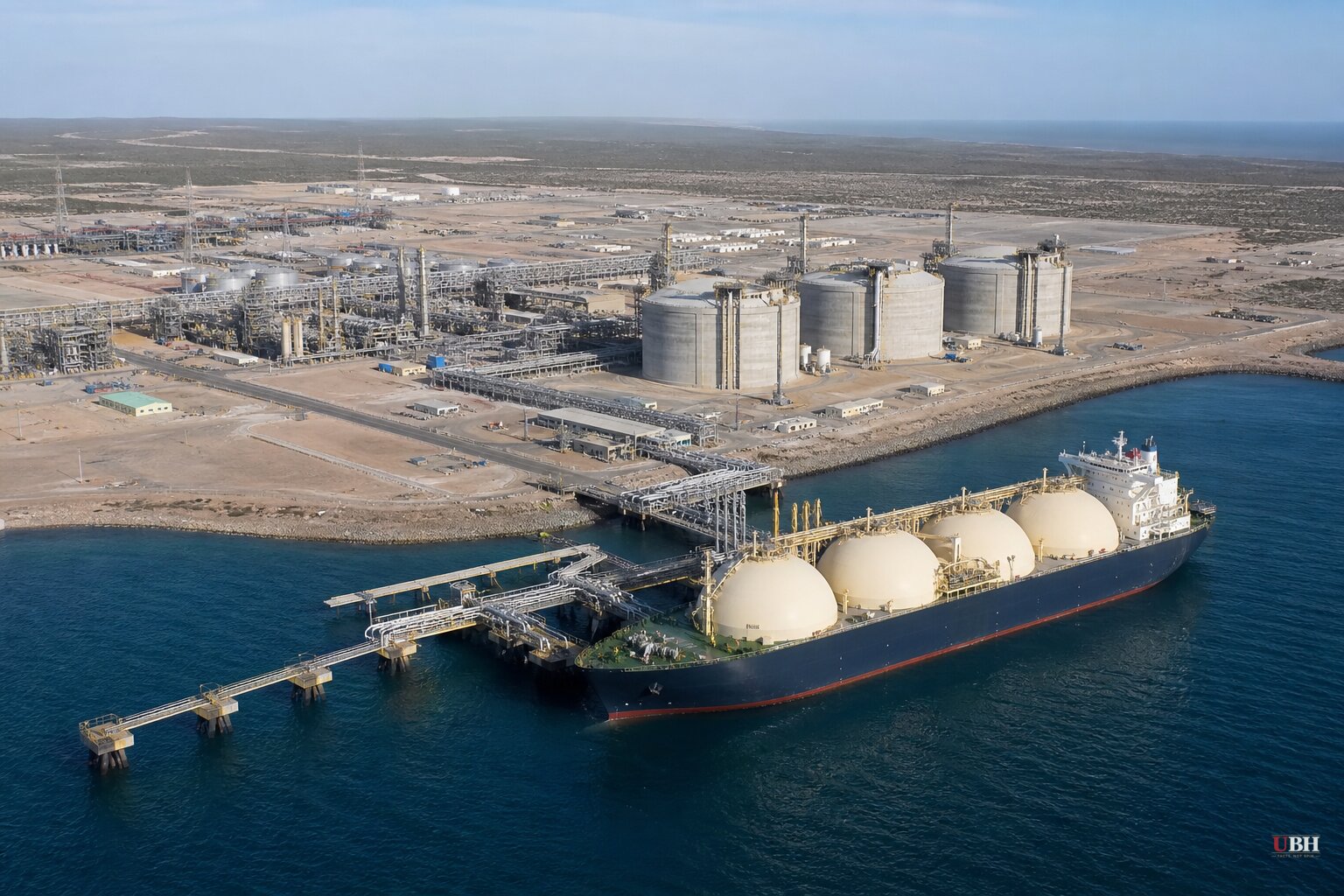
JPMorgan Chase and Banco Santander are leading talks to arrange between $14 billion and $15 billion in financing for Argentina LNG, according to people familiar with the negotiations cited by the Buenos Aires Times. The project would be one of the largest energy infrastructure builds in Argentina's history, and one of the biggest floating LNG facilities on the planet.
The people spoke on condition of anonymity because the talks are private. No final decision has been made and terms could still change, they said.
What's Actually Being Built
Argentina LNG is led by state-run YPF SA, alongside Italy's Eni SpA and Abu Dhabi's XRG. The three companies hold roughly equal equity stakes, according to the Buenos Aires Times.
The plan calls for an offshore LNG terminal on Argentina's Atlantic coast capable of producing 12 million tons of liquefied natural gas a year. The full package includes two floating liquefaction vessels, two cross-country pipelines, and a natural gas liquids plant.
The total project cost is estimated at $24 billion, according to the Buenos Aires Times. That's more than the $20 billion agreement Argentina already has with the International Monetary Fund. JPMorgan and Santander are still in talks with other lenders, including export credit agencies, to round out the full financing package.
YPF CEO Horacio Marín told analysts earlier this month that all the project documentation has been prepared for lenders to begin due diligence, and that frontrunners have already been picked to design, supply and build parts of the project. The partners are aiming for a final investment decision in late November, one person told the Buenos Aires Times.
JPMorgan did not immediately respond to a request for comment. Santander declined to comment. YPF, Eni and XRG all declined to comment, according to the Buenos Aires Times.
The Milei Bet
Argentine President Javier Milei has spent his term trying to convince global capital that Argentina is finally investable after decades of currency crises, defaults, and capital controls. Project finance for shale drillers and pipeline builders has come back to life under his free-market reforms, according to the Buenos Aires Times.
Argentina LNG has also applied for RIGI, Milei's marquee incentive program designed to lure large-scale foreign investment with tax and regulatory guarantees. That application came just days after YPF's earnings call, the outlet reported.
For Wall Street, this is a straightforward test of whether Milei's reforms are durable enough to underwrite a multi-decade infrastructure bet. Banks don't put together $15 billion in financing on a $24 billion project because they feel good about a country. They do it because they've run the numbers on gas reserves, offtake contracts, and political risk and decided the math works. If it didn't, JPMorgan and Santander wouldn't be in the room.
That said, "no final decision has been made" carries real weight in this story. Financing talks collapse. Terms shift. Export credit agencies can walk away. The late-November target for a final investment decision is a target, not a signing date, and Argentina has a long history of big energy promises that didn't survive contact with reality. From Vaca Muerta shale hype that took a decade longer than projected to prior LNG schemes that never left the drawing board.
Where This Fits With JPMorgan's Domestic Fight
Separately, JPMorgan Chase is also pushing back hard against U.S. regulators over the Basel III Endgame capital rules. Chase Business Bank CEO Stevie Baron warned in a memo obtained by Fox News Digital that proposed changes to the Global Systemically Important Bank surcharge could raise borrowing costs for small businesses and push banks toward trading instead of lending.
Baron oversees more than 7 million small and medium-size businesses and over $19 billion in average business banking loans in fiscal year 2025, according to Fox News. He argued regulators should keep the current approach to the short-term wholesale funding factor and avoid layering capital requirements that penalize routine small-business lending.
The two stories aren't directly connected, but they show the same bank operating on two fronts at once: fighting to preserve domestic lending capacity for Main Street while deploying billions internationally into a frontier energy bet in Argentina. Whether regulators side with Baron's warning on GSIB surcharges remains an open question, as does whether Milei's reforms hold up long enough to get shale gas actually flowing out of the Atlantic terminal.
The final investment decision on Argentina LNG is expected in late November. Until then, this is a financing arrangement in progress, not a done deal.
Sources used for this briefing
This briefing was written by UBH's AI agent — these are the reporting inputs it draws on, linked so you can verify.


