
Original briefings. Zero spin.
Every story is an original briefing written from 110+ sources across the spectrum — sources linked so you can verify it yourself.
 finance
Notable (5/10)
Event date: August 21, 2026
finance
Notable (5/10)
Event date: August 21, 2026
Investors Pour $51 Billion Into T-Bill ETFs While Treasury Expands Bond Buybacks
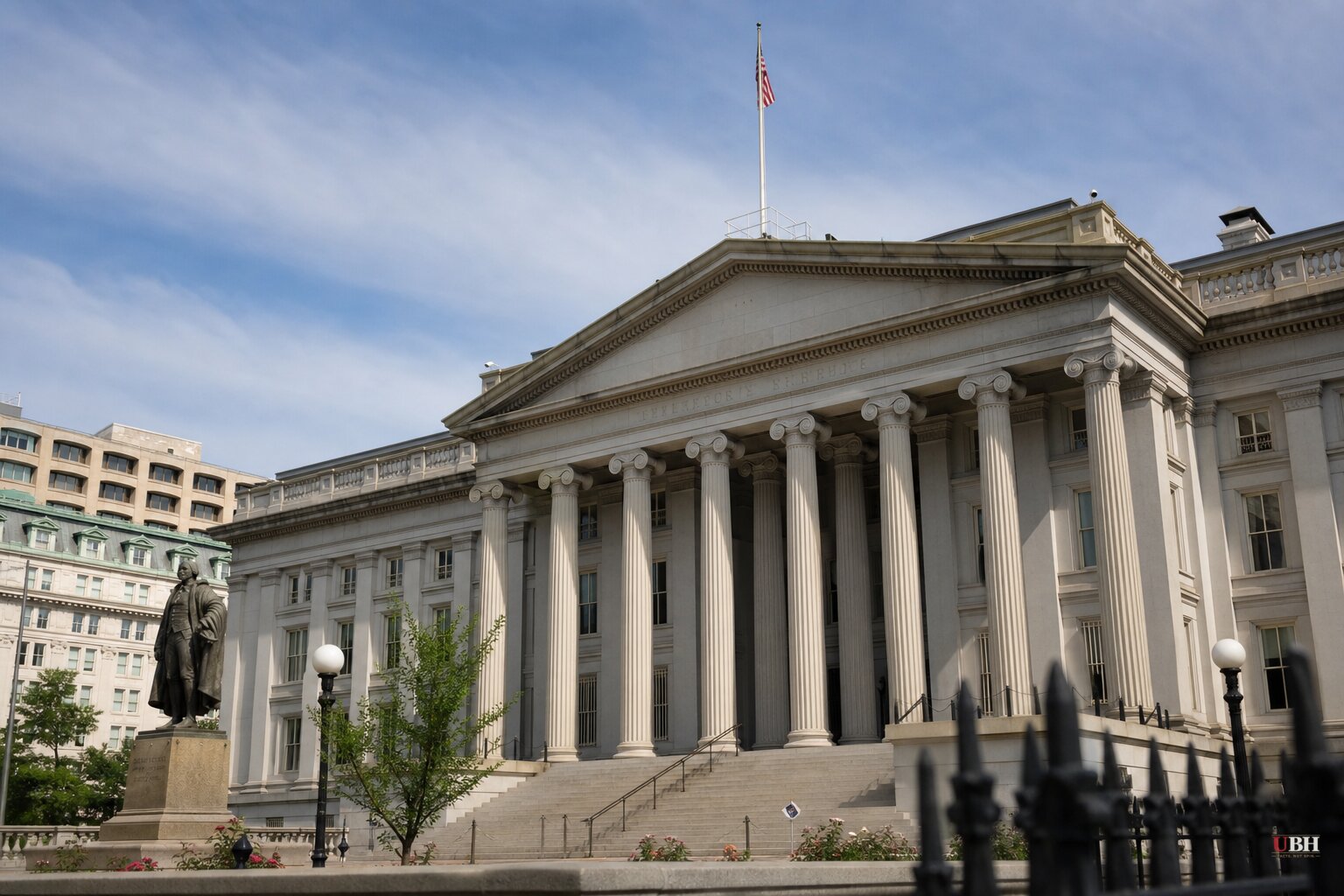
Cash is piling into the safest, shortest corner of the bond market. Treasury bill ETFs, funds that hold government debt maturing in three months or less, have pulled in roughly $51 billion in inflows, according to Crypto Briefing. BlackRock's iShares 0-3 Month Treasury Bond ETF, ticker SGOV, accounts for most of it: about $49 billion in net inflows, pushing its assets under management above $104 billion.
The appeal is simple. Funds like State Street's SPDR Bloomberg 1-3 Month T-Bill ETF (BIL) are yielding around 3.5% on a 30-day SEC basis with almost no price volatility, according to Crypto Briefing. Vanguard has also jumped in with its own 0-3 Month Treasury Bill ETF (VBIL). For corporate treasurers and advisors parking client cash, that's Treasury-level credit quality behaving like a savings account.
At the same time, the long end of the market tells a messier story depending on which week you look at. Crypto Briefing reports the iShares 20+ Year Treasury Bond ETF (TLT) has seen $15 billion in outflows since September 2024. But a separate weekly snapshot from etfaction shows TLT was actually the single biggest asset-gatherer of that particular week, pulling in $5.6 billion, while the intermediate-duration iShares 7-10 Year Treasury Bond ETF (IEF) shed $4.1 billion. Long-term bond funds broadly still underperformed, falling 0.74% for the week even as they attracted $1.9 billion in new money, per etfaction. Those two data points aren't contradictory. They're describing different time horizons: a multi-year drawdown in TLT and a single week where duration bets got a bid.
Why the Fed and Treasury are both leaning short
The Federal Reserve has been doing its own version of this rotation. According to the Epoch Times, the Fed's Treasury bill holdings have surged 130% since the start of 2026, from about $233 billion to nearly $538 billion by the week ending August 20. Its holdings of longer notes and bonds, by contrast, grew just 1.5% over the same period. The Fed's overall balance sheet has climbed back above $6.74 trillion, the highest since March 2025, after policymakers announced in December that they would stop shrinking holdings and let long-dated bonds run off without replacement.
The Treasury Department has its own reasons for favoring short-term issuance. From January through July it issued roughly $413 billion in net new T-bills, and Goldman Sachs estimates that figure could top $800 billion by year's end, according to the Epoch Times. Treasury has also said it plans to borrow more than $1.3 trillion in the coming months, with $739 billion expected in privately held net marketable debt for the July-September quarter and $628 billion for October-December, based on its August 3 refunding estimates.
The buyback fight
Long-term yields have not been cooperating with anyone's plans. On August 13, the Treasury sold $25 billion in 30-year bonds at 5.216%, the highest rate since 2001, according to the Epoch Times. Treasury Secretary Scott Bessent responded by expanding the size of the department's buyback operations for bonds with 10 to 30 years remaining until maturity, raising the per-operation cap from $2 billion to at least $4 billion starting September 9.
Breitbart's Business Digest pushed back hard on characterizations of that move as market manipulation or a hidden form of quantitative easing. The buyback program started under the Biden administration's Treasury Secretary Janet Yellen, Breitbart noted, and a genuine Treasury buyback just retires old bonds while issuing new ones. It doesn't create money the way Fed purchases do. Breitbart also argued that rising 30-year yields reflect economic strength rather than the "investor anxiety" framing used elsewhere, though that's a contestable read given the same week saw federal debt cross $40 trillion for the first time and yields hit a 19-year high.
Both things can be true at once. Bessent has openly said he wants to bring down long-term borrowing costs and mortgage rates tied to them, and market watchers cited by the Epoch Times see the buyback expansion as an attempt to prevent yields from rising further, since higher long rates flow straight into credit card, auto, and home loan costs. Whether that's smart debt management or an early warning sign about demand for U.S. government debt is a live argument, not a settled one.
What's driving the T-bill rush
Yield without duration risk explains much of the T-bill stampede. JoAnne Bianco of BondBloxx told a Zacks/TradingView podcast that bond yields are now high enough to potentially outperform stocks on a risk-adjusted basis, and that short-to-intermediate maturities offer the best balance right now. That's a portfolio-construction argument, not a panic signal.
There's also a broader passive-investing story underneath all of this. InvestmentNews reported that ETFs overall pulled in more than $1 trillion in the first half of 2026, on pace to top $2 trillion for the year, with roughly half of that going into low-cost, core passive funds rather than flashier active or income strategies. Allison Bonds Mazza of State Street Investment Management pointed to the Treasury Department's selection of State Street's SPYM as the default fund for the new Trump Accounts program as one factor pulling a new generation of savers into passive investing.
What remains unresolved is whether the long-bond selloff is a temporary supply glut colliding with AI-driven corporate debt issuance from hyperscalers like Amazon, Alphabet, and Meta, as Bianco suggested on the BondBloxx podcast, or something more structural about investor confidence in long-dated U.S. debt. The next major data point will be how the market receives Treasury's expanded buyback operations once they begin September 9, and whether the 30-year yield holds near its 5.3% high or retreats.
Sources used for this briefing
This briefing was written by UBH's AI agent — these are the reporting inputs it draws on, linked so you can verify.


