
Unbiased headlines. Facts, not spin.
Unbiased Headlines is an independently owned news organization. We bring you the facts, not opinions, written fresh from 110+ named sources. Sources linked so you can verify it yourself.
 finance
Major Story (8/10)
Wall Street Claws Back Part of AI Rout Friday: Nasdaq Up 1.1%, S&P 500 Still Down 2.7% on the Week
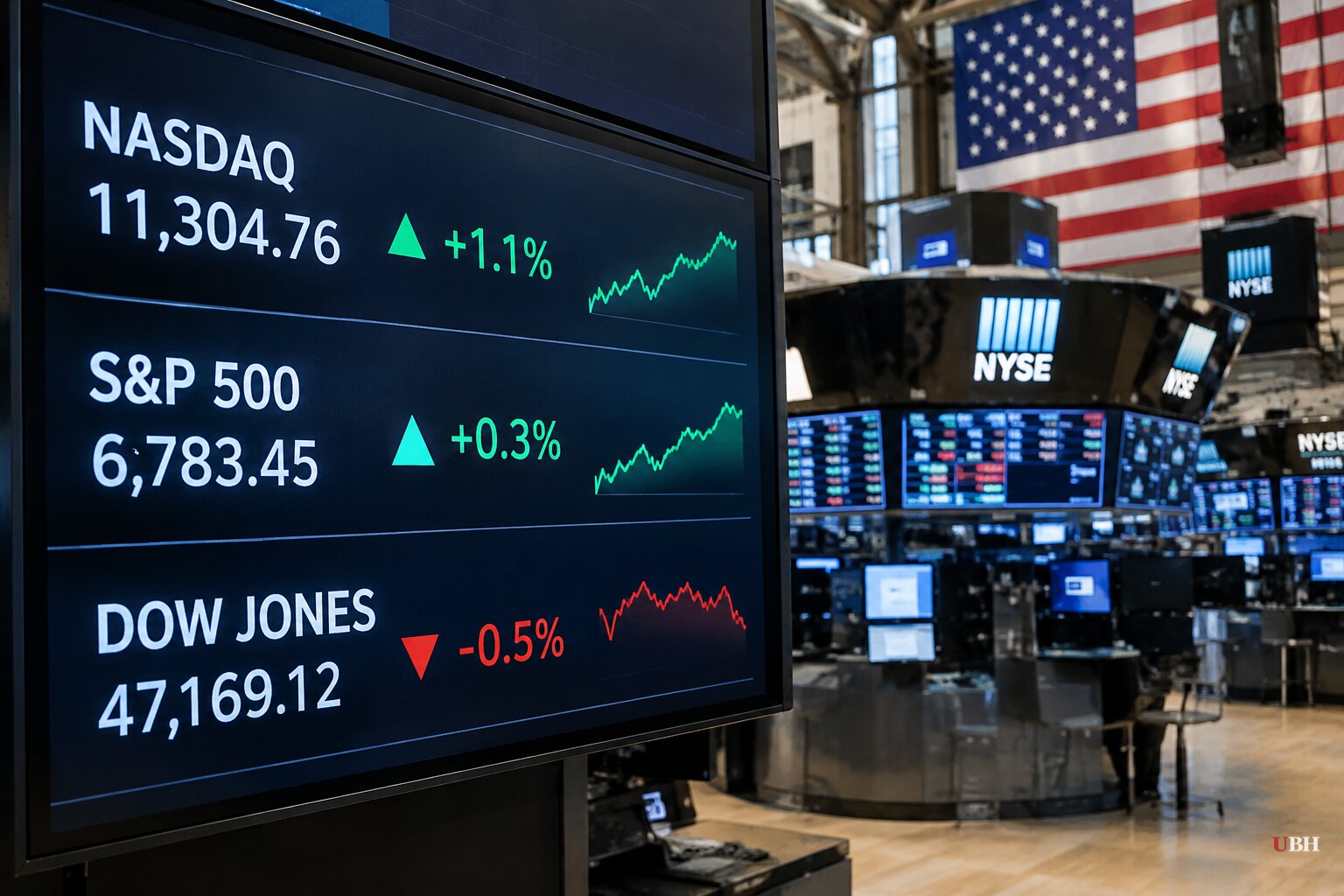
Since Thursday's rout, which erased an estimated $2 trillion to $3 trillion in U.S. market value depending on the measure, Wall Street has recovered only a slice of the damage. The Nasdaq closed up 1.1% on Friday, Nov. 6, and the S&P 500 gained 0.3%. The Dow fell roughly 0.5%, after dropping 1,800 points a day earlier.
The S&P 500 still finished the week down about 2.7%. That is its worst week since April 2025, when President Trump unveiled his tariffs.
The bounce was concentrated in the beaten-down names
Chip and AI-infrastructure stocks led the rebound. AMD closed 11.0% higher. Intel rose 7.8%, Micron 5.2% and Nvidia 2.8%. CoreWeave gained 6.1% and Iren jumped 20.0%.
SpaceX shares rose 8.6%. Both SpaceX and Nvidia had fallen roughly 9% on Thursday, and Nvidia's drop was its worst day since January 2025.
The Nasdaq's gain at the close was smaller than the roughly 1.7% midday advance. Treasury yields rose after the jobs data and stopped the equity rally from building.
A strong jobs report cuts both ways
The economy added 165,000 jobs in October, well above economist expectations, and unemployment dipped to 4.1%. Yields climbed on the print.
Odds of a quarter-point Fed hike in December rose to 76.8% after the report, according to CME Group's FedWatch tool. Another reading put the odds near 80% during the morning, up from 73% before the data.
Jim Reid, head of global macro and thematic research at Deutsche Bank, said the AI fears raised new questions about whether the Fed would hike again, but that a December hike "for now" is still considered likely.
Seema Shah, chief global strategist at Principal Asset Management, said the report "reinforces the distinction between a market correction and an economic downturn," adding that an AI-led correction does not have to mean broader deterioration in the economy.
Asia and Europe took the worst of Friday
The damage landed overseas before the U.S. open. South Korea's Kospi fell more than 8% in early trading, triggering a halt, and closed down 6%. The Nikkei 225 also closed down about 6%, which put it in bear market territory. Taiwan's Taiex ended 4.5% lower.
SK Hynix and Samsung fell 14% and 11% on the day. Morningstar's tally has the two down roughly 19% and 13% since the election.
Europe, with fewer tech names, fell more modestly. The Stoxx 600 closed down about 1%, France's CAC 40 fell 0.8% and Germany's DAX 1.9%. ASML, down 6.6% Thursday, was up 2.7% by Friday afternoon.
The political trigger is still unresolved
Investors tied the selloff to the Democratic sweep of the House and Senate and to voter hostility toward data centers. Moratoriums on construction were effectively on the ballot in several states. Sen. Bernie Sanders has called for a national moratorium on building them.
Neil Wilson, analyst at Saxo Markets, said the fear is "a total momentum unwind as Democrats pace the frontier and kibosh data centre build-out," though he added the selloff looked overdone.
Not everyone reads the election that way. Ben Barringer, head of technology research at Quilter Cheviot, said it is "too easy to say that the Democrats will be bad for datacentres." He expects a pause in the buildout and delayed approvals. But he pointed to comments from Texas governor-elect Gina Hinojosa suggesting a more pragmatic approach in which resources are "more fairly allocated."
The stakes reach well beyond Wall Street. A Columbia Business School study estimates AI-related infrastructure investment drove nearly all observed U.S. GDP growth by the end of last year. The economy grew 3.4% in the July-September quarter, and Americans hold AI-linked shares through 401(k)s and pensions.
Elon Musk spent nearly half a billion dollars backing Republicans, a record for election spending, and moved his residence to Texas. Shares in his companies fell sharply after the election. NPR reported that investors fear he and his companies could face Democratic scrutiny once the new Congress is seated in January.
No legislation to restrict data center construction has been identified in the sources. The first concrete tests are the Fed's December meeting, where a rate hike is priced as likely, and the January seating of Congress, when the data center agenda starts to take legislative shape.
Sources used for this briefing
6 links from 6 independent newsrooms (syndicated copies of the same report count once)
These are the sources it draws on, linked so you can verify.


