
Unbiased headlines. Facts, not spin.
Unbiased Headlines is an independently owned news organization. We bring you the facts, not opinions, written fresh from 110+ named sources. Sources linked so you can verify it yourself.
 finance
Major Story (8/10)
FinCEN Bars US Banks From Processing MEXC Transfers, Alleging at Least $16 Billion in Illicit Transactions
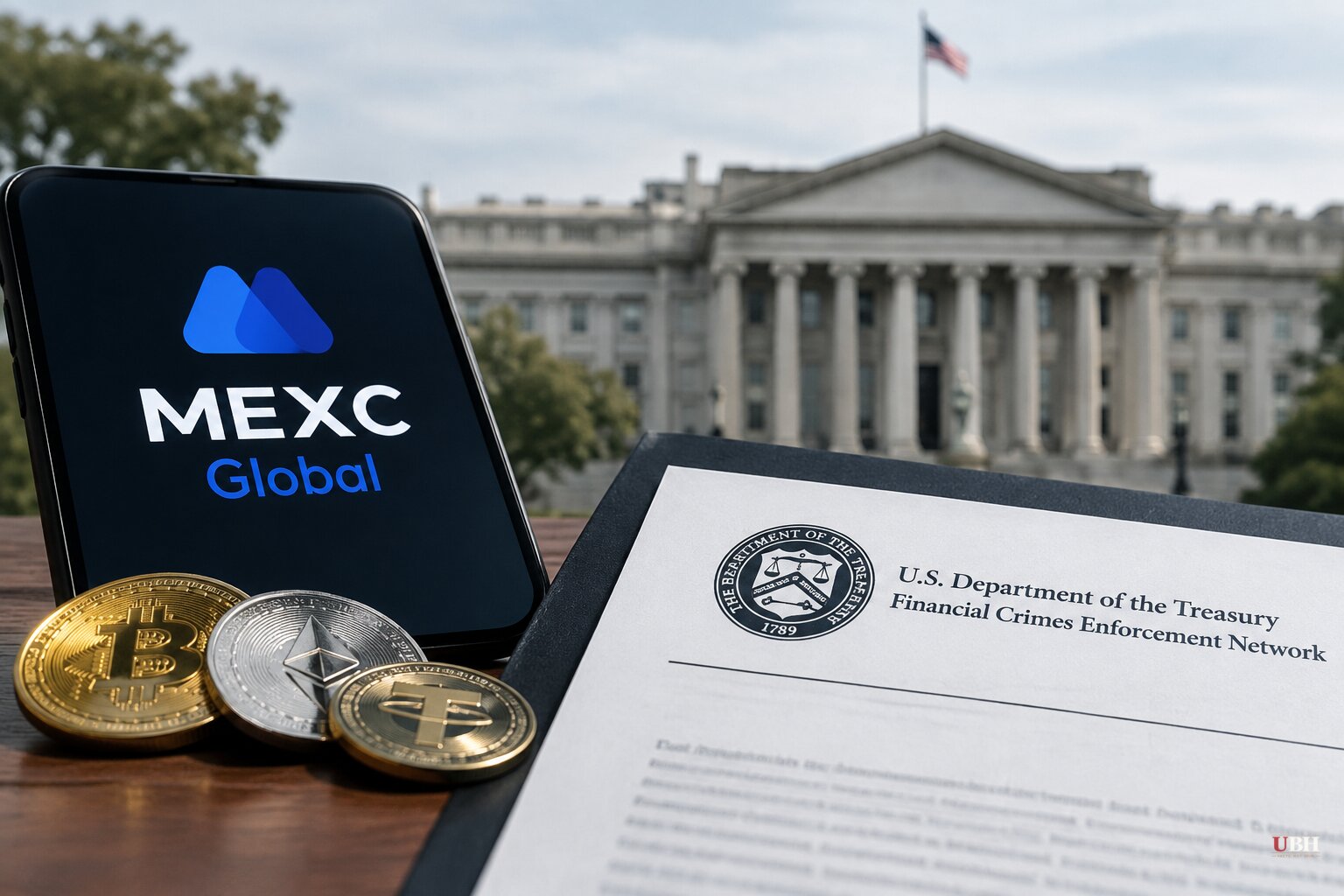
Since Treasury launched Operation Economic Outcast in August, and after this week's sanctions on ship-registry networks tied to Iranian oil, the campaign has now reached a crypto exchange. On Friday, Nov. 6, the Financial Crimes Enforcement Network (FinCEN) issued an order barring US financial institutions from processing funds transfers to or from MEXC Global.
The order was issued under Section 9714(a) of the Combating Russian Money Laundering Act. It takes effect 30 days after it is published in the Federal Register. Institutions that violate it could face civil or criminal penalties.
This is not an OFAC sanctions designation. It is a FinCEN measure that cuts the exchange's access to US banks and payment channels. FinCEN named MEXC a "primary money laundering concern" in connection with Russian illicit finance.
What FinCEN alleges
FinCEN says MEXC processed at least $16 billion in transactions associated with illicit activity between May 2021 and May 2026. The agency ties that volume to sanctions evasion by Iran, Russia and North Korea, along with cybercrime.
The agency's breakdown for Russia:
- Nearly $1.5 billion linked to Russian sanctions evasion.
- $232 million in direct transactions with entities sanctioned by the US, European Union and United Kingdom.
- Continued dealings with Garantex and its successor Grinex as recently as June 2026. Garantex was sanctioned in April 2022.
- At least $26 million benefiting the sanctioned A7 network, and nearly $200 million connected to A7A5, the stablecoin the network uses to move money.
The breakdown for Iran:
- Roughly $1 billion in direct transfers with more than 40 Iranian crypto exchanges, some of them sanctioned.
- About $22 million in transactions benefiting Iran's central bank and the Islamic Revolutionary Guard Corps, including its Qods Force.
The $16 billion is FinCEN's figure for transaction volume it associates with illicit finance. It is an agency finding in an administrative order, not a court judgment or a criminal indictment.
The exchange and its stated controls
According to FinCEN, MEXC was founded in 2018, processes more than $1 billion in daily transactions, holds around $5 billion in reserves and lists more than 3,000 tokens. DefiLlama put its total assets at about $4.48 billion as of Friday.
MEXC's own policies prohibit activity involving sanctioned jurisdictions, and it bars users in places such as Iran and North Korea. FinCEN says that is not what happened in practice. The agency said "severe deficiencies" in the exchange's anti-money-laundering and know-your-customer controls let prohibited transactions continue.
MEXC had not responded to Cointelegraph's request for comment by publication. Its response to the FinCEN findings has not been made public.
Treasury's stated rationale
Treasury Secretary Scott Bessent framed the move as part of the Iran pressure campaign. "Financial institutions cannot have it both ways: Either you support the Iranian regime, or you have access to the U.S. financial system," he said.
Bessent added that Treasury "will continue to sever the Iranian regime's economic lifelines and thwart its desperate attempts to circumvent U.S. sanctions using digital assets."
The MEXC order follows Treasury's move last month against Russia's A7 Network. The department designated it a transnational criminal organization and proposed cutting its front companies off from US finance. It flagged more than $179 billion in transactions through the A7A5 token, much of it routed through Garantex and Grinex.
What happens next
The 30-day clock does not start until the order is published in the Federal Register. After that, US banks and payment processors will have to stop handling transfers involving MEXC.
The order does not stop MEXC from operating outside the US financial system. It also leaves open how the exchange will answer FinCEN's findings, and whether it will challenge the order or change its compliance controls before the effective date.
Sources used for this briefing
7 links from 7 independent newsrooms (syndicated copies of the same report count once)
These are the sources it draws on, linked so you can verify.


