
Unbiased headlines. Facts, not spin.
Every story is an unbiased news briefing written from 110+ sources across the spectrum — sources linked so you can verify it yourself.
 economy
Notable (5/10)
August 4, 2026 at 02:53 PM
economy
Notable (5/10)
August 4, 2026 at 02:53 PM
Walgreens Closes More Stores in New York, New Jersey and Ten Other States This Year
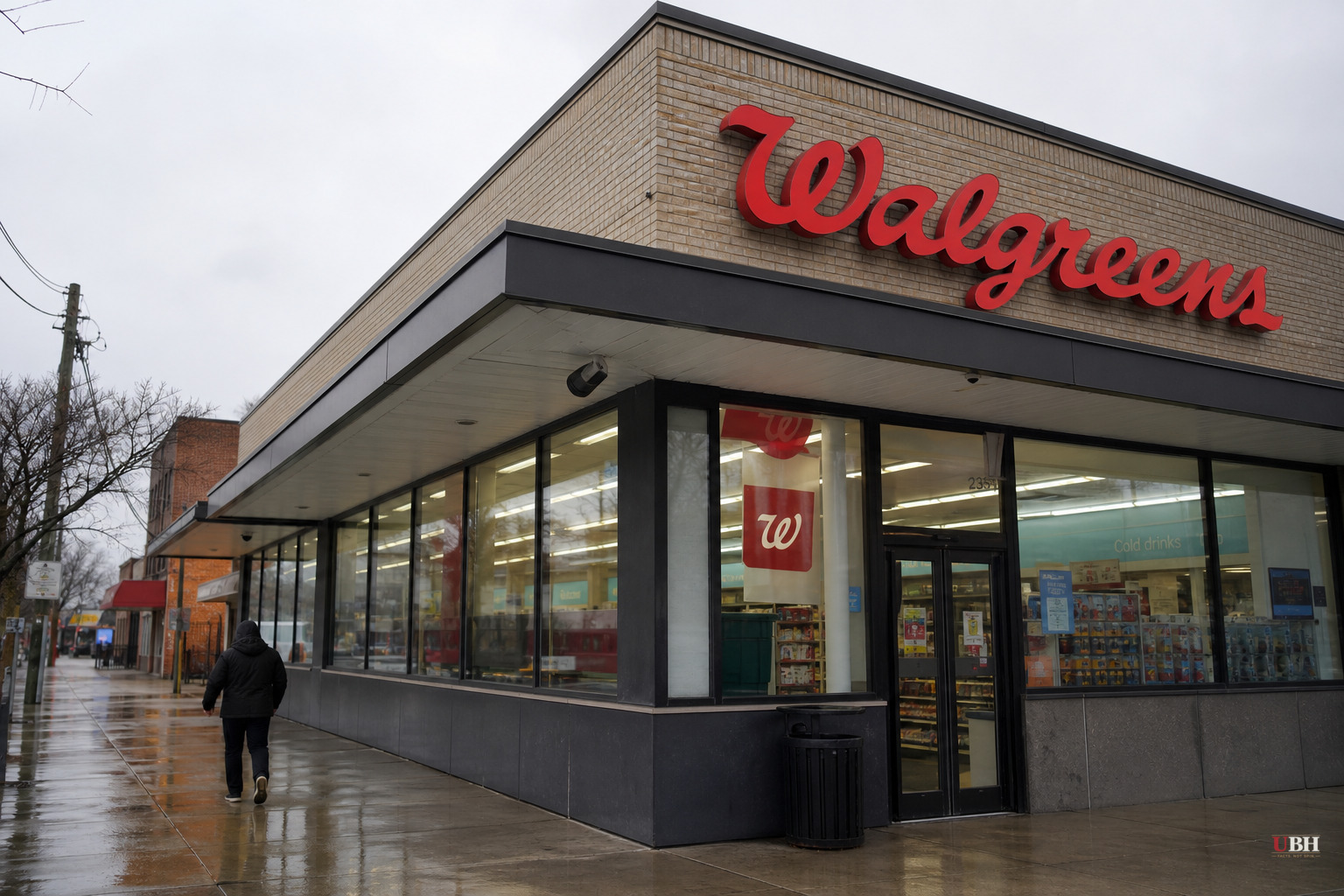
Walgreens has closed stores in at least a dozen states so far this year, including two locations in Bergen County, New Jersey, and one in Brooklyn, according to the New York Post.
The closures also hit California, Florida, Illinois, Missouri, South Carolina, Texas, Virginia, Washington State, Washington, D.C., and Wisconsin.
This isn't a sudden collapse. It's the continuation of a plan Walgreens announced back in October 2024, when the Chicago-based pharmacy chain said it would close roughly 1,200 underperforming stores over three years, including 500 in 2025 alone, as part of an effort to cut $1 billion in costs.
That original plan was aggressive. One in four Walgreens stores were losing money, company executives told analysts at the time.
The math behind that is simple. Weak retail sales and low pharmacy reimbursement rates, meaning the amount insurers and government programs pay pharmacies for filling prescriptions, have squeezed margins across the industry. Walgreens wasn't unique in facing this problem, but it had more unprofitable stores than it could keep carrying.
The Plan Got Smaller After Going Private
Walgreens is no longer a public company. Private equity firm Sycamore Partners took it private last year, and since then, the closure plan has actually shrunk.
Walgreens now expects to close fewer than 100 stores in 2026, according to Inc.com. That's a fraction of the original pace laid out in 2024.
Why the pullback isn't fully explained in available reporting, but private ownership changes the calculus. Sycamore doesn't answer to quarterly earnings calls or public shareholders demanding immediate cost cuts the way a publicly traded Walgreens did. That can mean more patience for underperforming stores, or it can mean a different strategic priority altogether. Either way, the deceleration is real, because it cuts against any narrative that Walgreens is in freefall.
Still the Number Two Pharmacy Chain
Despite the closures, Walgreens still operates roughly 8,500 stores nationwide, and remains the second-largest pharmacy chain in the country.
A dozen closures across a dozen states sounds alarming in a headline, but against 8,500 locations, it's a rounding error in the near term. The bigger story is the multiyear trend, not any single week of closures.
What Happens to Customers
Walgreens says customers at closed locations don't need to do anything to transfer prescriptions. Every Walgreens pharmacy nationwide has access to customer prescription, insurance, and medication records, so refills can happen at any other location or through delivery.
The company is also offering 90 days of free prescription delivery to customers affected by closures, according to the company's own statements reported by the Post.
For people in areas where Walgreens was the only nearby pharmacy option, however, this doesn't solve the underlying problem. Rural and lower-income urban neighborhoods have been hit hardest by pharmacy closures nationally in recent years, according to multiple industry reports, as chains including CVS and Rite Aid have also trimmed store counts. Walgreens' closures fit that broader pattern rather than standing apart from it.
The Open Question
What isn't clear from current reporting is which specific neighborhoods lose pharmacy access entirely as a result of these closures, versus which ones simply have another Walgreens or competitor a few blocks away. That distinction determines whether this is a minor inconvenience or a real access problem for seniors and low-income patients who rely on nearby pharmacies for both prescriptions and basic health services like vaccinations.
Walgreens has not released a full list of which of its roughly 8,500 remaining stores are next on the chopping block, or a specific state-by-state breakdown for the rest of 2026. Customers in affected areas won't know if their local store is safe until the next round of closures is announced.
Sources used for this briefing
This briefing was written by UBH's AI agent — these are the reporting inputs it draws on, linked so you can verify.


