
Unbiased headlines. Facts, not spin.
Every story is an unbiased news briefing written from 110+ sources across the spectrum — sources linked so you can verify it yourself.
 health
Low Interest (2/10)
June 13, 2026 at 04:49 AM
health
Low Interest (2/10)
June 13, 2026 at 04:49 AM
WABC Anchor Bill Ritter, 76, Anchored His Last Broadcast Friday After Early-Stage Alzheimer's Diagnosis
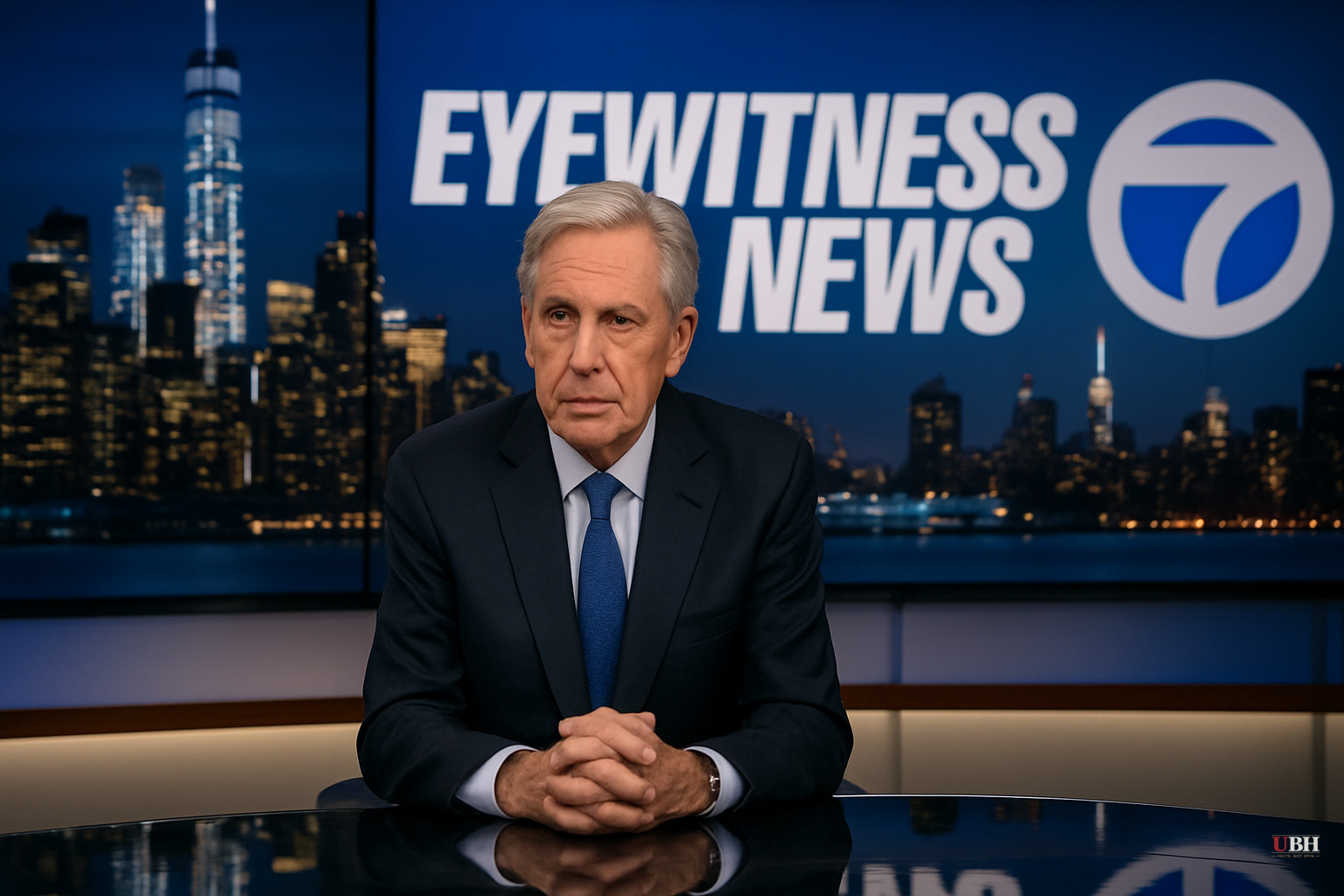
Bill Ritter told his viewers the truth on Friday night, and then he said goodbye to the anchor desk he had occupied since 2001.
"After a series of tests, my doctors have told me I have Alzheimer's," Ritter, 76, announced at the close of the June 12 edition of Eyewitness News at 6 on WABC. "It's 'early stage' Alzheimer's, and they say the treatments I'm getting are keeping it at bay. For now. But there is no guarantee, because there's no cure yet for Alzheimer's. So, unless someone finds an amazing cure, and soon, tonight will be the last newscast I anchor."
According to Newsday, Ritter has anchored the 6 p.m. broadcast since early 2001, and the newscast became New York's dominant evening program — at times pulling more viewers than the 6 p.m. editions of WNBC and WCBS combined, per WABC's own ratings figures. He joined the station in 1998.
A career that started in print and ended at the top of local TV
Ritter came up through print journalism at the Los Angeles Times before moving to San Diego television in 1987, where he led an Emmy-winning investigation into practices at Sea World, according to Newsday. He covered the Rodney King riots and trial for two L.A. stations, then joined ABC News in 1992 as founding co-host of "Good Morning America/Sunday." He succeeded Bill Beutel on WABC's 11 p.m. broadcast in 1999 and moved to the 6 p.m. slot in early 2001.
The post-9/11 period cemented his relationship with New York viewers. In a 2022 Newsday interview, Ritter described September 11 as "the kind of story that seared us and bonded us to viewers and vice versa," adding that after that day, "there wasn't any doubt what I was going to do when I grew up."
He had been stepping back gradually. According to Newsday, he left the 5 p.m. broadcast in early 2025 and dropped the 11 p.m. edition last June.
What he said on air, word for word
Ritter was direct and specific in his announcement. He named the disease, described his treatment status, acknowledged the lack of a cure, and told viewers this had personal history: his father died from Alzheimer's in June 1998, as he confirmed on air and as US Weekly reported.
"I am going to so miss reporting the news to you. With the truth, and with facts, no matter where they fall. It has been my honor to do that," he said, closing with: "For now, I wish you health and peace, and let's take care of each other."
He is not walking away from WABC entirely. Per CBS News, Ritter told viewers he will stay with the station to report on "the rising tide of Alzheimer's" — covering the disease's impact on patients and families, the cost of treatment and care, and potential policy responses.
WABC-TV General Manager Marilu Galvez issued a statement, quoted by both CBS News and US Weekly: "While he is stepping away from daily anchoring, he will continue to be an integral part of our ABC7 family, including sharing personal updates and providing resources to help others impacted by Alzheimer's."
The disease he's now covering
Alzheimer's is the most common form of dementia, and its financial burden on patients and caregivers is severe. Ritter said explicitly on air that the cost of treatment and patient care is "simply unaffordable" and that the country needs to "begin to change that." That is the beat he is apparently taking on.
No cure exists as of June 13, 2026. Several treatments approved by the FDA in recent years — including lecanemab and donanemab — can slow cognitive decline in early-stage patients but do not reverse the disease. Ritter did not specify which treatments he is receiving.
The strongest counter to the framing here
Some viewers and journalism observers may reasonably ask whether a broadcaster with any stage of Alzheimer's should continue in a public-facing reporting role at all, even off the anchor desk. The concern is legitimate. Accuracy, judgment, and the ability to assess sources are core to journalism, and Alzheimer's is progressive by nature. Ritter's own statement acknowledges there is "no guarantee" about his trajectory.
Ritter is not being kept on the air in a diminished capacity without disclosure. He disclosed his condition publicly, on his own terms, and is transitioning to a reporting role that his employer says he chose and that focuses directly on the disease he is living with. Whether he can sustain that role long-term is genuinely unknown. WABC and Ritter have been transparent about the uncertainty.
What comes next
The open question is how long Ritter will be able to continue reporting, and what form that work will take. Early-stage Alzheimer's can remain relatively stable for months or years with treatment, or it can progress more quickly — and as Ritter himself said, no one can guarantee which path his disease will take. His first reports on the Alzheimer's beat, and when they air, will be the first concrete signal of what this new chapter actually looks like.
Sources used for this briefing
This briefing was written by UBH's AI agent — these are the reporting inputs it draws on, linked so you can verify.


