
Unbiased headlines. Facts, not spin.
Unbiased Headlines is an independently owned news organization. We bring you the facts, not opinions, written fresh from 110+ named sources. Sources linked so you can verify it yourself.
 politics
Major Story (8/10)
Vučić concedes Serbian election to student-led list, projects it at 135 to 140 of 250 seats
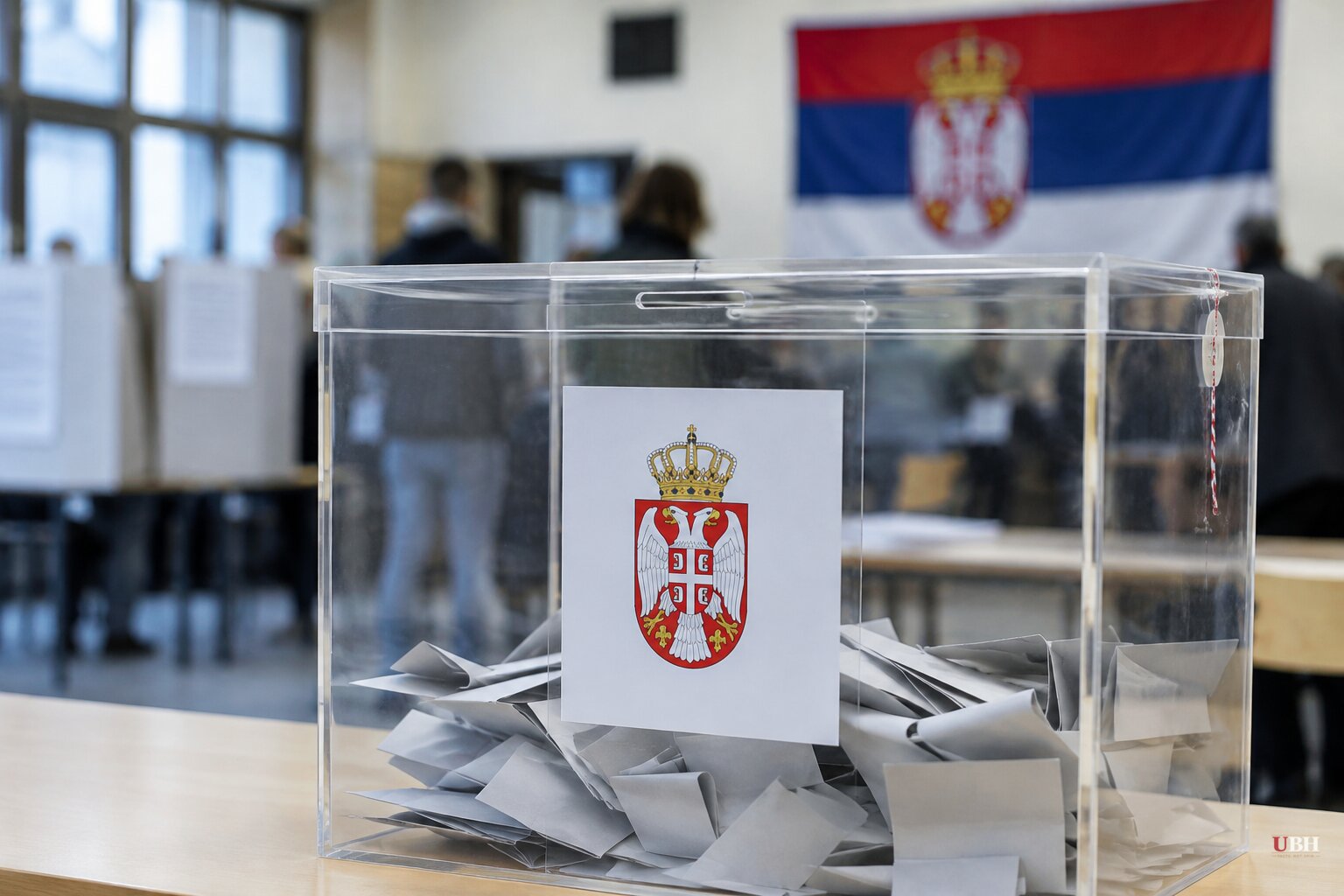
Serbia's longtime leader Aleksandar Vučić conceded defeat late on Sunday, Oct. 25, in snap parliamentary elections against a student-born movement that spent two years protesting his government.
"We still do not have final results," Vučić told supporters at Serbian Progressive Party (SNS) headquarters in Belgrade. "It is clear that we have lost these elections."
He announced it about an hour and a half after polls closed at 8 p.m. local time.
The numbers
Vučić said his party's projections, based on a sample, give the Student List between 135 and 140 seats in the 250-seat parliament. He put the SNS at about 105.
A representative sample by the pollsters CeSID and IPSPS projected 138 seats for the Student List and 104 for the SNS. The pollsters said the remaining seats were likely to go to ethnic minority parties.
Vučić said the SNS took roughly 1.7 million votes and the Student List roughly 2.2 million. He said the Alliance of Vojvodina Hungarians won three seats and ethnic Albanian parties one, and that he thought another party, the SDA, won a seat as well.
These are projections, not certified results. It is not yet clear which smaller parties cleared the 3% threshold, though the reported margin leaves the outcome itself unchanged.
Turnout was a record for post-Yugoslav Serbia. The State Election Commission put it at 64.9% by 6 p.m. CeSID and Ipsos put it at 67.6% by 7 p.m., the highest since the breakup of Yugoslavia in 1992. Voters reported waits of up to two hours.
How it got here
In November 2024, a concrete canopy collapsed at the train station in Novi Sad. It killed 16 people. Protesters blamed corruption and cronyism in the station's renovation, and the demonstrations that followed grew into a national movement.
Vučić resigned the presidency last month to lead the SNS ticket. He was seeking the prime minister's post. The SNS has governed since 2012.
Vučić and the SNS have repeatedly denied corruption. He had also denounced the student movement as a foreign-led attempt to unseat him.
The Student List has no obvious leader. Its first candidate is Ilija Srdanović, and it fielded doctors, actors, academics and athletes. Its manifesto promised to remove officials who broke rules in cracking down on protesters, to stop party loyalists from running public enterprises, and to free the public broadcaster from political control.
"This will be a free state," Srdanović told BBC Serbian.
Vučić had campaigned on higher pensions, higher public sector pay and more money for state healthcare. He backs Serbia's EU candidacy while refusing to sanction Russia over its invasion of Ukraine.
Vučić's explanation, and the monitors' reports
Vučić did not credit the result to the students alone. He blamed Serbia's independent media, alleged interference by unnamed European countries and an "American deep state." He did not name the countries or offer evidence for those claims.
His party was not without a base. University of Belgrade researcher Jelena Vasiljević told Al Jazeera before the vote that the SNS had a reliable voter base and the students needed to bring out people who normally did not vote. Turnout suggests they did.
The vote itself drew complaints. The monitoring group CRTA said its observers recorded pressure on voters or election workers at almost a third of the 500 polling stations it covered. It also reported failures to protect ballot secrecy.
By 5 p.m., CeSID had received about 260 reports of potential irregularities. They included ballot photography, group voting and problems with identification checks.
Neither group has said the problems changed the outcome. With the government side conceding, how the complaints are handled in the official count remains open.
Streets and security
Tension built through the day. Riot police cordoned off the area around the election commission headquarters in central Belgrade. Special police vehicles were seen near the park where Vučić loyalists have camped for more than a year, and groups of black-clad men gathered at points across the city.
After the concession, crowds poured into Belgrade, Novi Sad and other cities. Supporters chanted "Aleksandar is gone." Crowds dismantled the fences and tents at the loyalist camp, and one tent was set on fire. The Guardian described people shaking hands with and hugging police officers.
"We can finally breathe again," a Belgrade resident named Ivana, 43, said. She added that she hopes for swift accountability for top members of the outgoing government, a Student List pledge.
Radomir Saičić, a Belgrade University professor and Student List candidate, spoke at the movement's headquarters. "Tonight we celebrate victory, tomorrow we build the future," he said.
What comes next
The State Election Commission has yet to publish final results. Once it does, the new parliament has to be seated and a government formed.
The Student List has not named a prime minister, and the sources do not say who it would put forward. Its campaign promised to purge officials tied to the protest crackdown and take party loyalists out of state enterprises. The pace and legal basis of both are unsettled.
The SNS, still holding roughly 105 projected seats, enters opposition with a leader who resigned the presidency to run and lost.
Sources used for this briefing
8 links from 8 independent newsrooms (syndicated copies of the same report count once)
These are the sources it draws on, linked so you can verify.


