
Unbiased headlines. Facts, not spin.
Unbiased Headlines is an independently owned news organization. We bring you the facts, not opinions, written fresh from 110+ named sources. Sources linked so you can verify it yourself.
 politics
Major Story (7/10)
Event date: September 4, 2026 ·
Kagan Accuses Supreme Court Majority of Weakening Democracy Two Weeks Before Midterms
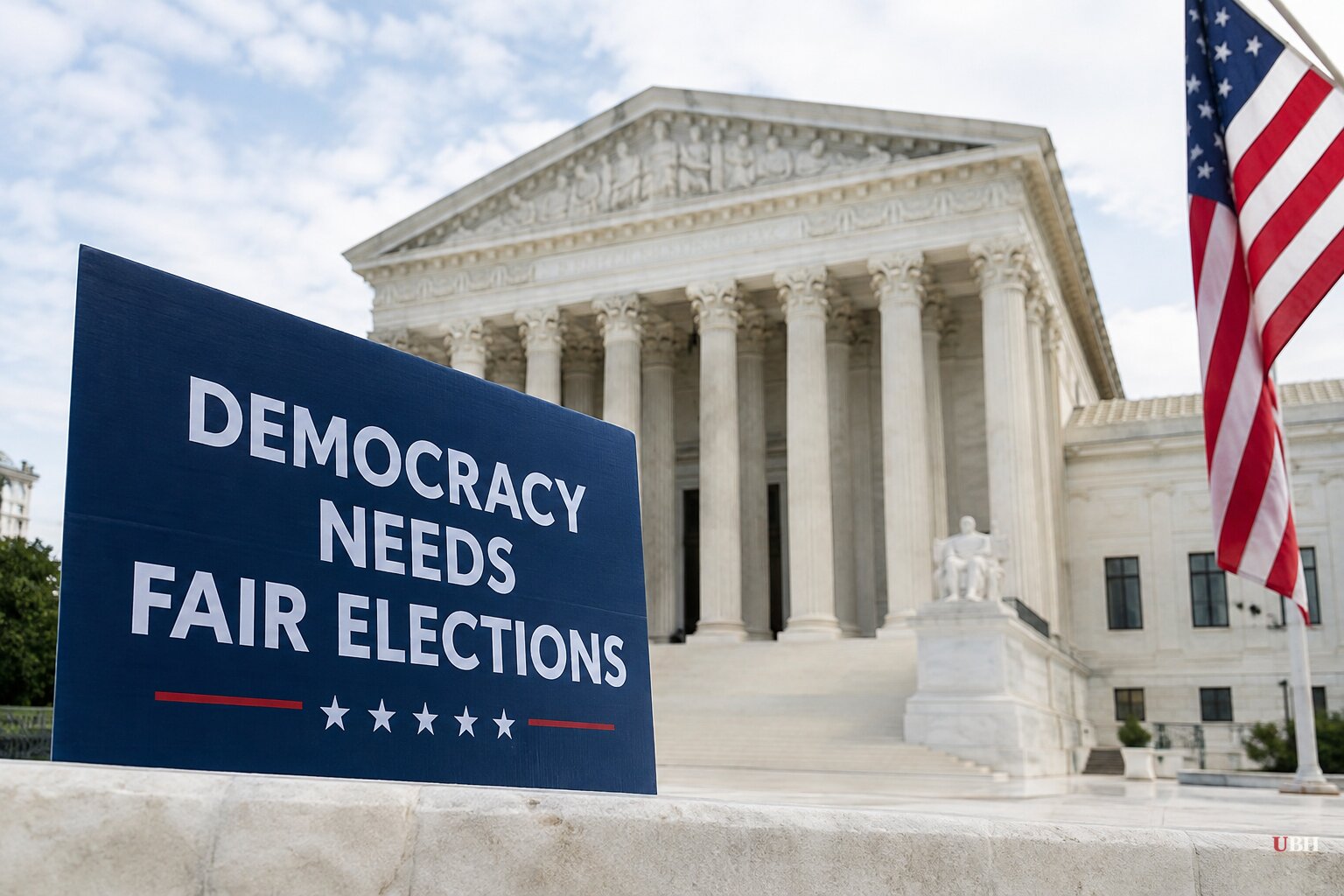
Justice Elena Kagan took aim at her own court this week. Speaking at Catholic University's law school in Washington on Tuesday, she said the conservative majority has "kind of blinded itself to the very deleterious effect of their rulings on how the political system works and has created a democracy that does not work as well as it should."
The timing is hard to miss. Control of Congress is on the ballot Nov. 3, and Republicans are defending thin House majorities.
Kagan dissented from every ruling she criticized.
What she went after
Kagan pointed to three areas: the Voting Rights Act, partisan gerrymandering and campaign money.
In April, the court ruled 6-3 in Louisiana v. Callais, striking down Louisiana's congressional map. Kagan called it an "evisceration" of the 1965 Voting Rights Act. The decision made it harder to challenge maps that weaken minority voters' influence. Republican-led states then proposed redrawn maps that favored their candidates.
On gerrymandering, Kagan targeted the court's 2019 ruling in Rucho v. Common Cause that federal courts cannot police the practice. The majority held that such fights are political disputes, not legal ones. Kagan said both parties are now in "a race to the bottom" and that candidates are pushed "toward the extremes, because the only thing anybody has to worry about any more is being primaried."
She also hit the court's campaign finance decisions, including a June 6-3 ruling in National Republican Senatorial Committee v. FEC that removed limits on how much political parties can spend in coordination with their candidates. "The people of America look around this political system and think that all this money chasing all these political candidates is a nightmare," she said. "And they're right."
The court's conservatives have ruled that key campaign finance regulations violate the First Amendment's free speech protections. That is the legal basis for those decisions.
Kagan's own caveat
Kagan did not claim the majority simply does Trump's bidding. She said that would be unfair, and she named areas where the court has ruled against the president: tariffs, birthright citizenship and mail ballots.
The mail ballot record backs her up. In September, the court rejected Trump's push to give the U.S. Postal Service the power to withhold mail ballots. None of Trump's three first-term appointees dissented. In June, a 5-4 majority upheld state laws that allow mail ballots to arrive a few days after Election Day.
The Brennan Center for Justice, which represents parties in some of these cases, counts at least 34 federal district court rulings that paused or blocked Trump administration efforts on elections. Twelve of those judges were appointed by Republican presidents, eight of them by Trump himself. One ruling from the federal court in D.C. put it plainly: "Our Constitution does not allow the President to impose unilateral changes to federal election procedures."
The pushback
Jason Snead, executive director of the Honest Elections Project, rejected Kagan's argument. "Justice Kagan is wildly off base, as are claims that the Supreme Court's recent record in election cases has favored Republicans," he told CNN. "Her claims that the court has somehow undermined democracy are little more than political spin."
Snead's point has some support in the record above. A court that blocks a Republican president's mail ballot order is not acting as a partisan arm of the GOP.
The majority's reasoning on gerrymandering also cuts against the idea that it favors one party. The 2019 ruling applies to Democratic and Republican maps alike, and Kagan herself says both parties are exploiting it.
The critics want structural change
UCLA law professor Rick Hasen, who directs the school's Safeguarding Democracy Project, said Kagan did not go far enough. He called Callais "the worst election law decision in 100 years at the Supreme Court."
Hasen pointed to Louisiana and Alabama, each of which eliminated a district where Black voters could elect their candidates of choice. "We'll see much more of that in the next few election cycles," he predicted. He also said "you're going to hear more voices calling for the Supreme Court to be changed, either by adding more justices, putting in term limits, or doing other things."
That is where the fight leads. Court expansion and term limits are not small ideas, and they would hand future majorities a way to rewrite the court whenever they dislike its rulings.
The long view on Shelby
The argument over the Voting Rights Act goes back to the 2013 Shelby County v. Holder ruling, which relieved states with histories of discrimination of the preclearance requirement. Chief Justice John Roberts wrote for the 5-4 majority that "things have changed." Justice Ruth Bader Ginsburg's dissent said eliminating preclearance was like "throwing away your umbrella in a rainstorm because you are not getting wet."
Political scientists Michael G. Miller and Kevin T. Morris argue in a new book that counties across the affected states adopted policies that reduced minority turnout by hundreds of thousands of voters, "perhaps millions." They estimate preclearance would have produced 15 more lower-house legislative districts with majority-of-color electorates in 2022. Those are the authors' estimates, not court findings.
Texas Republicans took the other side of that history. Then-Attorney General Greg Abbott said within minutes of the 2013 decision that the state's voter ID law "should go into effect immediately."
What comes next
Polls indicate Democrats are poised to win the House, according to CNN's reading of them. If that happens, many of the court's election rulings may end up with little effect on who controls Congress.
The maps, though, are drawn and the party spending limits are gone. Whatever happens Nov. 3, those rules will govern the next cycle too, and Hasen says the push to change the court itself will only grow.
Sources used for this briefing
7 links from 7 independent newsrooms (syndicated copies of the same report count once)
These are the sources it draws on, linked so you can verify.


