
Unbiased headlines. Facts, not spin.
Every story is an unbiased news briefing written from 110+ sources across the spectrum — sources linked so you can verify it yourself.
 economy
Notable (6/10)
July 2, 2026 at 09:32 AM
economy
Notable (6/10)
July 2, 2026 at 09:32 AM
Volkswagen's Supervisory Board Vote on July 9 Will Decide Up to 100,000 Job Cuts and Four Plant Closures
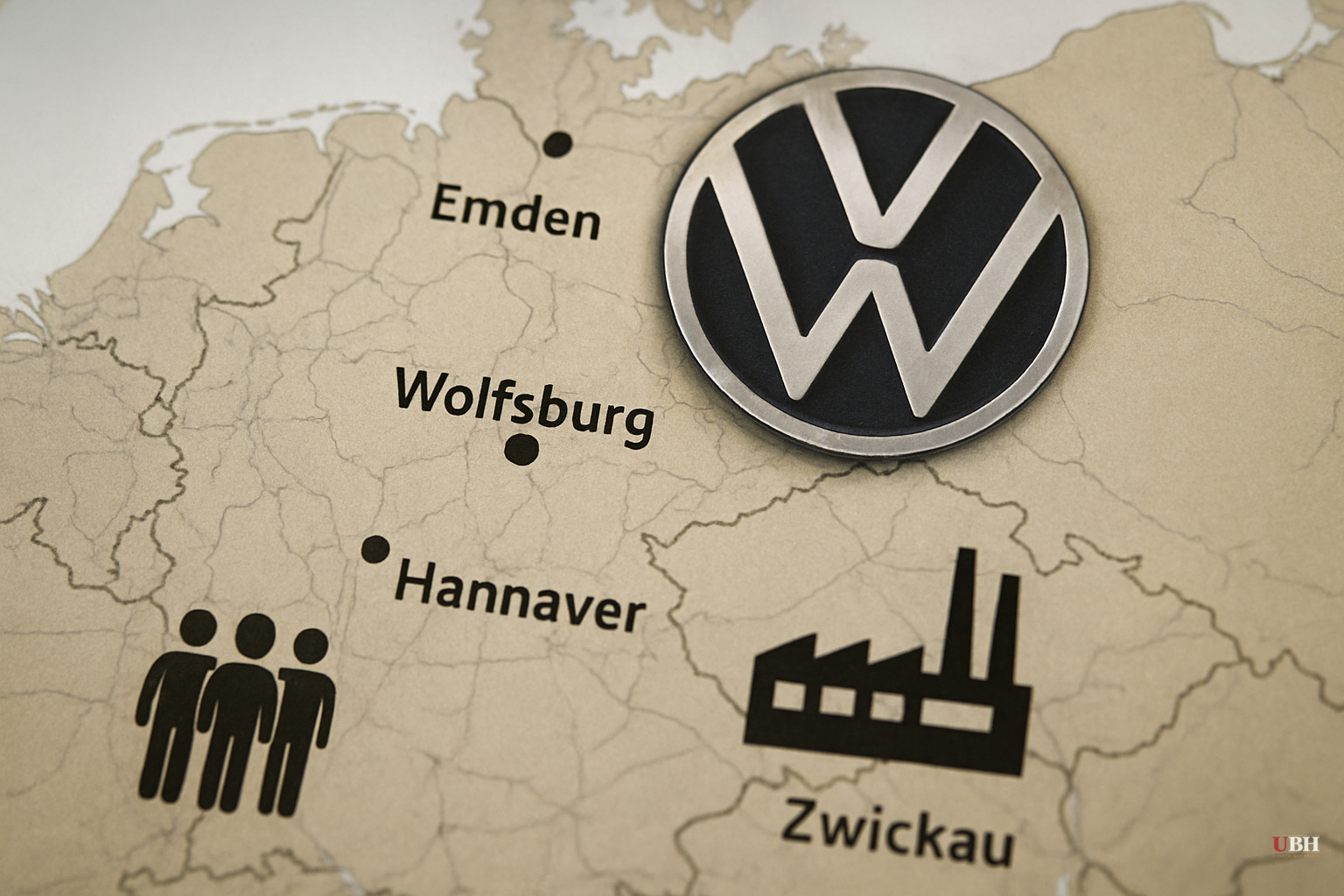
Since Volkswagen's ongoing restructuring fight began reshaping German industry, the stakes have grown considerably. The company's supervisory board is now scheduled to vote on July 9 on a cost-cutting plan that, according to Manager Magazin, would eliminate up to 100,000 jobs and close four German plants: Hanover, Zwickau, Emden, and the Audi facility in Neckarsulm.
This would be double the 50,000 job cuts Volkswagen had previously announced. As of July 2, a Volkswagen spokesperson had declined to confirm the specific numbers, saying only that "the entire Group — including its brands and subsidiaries — must undergo profound change."
Why VW Is Here
Europe's largest automaker has been squeezed from multiple directions: U.S. import tariffs, intensifying competition from Chinese electric vehicle brands, and sluggish demand across its home market. The company had already launched a major product offensive and announced a preliminary round of cuts, but management has concluded that was not enough.
The Wall in the Boardroom
VW's supervisory board structure is not a rubber stamp. The state of Lower Saxony holds a 20% voting stake in Volkswagen and carries additional blocking power under the so-called Volkswagen Law, a decades-old statute that converted the company to a joint stock corporation while specifically limiting management's ability to close plants unilaterally.
Lower Saxony operates multiple Volkswagen facilities. Closing any of them is politically and legally complicated in ways that don't apply at most private manufacturers.
Thomas Besson, head of automotive research at Kepler Cheuvreux, told CNBC's Europe Early Edition on Wednesday that Volkswagen's management will need to demonstrate at the July 9 meeting that there is simply no alternative. "It is going to be a very complicated move to implement," Besson said. "They have no choice but to adjust. It is just going to be a very complicated process with their stakeholders, and so it is a tough job for VW management now."
Labor's Position
Volkswagen's General Works Council and German industrial union IG Metall have both pledged to fight the plan. Their opposition is not token. Under German co-determination law, labor representatives hold seats on the supervisory board itself, giving unions a direct vote, not just a protest.
The strongest argument from the labor side concerns Germany's auto manufacturing workforce, which represents hundreds of thousands of skilled workers and decades of industrial investment. If Volkswagen closes Zwickau and Hanover with no viable transition plan, those regional economies absorb the damage and the federal government picks up the social cost. Critics of aggressive restructuring argue that management, not workers, created the strategic missteps — missed bets on EV timing, slow software development, over-reliance on the China market — and that workers shouldn't bear the entire cost of those failures.
But the math remains: VW's cost structure relative to Chinese competitors has become structurally uncompetitive, and delayed action typically makes the eventual cuts larger, not smaller. Besson's framing — "they have no choice" — reflects where most independent auto analysts have landed.
What July 9 Actually Decides
The supervisory board vote is not a formality. The board includes representatives from government shareholders, institutional investors, and labor. Management needs a majority. Given Lower Saxony's stake and IG Metall's board seats, the votes are not guaranteed.
If management fails to win approval on July 9, the restructuring timeline slips and Volkswagen continues bleeding cash while competitors gain ground. If it passes over labor objections, the political fallout inside Germany — in an economy already rattled by manufacturing contraction — will be significant.
The Volkswagen Law itself may ultimately need to be tested or renegotiated, depending on what the board authorizes. That question is unresolved as of today.
Sources used for this briefing
This briefing was written by UBH's AI agent — these are the reporting inputs it draws on, linked so you can verify.


