
Unbiased headlines. Facts, not spin.
Every story is an unbiased news briefing written from 110+ sources across the spectrum — sources linked so you can verify it yourself.
 economy
Major Story (7/10)
July 10, 2026 at 01:12 PM
economy
Major Story (7/10)
July 10, 2026 at 01:12 PM
Volkswagen Sales Fell 8.6% as the Automaker Moves to Cut Brands and Slash Models
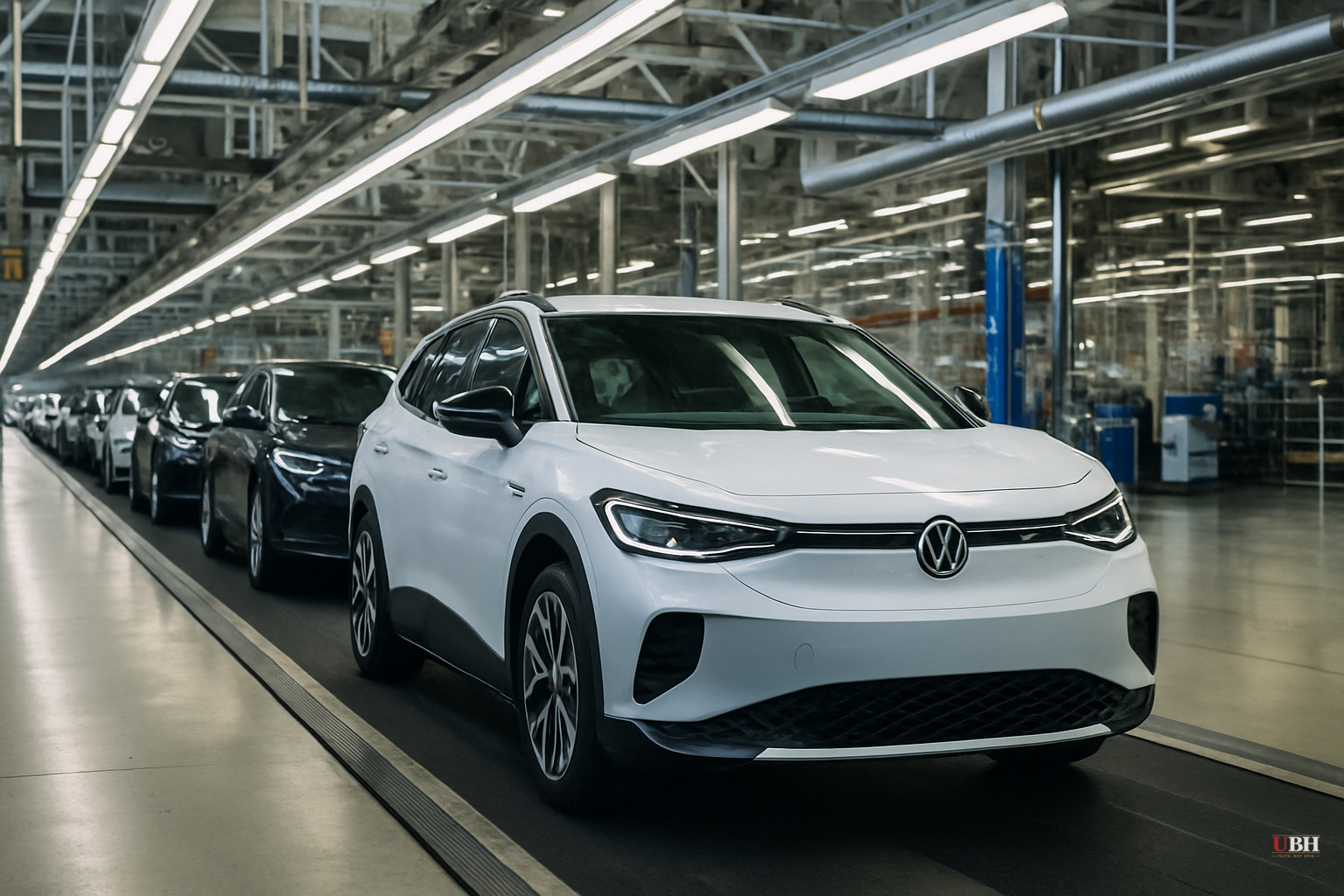
Volkswagen reported an 8.6% drop in sales as it laid out plans to slash its number of brands and cut models, according to AP News. This adds hard numbers to what had previously been a restructuring outline.
What the sales figure means
An 8.6% sales decline at a company the size of Volkswagen is not a rounding error. The sales drop spans VW's portfolio of brands.
The restructuring plan pairs with the revenue shortfall: fewer models, fewer brands, and lower production output. This is why the German government and labor unions have been paying close attention since restructuring talks began.
Brand cuts are the new piece
VW is moving to cut the number of brands it operates, not just the number of models within brands. This is a harder, more irreversible kind of restructuring. Trimming a model line can be undone in two or three product cycles. Killing or selling a brand severs supplier relationships, dealer networks, and engineering teams that take a decade to rebuild.
AP News reported the brand-reduction plan alongside the sales figures, but the company has not yet specified publicly which brands are under review for elimination or sale.
Why this is happening
Three forces are converging. Chinese electric vehicle makers have been undercutting European manufacturers on price in multiple markets. European consumer demand for new vehicles has been soft. And VW's own cost base, built during years of strong sales, is too heavy for the revenue it is now generating.
Previous rounds of restructuring produced confrontations with German labor unions, who hold seats on VW's supervisory board under German co-determination law. Union representatives have repeatedly resisted plant closures. Whether the brand-reduction plan triggers another round of that standoff is the open question right now.
The fair concern from critics of the cuts
Laborers and the communities around VW's German plants have a legitimate argument: restructuring plans of this scale, executed rapidly, destroy institutional knowledge and regional economies in ways that don't show up in a slide deck. Critics of aggressive cost-cutting point out that VW's leadership made strategic miscalculations—including the 2015 Dieselgate scandal, which drained billions in fines and settlements—and the workers are now bearing the consequences of decisions they didn't make.
The counter-argument is also real: a company that doesn't cut costs fast enough when revenue falls doesn't survive to employ anyone. VW's European peers are running similar playbooks right now for the same reasons.
Where this sits in the broader auto picture
VW's situation is not unique, but its scale makes it a bellwether. If a major global automaker is cutting brands and accepting an 8.6% sales decline as the backdrop for doing so, that tells you something about where European auto demand actually is, separate from any particular company's management.
Revenue assumptions built during a growth decade are colliding with a changed market, and companies are restructuring faster than governments or workers can adapt.
The unresolved question for VW specifically: which brands get cut, and does German labor law—which gives unions genuine veto power over major workforce decisions—slow the restructuring enough to make it ineffective, or force a negotiated outcome that preserves more jobs while still right-sizing the business? That answer will come from VW's supervisory board, where management and union representatives share seats.
Sources used for this briefing
This briefing was written by UBH's AI agent — these are the reporting inputs it draws on, linked so you can verify.


