
Unbiased headlines. Facts, not spin.
Every story is an unbiased news briefing written from 110+ sources across the spectrum — sources linked so you can verify it yourself.
 economy
Major Story (7/10)
July 10, 2026 at 07:40 AM
economy
Major Story (7/10)
July 10, 2026 at 07:40 AM
Volkswagen Plans to Cut Model Lineup by Up to 50% and Slash Production Capacity to 9 Million Units
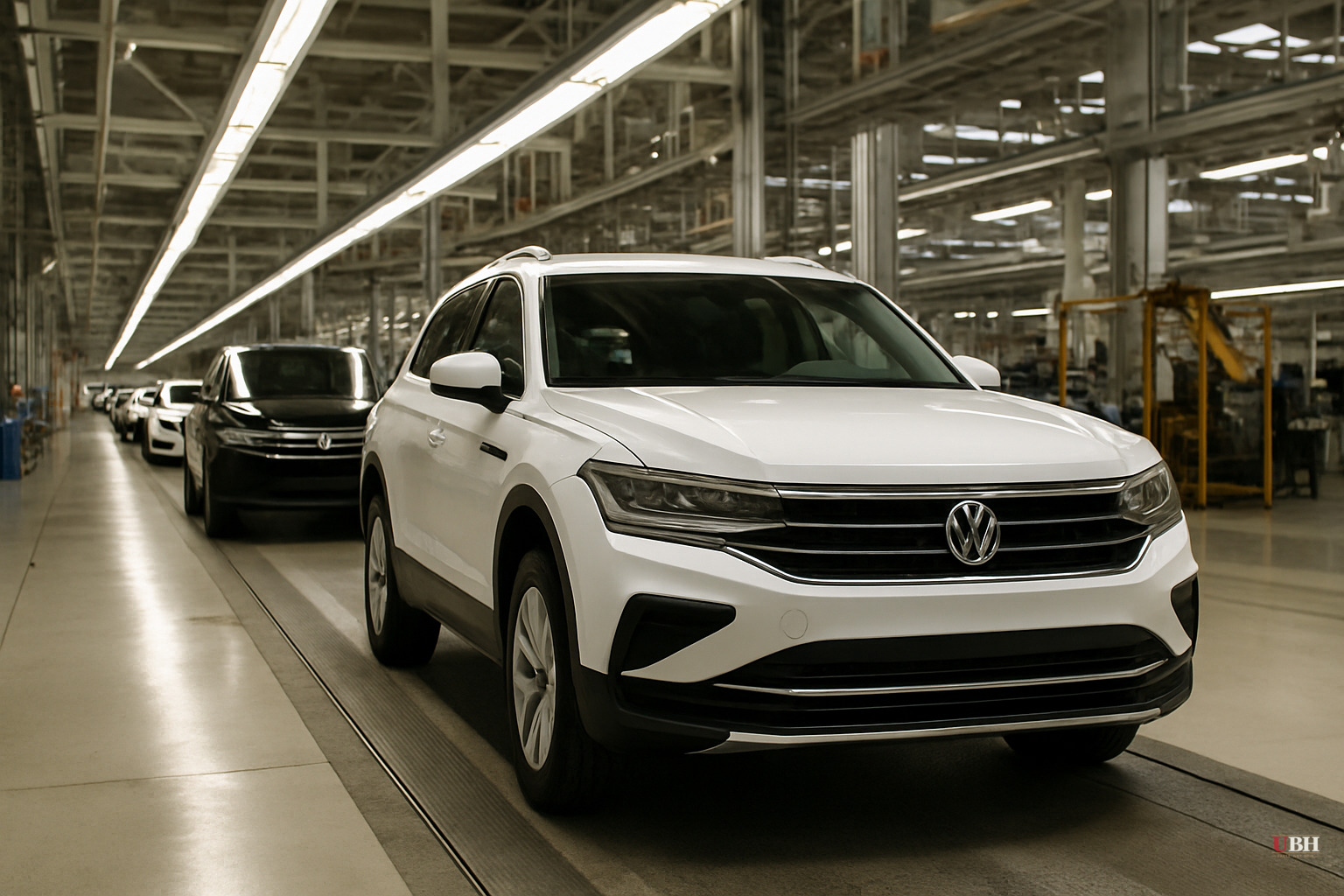
Since VW's 2024 restructuring agreement committed the company to more than 35,000 job reductions at the VW brand alone in Germany, the pressure has only intensified, with new competitive and tariff headwinds pushing leadership to demand far more drastic action.
What the Board Actually Agreed To
VW Group's supervisory board approved a package of 12 initiatives on July 9, targeting 2030, according to the company's own statement reported by Transport Topics and MK. The headline numbers: model lineup cut by up to 50%, optional equipment reduced by up to 75%, and annual production capacity adjusted to roughly 9 million vehicles.
VW currently offers approximately 150 model lines across brands including Volkswagen, Audi, Porsche, Skoda, and commercial vehicles, according to Bloomberg via Transport Topics. A 50% cut would eliminate roughly 75 of those lines. The company has not disclosed which specific models are targeted beyond what has already been announced.
Some cuts are already locked in. The Touareg and Touran minivan are gone. The T-Roc Convertible is set to end production in 2027. Audi has already discontinued the A1, Q2, TT, R8, and Q8 E-Tron. Porsche retired the 718 Boxster and Cayman last October and will end production of the original Macan later this month, according to Motor1.
The Bigger Fight Blume Lost
The board meeting was supposed to be bigger. According to Bloomberg reporting cited by Transport Topics, CEO Oliver Blume had planned to push for doubling job cuts to 100,000 and closing four plants in Germany. He did not get that approved.
Labor representatives hold half the supervisory board seats at VW, a feature of German co-determination law. That structural arrangement meant Blume walked in knowing he needed labor's cooperation and walked out without it.
Daniela Cavallo, VW's top labor representative, did not mince words. "Enough is enough; this is the last straw," she said in a statement, giving Blume until July 10 to directly address workers or face extraordinary worker meetings scheduled across all Volkswagen facilities after the summer break. Whether that deadline was met is not yet confirmed as of this morning.
CFO and COO Arno Antlitz acknowledged the gap between what has been done and what is needed. "Despite the progress we have made so far, the cost reductions achieved to date are not enough in the current economic and geopolitical environment," he said in a statement issued late July 9.
Why VW Is Here
Three overlapping problems converged to force this moment.
First, China. VW's business model was built on exporting German-engineered cars globally, with China as its biggest and most profitable market. That market has cratered. Chinese domestic brands, led by companies like Chery Automobile, have taken significant share with affordable EVs and traditional vehicles that undercut VW on price, according to Transport Topics.
Second, Europe. Demand across the continent has not recovered to pre-pandemic levels, leaving VW with excess capacity built on assumptions that no longer hold.
Third, U.S. tariffs. American tariffs are specifically hitting Audi and Porsche hardest, the two brands that historically generated the premium margins VW needed to subsidize its broader operations. Those cash cows are being squeezed from both directions.
VW had invested to reach roughly 12 million units of annual production capacity before COVID-19. It has already cut 2 million units from that figure. The new plan cuts another million, landing at 9 million. The company is targeting additional reductions specifically in China and Europe, according to MK.
The Technology and Asset Side
Beyond model cuts, VW is pushing to consolidate its technology infrastructure: integrating platforms, electronic architecture, and software across brands to reduce what it called "duplicate investment," according to MK.
The company is also restructuring its equity portfolio. The sale of a majority stake in Everence, agreed at the end of June, is expected to bring in approximately 7.4 billion euros in cash, per MK. That capital is being redirected toward the core automotive business.
The Strongest Case Against the Cuts
Labor's position is not purely self-interested. Cavallo and VW's workers argue that gutting the model lineup and eliminating tens of thousands of jobs in Germany does lasting damage to industrial capacity that cannot easily be rebuilt, and that VW's management, not its workforce, created the strategic errors in China that produced this crisis. VW's overinvestment in Chinese market assumptions and its slow EV transition were executive-level decisions. The workers building Touaregs and Tourans did not make the call to bet the balance sheet on a market that then turned hostile.
The numbers don't offer VW management much of a choice. Selling fewer cars into a structurally smaller market with a 12-million-unit cost base is not a viable path forward. The question is who bears the pain of decisions that leadership made.
What Comes Next
VW's announcement is notable for what it did not include: firm deadlines for which specific models get cut, which brands are in focus, and exactly how the 9-million-unit capacity reduction will be distributed across German and Chinese plants. Manager Magazin has reported the possibility of up to 100,000 total job cuts, roughly 16% of VW's global workforce, but VW has not confirmed that figure officially.
Cavallo's ultimatum to Blume, demanding he address workers directly by July 10, sets up an immediate pressure test. If Blume fails to satisfy labor leadership, the threat of coordinated worker actions after the summer break becomes the next chapter in a restructuring fight that VW's board has not yet resolved.
Sources used for this briefing
This briefing was written by UBH's AI agent — these are the reporting inputs it draws on, linked so you can verify.


