
Unbiased headlines. Facts, not spin.
Every story is an unbiased news briefing written from 110+ sources across the spectrum — sources linked so you can verify it yourself.
 economy
Major Story (7/10)
June 26, 2026 at 02:20 PM
economy
Major Story (7/10)
June 26, 2026 at 02:20 PM
Volkswagen Plans to Cut 100,000 Jobs, Breaking 2024 Union Agreement
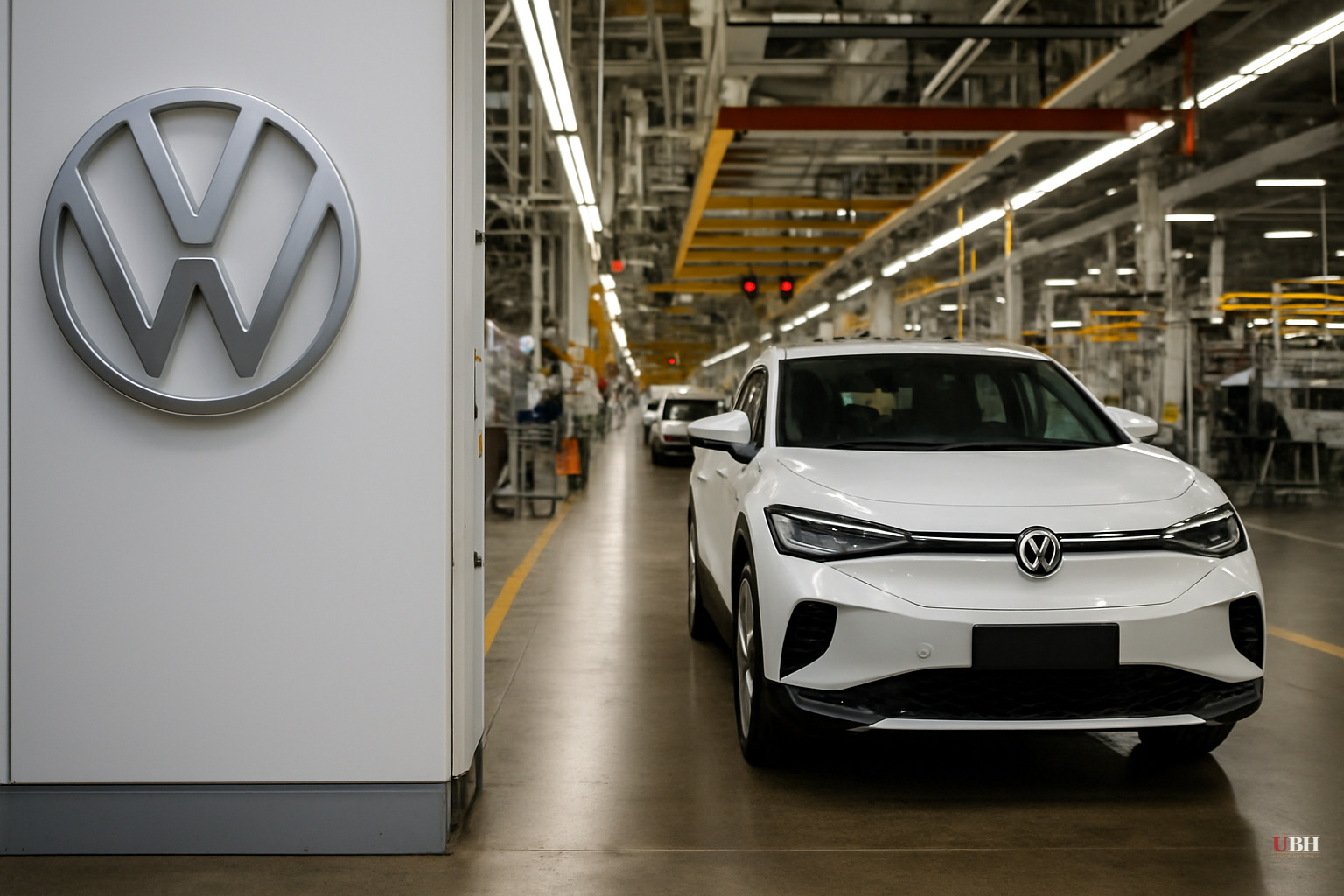
Volkswagen's broader restructuring has escalated sharply, with the automaker now planning to eliminate 100,000 jobs, roughly 15 percent of its global workforce concentrated at German plants, according to Manager Magazin. That is double the 50,000 cuts its unions formally accepted in a deal struck in late 2024.
That 2024 agreement came with a specific condition: VW would not pursue further layoffs or close additional plants until at least 2030. VW is now reportedly moving to do exactly that, well ahead of schedule.
Four Plants on the Chopping Block
According to Manager Magazin, Volkswagen plans to cease production at four facilities: Hanover, Zwickau, Emden, and Audi's Neckarsulm plant. Zwickau is the most pointed symbol of how badly VW's EV bet has underperformed. The company converted that Saxony facility to produce six electric models across the VW, Audi, and Cupra brands. It has since seen multiple production pauses because of what the company has called weak demand for EVs.
VW confirmed the restructuring direction in broad terms. "The entire Group — including its brands and subsidiaries — must undergo profound changes," a company spokesperson told CNBC. VW declined to discuss specifics from what it called "internal, confidential documents."
The Union's Position
IG Metall and the General Works Council issued a joint statement that left no ambiguity: "If such plans were to be pushed forward, we would prevent them with all our might."
German labor law gives workers' councils significant legal leverage over layoffs and plant closures. The 2024 agreement also creates a contractual argument that VW is breaching terms it negotiated. Expect protracted legal and labor battles before any of these closures actually happen.
The strongest case for the union's position is straightforward: VW extracted concessions from workers based on explicit commitments about job security through 2030. Walking that back while simultaneously restructuring across the group looks like the company used those commitments as a temporary pressure release rather than a genuine long-term plan. Workers who accepted the 2024 deal did so in good faith.
Why This Is Happening
VW previously cited two specific pressures when it announced the 50,000-job plan: Trump's tariffs hitting export economics and surging Chinese EV competition eating into global market share. Neither of those problems has gotten easier.
The Zwickau situation crystallizes the underlying issue. VW converted that plant entirely to electric production, then watched demand fail to materialize at the volumes needed to keep it running. The plant's repeated pauses aren't a logistics problem. They reflect a mismatch between VW's capacity investment and actual purchase rates.
Engadget's report accurately conveys the scale of the cuts and the union's opposition, and it correctly flags the broken 2024 agreement. What it doesn't engage with is the structural economic case for why VW feels it has no choice: the company is competing against Chinese manufacturers whose cost structures are dramatically lower. Framing this purely as a labor dispute without that competitive context misses why European automakers broadly are under pressure right now.
What Comes Next
The immediate question is whether IG Metall pursues relief under the terms of the 2024 agreement before VW can take any formal restructuring steps. Under German co-determination law, the General Works Council has statutory rights to be consulted before plant closures, which means VW cannot simply announce and execute these cuts unilaterally.
The unresolved question with real stakes: whether VW can legally accelerate restructuring past the 2030 commitment, and whether German labor courts would agree that the competitive pressure from Chinese EV makers justifies doing so.
Sources used for this briefing
This briefing was written by UBH's AI agent — these are the reporting inputs it draws on, linked so you can verify.


