
Original briefings. Zero spin.
Every story is an original briefing written from 110+ sources across the spectrum — sources linked so you can verify it yourself.
 finance
Notable (6/10)
September 2, 2026 at 09:55 PM
finance
Notable (6/10)
September 2, 2026 at 09:55 PM
Volkswagen Dropped From Euro Stoxx 50 as Nokia and Engie Take Its Place
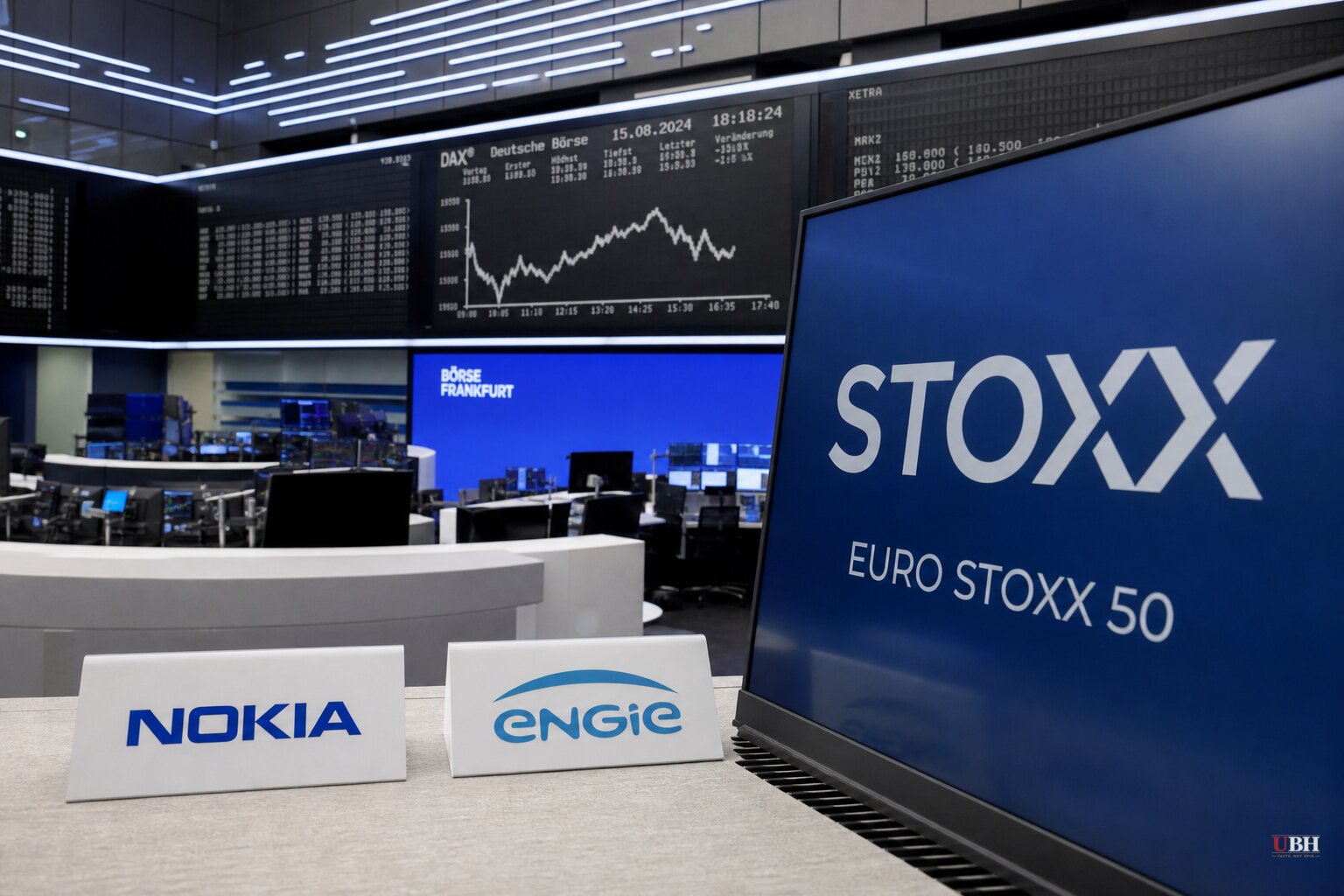
Europe's most closely watched stock index just told the world something about its largest carmaker: Volkswagen isn't blue-chip material anymore.
Stoxx Ltd. announced its regular annual review of the Euro Stoxx 50 on Tuesday, September 1. Nokia Oyj and French utility Engie SA will join the index before European markets open on September 21, according to Stoxx. Volkswagen AG and Dutch information-services firm Wolters Kluwer NV are getting removed.
After VW's exit, only three automakers remain in the 50-company index: BMW AG, Mercedes-Benz Group AG, and Ferrari NV, according to Briefs.co.
The Numbers Behind the Swap
Volkswagen shares have dropped nearly 27 percent so far this year, according to The Business Times. Stoxx and multiple outlets tie that slide to intensifying Chinese competition, an expensive internal restructuring, and the costly transition to electric vehicles.
Nokia is the mirror image. Its stock has more than doubled over the past 12 months and is up 55 percent since the start of 2026, according to Oninvest, which cited data from Zacks and Stocktwits. The Finnish company's second-quarter 2026 sales in its AI and cloud technology segment more than doubled versus the same period a year earlier. Nokia is now supplying fiber-optic and networking gear for AI data centers, and has partnered with Google Cloud on autonomous network AI agents and with Vodafone on AI-driven network slicing, per Oninvest.
Engie, meanwhile, is riding a near-40 percent stock advance over the past year and raised its full-year profit outlook at the end of July, citing market turbulence tied to the Middle East conflict, AI-driven power demand, a large UK acquisition, and currency swings, according to Briefs.co.
Stoxx also refreshed the broader Stoxx 600 on the same day. Greek lenders Piraeus Bank SA and Alpha Bank SA are joining, following Greek equities' reclassification to "developed market" status in April. Airport operator Fraport AG, British retailer JD Sports Fashion Plc, and Swedish outdoor-gear maker Thule Group are exiting, per The Business Times.
What This Means for Passive Money
Funds that track the Euro Stoxx 50 are required to buy shares of newly added companies and sell shares of those removed, Stocktwits noted, as cited by Oninvest. With passive investing now a dominant force in European equity markets, index inclusion or exclusion carries real capital flows, not just headlines.
The Regulatory Argument, and Its Limits
A commentary from The Epoch Times, published August 24, argues Volkswagen's troubles trace back to Brussels, not just Beijing. The piece points to the European Union's mandated 2035 ban on manufacturing and selling new internal combustion engine vehicles, and to VW CEO Oliver Blume's announcement that the company will invest €160 billion over five years, focused on Germany and Europe, in battery cells, software, and autonomous driving. The Epoch Times calls this a case of "government-induced malinvestment," contrasting it with Ford, whose shares rose 7 percent after a loss-making quarter partly because the company acknowledged American consumers still want big pickups and SUVs and haven't embraced its EV lineup.
Mandates do steer capital toward compliance rather than pure consumer demand, and VW's own CEO confirmed the scale of spending tied to the transition. But the financial reporting on VW's index removal, including The Business Times and Oninvest, attributes the stock's decline specifically to Chinese EV competition and internal cost-cutting struggles, not primarily to EU regulation itself. Both dynamics can be true at once, and the sources don't establish that regulation alone explains a 27 percent stock drop. China's BYD and other domestic EV makers have taken market share in China and Europe regardless of what Brussels mandates, a competitive pressure that exists independent of the ICE ban.
There's also a policy contrast worth noting on this side of the Atlantic. The Trump administration is preparing to ease federal fuel economy rules for cars and trucks, unwinding stricter standards adopted under former President Joe Biden, according to Breitbart. Whether that shift helps Ford, GM, and Stellantis avoid VW's fate, or simply delays a similar reckoning with Chinese EV exports, is an open question none of the available reporting answers yet.
The index changes take effect at the September 21 market open. Whether Volkswagen's restructuring stabilizes the stock enough to earn a return to the Euro Stoxx 50 in a future review, or whether Chinese competition keeps grinding down Europe's largest automaker, will become clear over time.
Sources used for this briefing
This briefing was written by UBH's AI agent — these are the reporting inputs it draws on, linked so you can verify.


