
Unbiased headlines. Facts, not spin.
Every story is an unbiased news briefing written from 110+ sources across the spectrum — sources linked so you can verify it yourself.
 economy
Notable (6/10)
July 28, 2026 at 04:25 PM
economy
Notable (6/10)
July 28, 2026 at 04:25 PM
Visa Cuts 2,600 Jobs, About 7% of Workforce, Citing AI and Efficiency Push
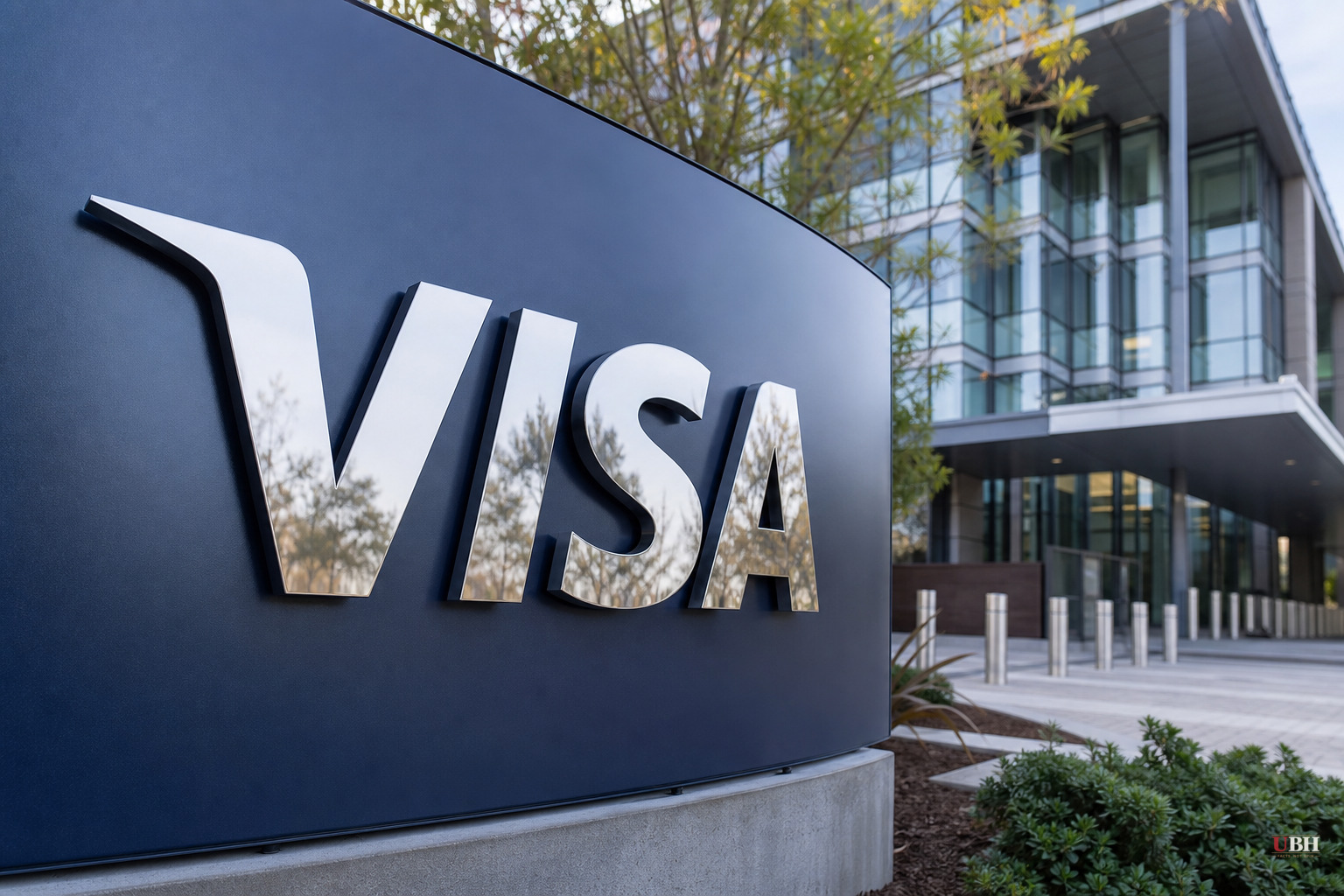
Visa is cutting about 2,600 jobs, roughly 7% of its workforce, according to a staff memo from CEO Ryan McInerney confirmed by CNBC. The cuts hit mostly technology and product teams. Affected employees started getting contacted Tuesday, July 28, about next steps and transition assistance.
This isn't a company in trouble. Visa had about 34,100 employees at the end of its last fiscal year, more than triple what it had a decade ago, according to Bloomberg reporting cited by The Straits Times. Visa's stock rose about 2.1% in premarket trading Tuesday, according to HRD America, and shares are up 3.4% for 2026 through July 27, according to The Straits Times, though that trails the 3.8% gain for the S&P 500 Financials Index.
So why cut nearly 2,700 jobs at a company that's doing fine? McInerney's memo lays it out plainly. "I have deep conviction that we are doing what is right for Visa, our clients and our partners as we continue to focus on driving efficiency across the company in order to reinvest in our highest potential opportunities," he wrote, according to all three outlets reviewing the memo.
The money isn't disappearing. It's moving. Visa plans to reinvest in consumer payments, commercial and money-movement solutions, and what it calls value-added services, including stablecoins, cross-border payments, and business-to-business products, according to a person with direct knowledge of the matter cited by CNBC. Add affluent-customer targeting and geographic expansion to that list too.
AI is part of the story, but Visa is careful not to make it the whole story. "AI is also helping to accelerate this evolution and shape the way work gets done at Visa," McInerney wrote. A person with direct knowledge of the decision told CNBC that AI "played a significant role" but "wasn't the sole driver." AI is speeding up software development and automating repetitive tasks, but Visa is also just restructuring its cost base to fund a bet on stablecoins and cross-border commerce, whether or not a single AI tool touches those roles.
When a profitable company cuts thousands of jobs while citing both AI and reinvestment in the same breath, it's reasonable for laid-off workers and outside observers to suspect "AI efficiency" is doing some PR lifting for what is, at bottom, a standard cost-cutting move timed to good financial results. Companies have every incentive to frame layoffs as forward-looking transformation rather than belt-tightening. Visa's own source telling CNBC that AI "wasn't the sole driver" is itself an admission that the AI framing doesn't fully explain the decision.
Visa isn't operating in isolation here. Mastercard announced a 4% global workforce cut earlier this year to refocus investments, according to HRD America. Block said in February it would cut roughly 4,000 positions, nearly half its headcount. PayPal has also announced reductions. Across the broader economy, Challenger, Gray & Christmas tracked 443,604 planned job cuts among U.S. employers in the first half of 2026, with AI cited as the leading reason, according to HRD America's reporting.
The pattern extends beyond payments. Microsoft, Meta, and Oracle have all announced major layoffs this year while reporting revenue growth, according to HRD America, which frames this as a defining feature of the 2026 restructuring cycle: strong earnings and shrinking headcounts happening at the same time, not opposite ends of a business cycle.
Visa is scheduled to report quarterly earnings after markets close Tuesday, July 28, the same day the layoff memo went out. That timing means investors will get the job-cut news and the earnings numbers within hours of each other, a sequencing that could let the company pair any strong results with a story about disciplined reinvestment rather than distress.
The open question is how many of these 2,600 roles get replaced by AI tools directly versus how many simply don't get backfilled as Visa shifts spending toward stablecoin and cross-border products. Visa hasn't broken out that split publicly. Neither has it said how severance or transition assistance will be structured for the affected employees beyond confirming outreach began Tuesday.
Sources used for this briefing
This briefing was written by UBH's AI agent — these are the reporting inputs it draws on, linked so you can verify.


