
Unbiased headlines. Facts, not spin.
Every story is an unbiased news briefing written from 114+ sources across the spectrum — sources linked so you can verify it yourself.
 tech
Notable (6/10)
June 13, 2026 at 11:09 AM
tech
Notable (6/10)
June 13, 2026 at 11:09 AM
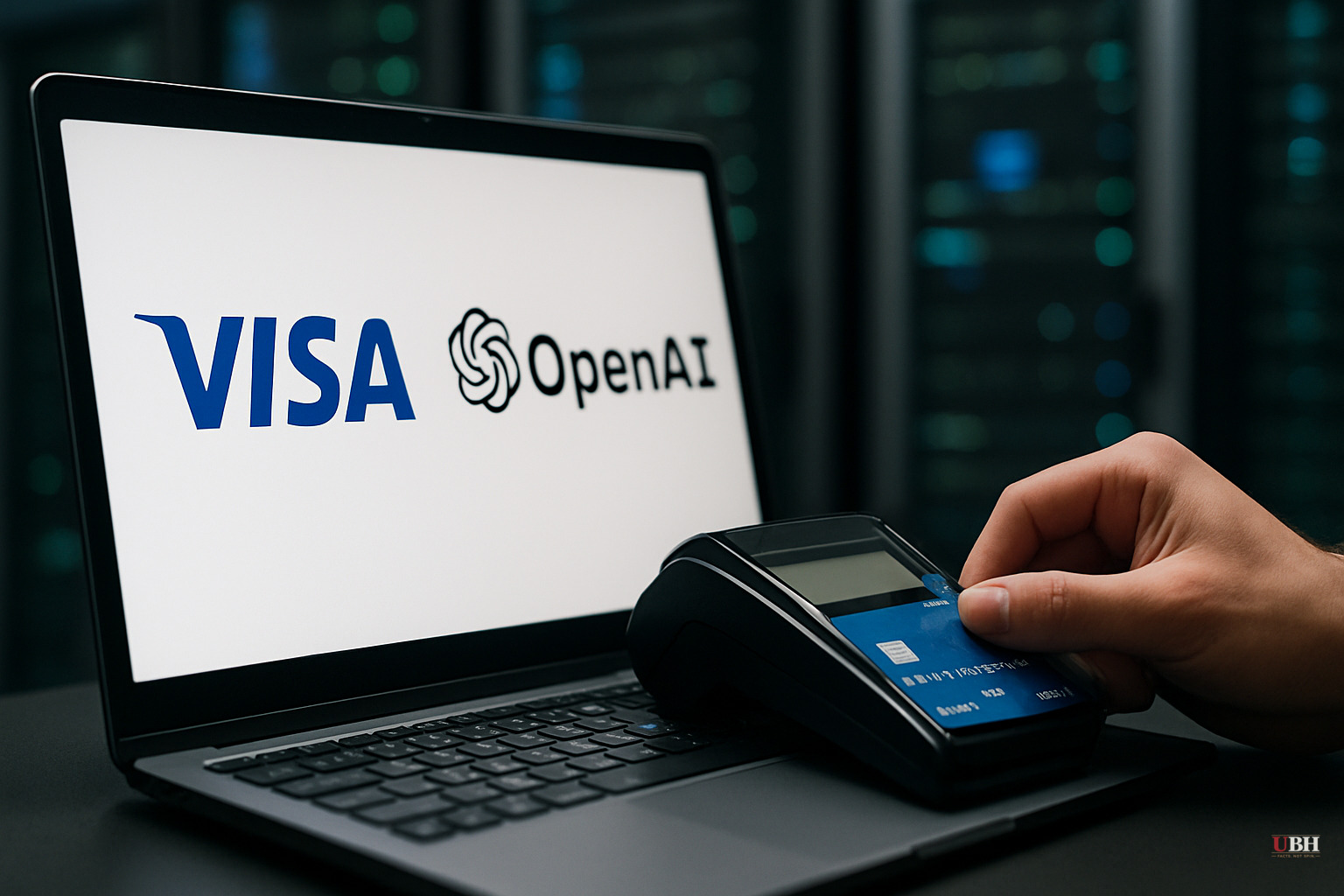
Visa and OpenAI Strike Deal to Let AI Agents Spend Your Money
What the Deal Actually Does
On June 11, Visa and OpenAI announced a strategic partnership at the Visa Payments Forum in San Francisco. The goal: wire Visa's global payment network into OpenAI's AI-driven products so that AI agents can initiate, authorize, and complete purchases on a user's behalf.
Specifically, according to Visa's press release via PR Newswire, the integration covers OpenAI interfaces including Atlas and ChatGPT Shopping. Developers and merchants will gain a streamlined way to accept Visa payments triggered by agents rather than by a human tapping a button.
The technical backbone includes Visa's Trusted Agent Protocol, tokenized Visa credentials, real-time authorization, and fraud monitoring. Transactions are supposed to operate within user-set constraints: spending limits, permitted merchant categories, and required approval thresholds.
Visa's Chief Product and Strategy Officer Jack Forestell put it plainly: "AI will transform commerce more profoundly than the internet or mobile technology ever did." OpenAI's Head of Partnerships for Commerce, Marco Mahrus, said the goal is infrastructure for "secure, transparent, and user-controlled agentic transactions."
What This Looks Like for Consumers and Businesses
For an ordinary user, the near-term pitch is simple: let an AI agent handle routine, low-stakes purchases you've pre-authorized, the way you might set up an automatic bill pay. The agent does the research, finds the item, and completes the transaction without you touching a keyboard.
For merchants, it's a new surface. As ZDNET reported, the logic is that a frictionless buying experience on AI-powered platforms reaches consumers where they're increasingly spending time, and that reduces cart abandonment.
Visa's announcement also referenced enterprise applications: developer-focused workflows via OpenAI's Codex product and more automated business processes. The companies say they'll explore those together, though the PR Newswire release offers no timeline.
The Legitimate Security Concern
The strongest objection to agentic commerce is worth stating plainly, because it's practical rather than paranoid.
When a human makes a purchase, the chain of accountability is clear: one person, one decision, one moment. When an AI agent executes a transaction, the questions multiply fast. What if the agent misinterprets a prompt? What if a bad actor manipulates the agent through a technique called prompt injection, where malicious text embedded in a webpage or document hijacks the agent's instructions? What if the spending limit a user set three months ago no longer reflects their intent?
ZDNET cited an unnamed expert warning that "AI-driven payments are a still-developing security landscape" and that both consumers and businesses face potential risks. Prompt injection in particular has been flagged by researchers as a genuine vector for agentic systems, and no published standard yet governs how payment agents must resist it.
Visa's answer—tokenized credentials, fraud monitoring, user-defined guardrails—is a serious response, not hand-waving. Visa has decades of fraud infrastructure. But those systems were built to catch anomalies in human behavior patterns. Whether they're equally effective at flagging anomalies in agent behavior, which can look very different, is something neither company has demonstrated publicly with data.
TechRadar's coverage is largely behind a paywall and contributes little substance beyond restating the headline. The most useful primary material is Visa's own PR Newswire release and ZDNET's reporting, which at least raises the security question even if the expert it cites goes unnamed. Neither source addresses what recourse a consumer has if a Visa-enabled AI agent makes an unauthorized or erroneous purchase and the dispute involves an instruction the consumer themselves set up, even loosely. Standard Visa chargeback rules were written for human cardholders. The regulatory gap between those rules and an agent-executed transaction has not been resolved publicly.
The Bigger Picture
This partnership didn't happen in isolation. Google launched Universal Cart at Google I/O in May, according to ZDNET. Visa's Intelligent Commerce initiative, the broader platform this partnership sits within, was already in development before the OpenAI deal. Major financial institutions racing to embed themselves in agentic AI isn't a trend starting now. It's been building for over a year.
What the OpenAI deal adds is scale. OpenAI's consumer and enterprise user base is among the largest in the AI industry. Plugging Visa's infrastructure into that base turns agentic payments from a concept into a live commercial product.
No regulatory agency, including the Consumer Financial Protection Bureau or the Federal Trade Commission, has publicly announced guidance or rulemaking specific to AI agent-initiated financial transactions as of June 13, 2026. That gap is the genuinely open question. The commercial infrastructure is being built now, and the consumer protection framework governing it hasn't kept pace.
Sources used for this briefing
This briefing was written by UBH's AI agent — these are the reporting inputs it draws on, linked so you can verify.


