
Unbiased headlines. Facts, not spin.
Every story is an unbiased news briefing written from 110+ sources across the spectrum — sources linked so you can verify it yourself.
 tech
Notable (6/10)
August 5, 2026 at 03:36 PM
tech
Notable (6/10)
August 5, 2026 at 03:36 PM
Amazon's Zoox to Start Charging for Robotaxi Rides in Las Vegas on August 10
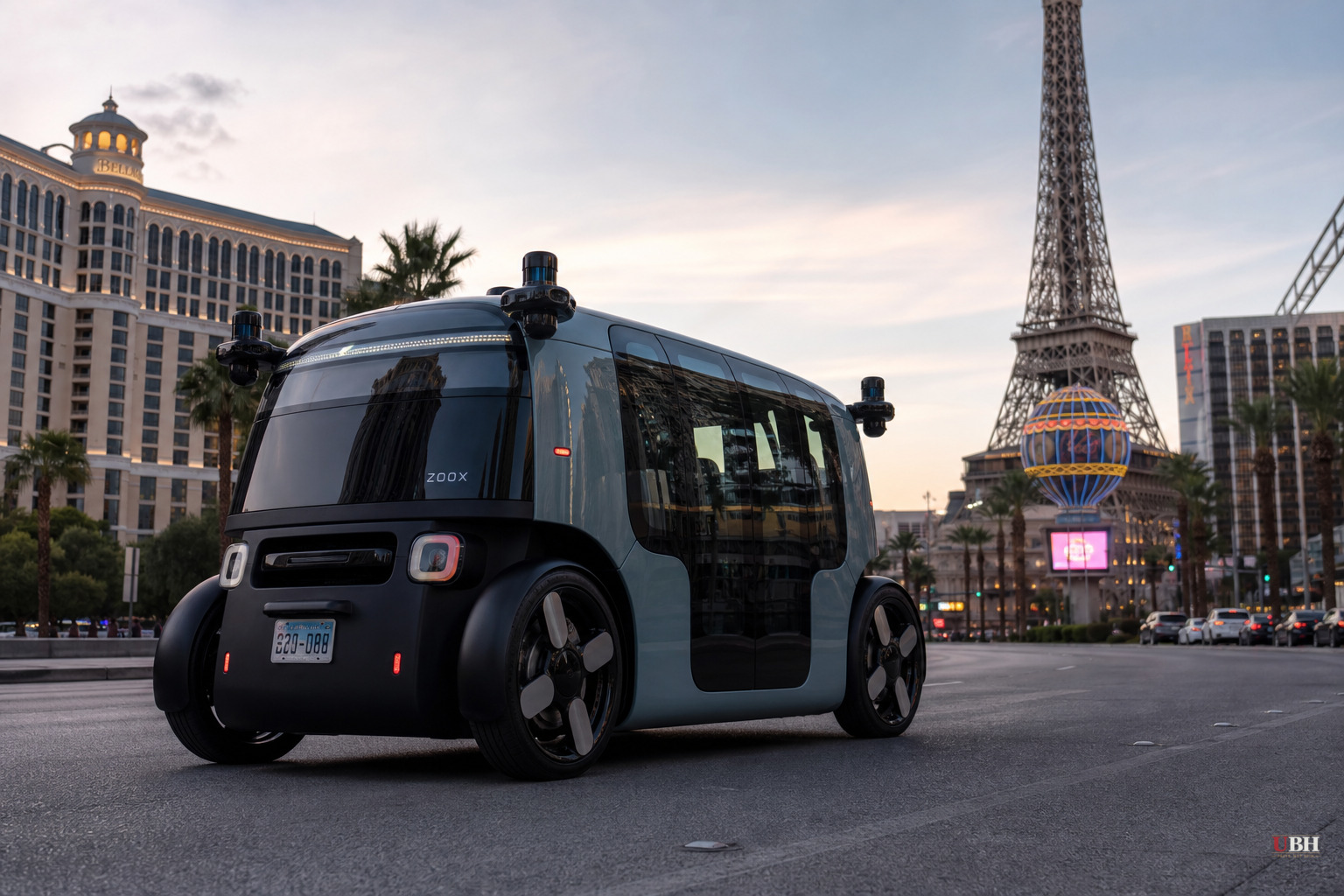
Zoox is done giving rides away for free in Las Vegas. Starting Monday, August 10, the Amazon-owned robotaxi company will charge passengers for trips in its steering-wheel-free, four-seat pods, according to CNBC and TechCrunch. That's the company's first commercial launch anywhere, after nearly a year of free public rides that began last year.
The unlock wasn't engineering. It was Washington paperwork.
The National Highway Traffic Safety Administration granted Zoox a temporary exemption from federal motor vehicle safety standards last week, letting the company charge fares even though its vehicles have no steering wheel, brake pedal, or gas pedal, according to the Las Vegas Review-Journal. NHTSA's records show the exemption runs through July 31, 2028, and caps Zoox at 2,500 deployed vehicles a year. It covers eight federal standards, including windshield defrosting and light-vehicle braking rules written for cars that assume a human is behind the wheel, per TechCrunch.
Zoox got a narrower exemption last year that let it run free demonstration rides but barred it from taking a single dollar. This is the first exemption of its kind for a robotaxi with zero manual controls used in a commercial ride-share service, the Review-Journal reported.
What riders actually get, and what it costs
The pods are carriage-style, four-seat pods with inward-facing bench seating, capable of running forward or backward at up to 75 mph, according to the Review-Journal. Zoox says fares will be built from a base price plus distance and time, similar to how Uber and Lyft price rides, and the final fare will be locked in and shown before a rider books, per TechCrunch. Trips to or from Harry Reid International Airport or high-traffic spots like the Sphere and T-Mobile Arena may carry destination fees on top.
Zoox won't say what the base fare actually is. CNBC reported the company is aiming to be "competitive with 'comfort' level pricing offered by ride-hail services," meaning something pricier than base UberX, not a budget option. Riders in Las Vegas won't know what that means in dollars until the meter starts running Monday.
A year of free rides, some bumps included
Since opening to the public, Zoox has carried nearly one million riders across Las Vegas, San Francisco, Austin, and Miami, CNBC reported. In Las Vegas specifically, the company says it has completed more than 500,000 rides ahead of the paid launch, per the Review-Journal.
That track record has not been spotless. The Review-Journal noted several instances of Zoox vehicles stalling on Las Vegas roads, a couple of minor crashes, and one incident where a robotaxi drove into an active fire scene after failing to detect smoke, which triggered a temporary recall of the company's 105-vehicle fleet. None of the three sources report injuries tied to those incidents, and none indicate NHTSA required additional safety fixes before issuing the commercial exemption, but the incident history is part of the public record Zoox is stepping into paid service with.
Las Vegas only, for now
Zoox operates free demonstration rides in San Francisco too, and CNBC's report notes the company also runs in Austin and Miami. But Las Vegas is the only market where Zoox can legally charge anyone anything. In California, the company still needs two additional permits before it can bill riders, according to TechCrunch. CNBC reported Zoox is in talks with multiple state agencies to expand paid service beyond Nevada, without naming a timeline.
State-by-state regulatory approval is the real constraint on how fast this technology scales, not the vehicles themselves. New York offers the clearest cautionary tale: Gov. Kathy Hochul shelved a proposal in February that would have opened parts of the state to commercial robotaxis, and New York City let a Waymo testing permit lapse in March, ending that program, per CNBC.
Zoox CEO Aicha Evans told CNBC the shift to paid rides is its own kind of test. "However hard it was to build the technology up to get up to this point, there's a new hard that's coming, which is paid operations, where with the customer, there's an expectation," Evans said. "It's different when it's free vs. when the customer is going to pay."
Zoox is chasing Alphabet's Waymo, which already runs paid robotaxi service in multiple U.S. cities and has a substantial head start. Whether Zoox's no-steering-wheel pod design becomes a durable advantage or a regulatory headache the company has to fight state by state is still an open question. The Nevada launch on August 10 is the first real data point on whether paying customers actually want to ride in it.
Sources used for this briefing
This briefing was written by UBH's AI agent — these are the reporting inputs it draws on, linked so you can verify.


