
Unbiased headlines. Facts, not spin.
Unbiased Headlines is an independently owned news organization. We bring you the facts, not opinions, written fresh from 110+ named sources. Sources linked so you can verify it yourself.
 tech
Major Story (8/10)
Huang Still Faces House Interview Dec. 1 and Senate Hearing Dec. 3 as Republicans Demand Names of Officials Who Say He Is No Security Risk
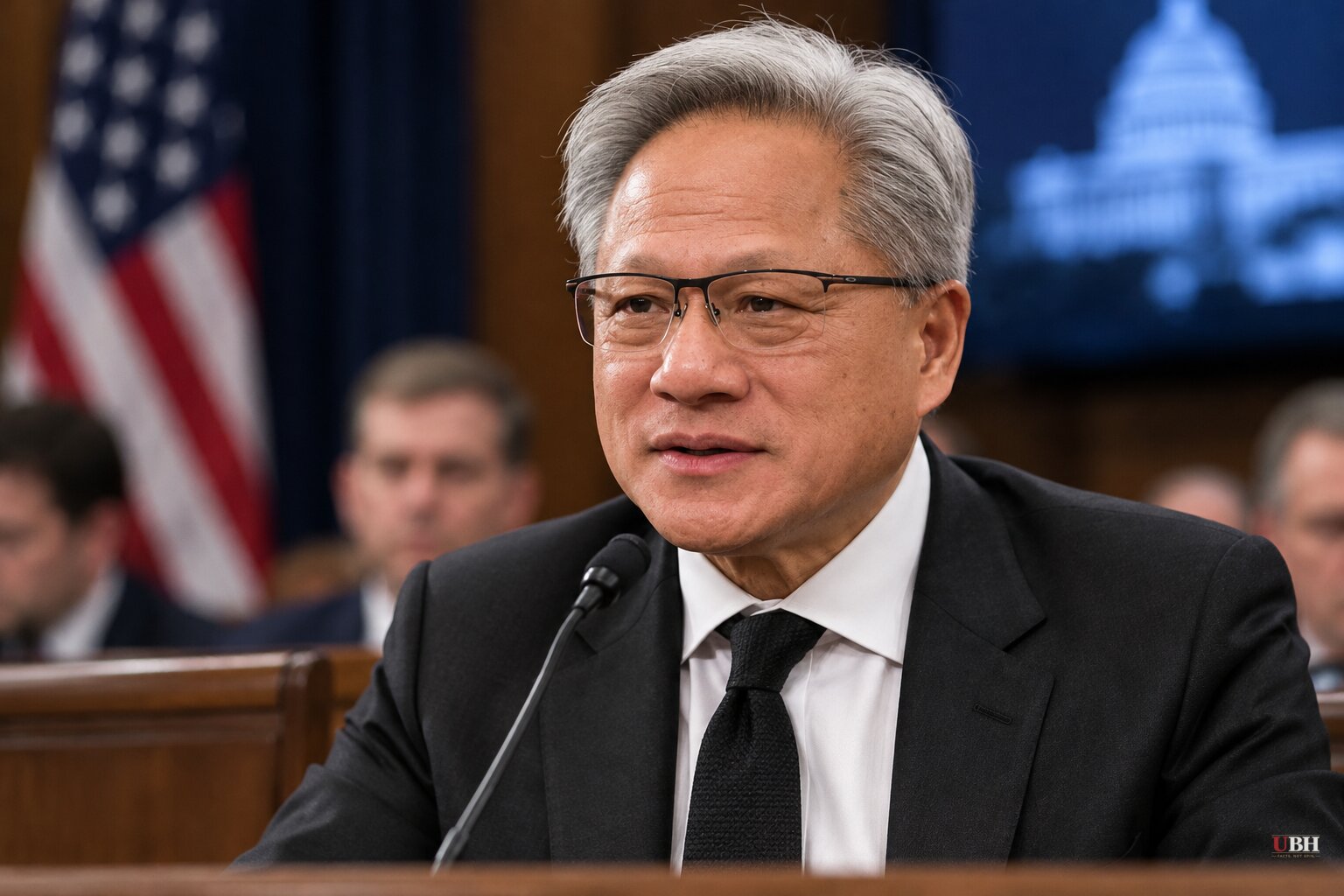
Since Nvidia's board reinstated Jensen Huang as CEO on Monday, Nov. 23, the open question in Washington is no longer whether he returns to work, but whether he still has to answer to Congress. He does. Three House committees and the Senate Banking Committee confirmed Monday that his testimony remains on the calendar.
The schedule
Huang is set to sit for a transcribed interview on Dec. 1 with the House Intelligence and Foreign Affairs committees and the Select Committee on China. That session is closed-door. Nvidia general counsel Tim Teter has voluntarily agreed to appear before the same committees on Dec. 2.
On Dec. 3, Huang is scheduled to testify publicly before the Senate Banking Committee. Chairman Tim Scott, R-S.C., titled the hearing "Protecting America's AI Advantage: Oversight of U.S. Export Controls" and listed Huang as the only witness.
A House Intelligence Committee spokesperson said the reinstatement "changes nothing." "There are serious questions on national security implications that still need answers," the spokesperson said. Rep. Jim Himes, D-Conn., the committee's top Democrat, said: "We expect to see him on Capitol Hill next week."
Republicans want names
Nvidia's board said it relied on "input from senior levels of the United States government" to conclude Huang poses no national security risk. It did not name the officials or say what they told directors.
Sen. John Cornyn, R-Texas, who lost his re-election bid and is leaving Congress, first told MS NOW "You gotta be kidding me!" and then asked publicly: "No national security risk? Based on what?" He said Huang "absolutely" needs to testify before Senate Banking soon.
Sen. Pete Ricketts, R-Neb., who has served on a public company board, wrote that Huang's "behavior does not support reinstatement," noting the board itself had described a lack of "candor." Ricketts also said the move "doesn't absolve Nvidia of answering for national security concerns and unaccounted-for chips."
Sen. Kevin Cramer, R-N.D., said the "legal and reputational risk" of hiring a CEO who "may very well be convicted" of espionage or export violations falls on Nvidia's board, but the national security risk is "passed along" to the United States. Sen. John Curtis, R-Utah, said: "I have some questions."
Rep. Don Bacon, R-Neb., said Nvidia "should have moved on without Huang and ignored the Administration's inexplicable desire to save Huang." Newt Gingrich called a relationship with a Chinese spy that helped China obtain advanced chips "profoundly wrong" and urged Congress to treat it as a national security issue.
Democrats and the January handover
Sen. Elizabeth Warren, D-Mass., the top Democrat on Banking, called the decision "reckless" and demanded the administration say which senior officials gave the board "input." Senate Minority Leader Chuck Schumer said Democrats will "wield their full power" to investigate. House Minority Leader Hakeem Jeffries, set to become Speaker next year, called the decision "indefensible, irresponsible and incomprehensible" and promised a "swift, thorough and wide-ranging investigation." Sen. Ron Wyden, D-Ore., said Democrats will hold the administration accountable in January.
What Trump and the board say
Trump's position is that Huang did nothing wrong. He wrote that the attorney general "confirmed that the U.S. Government does not possess evidence that he has engaged in any unlawful conduct," and told CNBC: "You have to protect our geniuses." The White House's Steven Cheung said Trump "was totally involved."
Attorney General Todd Blanche's own on-record position, stated Nov. 12, was that the FBI was investigating reports that Alice Huang worked for the Chinese government and that the Justice Department had not reached a conclusion. Beijing rejects the espionage allegation. Alice Huang has not commented. Alice Huang and Jensen Huang are not related.
Nvidia said its committee of independent directors will carry its investigation to conclusion and that Huang is cooperating. The company also said it is seeking a Chief Compliance Officer, after setting up an export control compliance committee last week.
How the deal came together
Trump told CNBC: "I convinced them. I made the deal." He added that it was "a lot easier to convince them yesterday than it was a week and a half ago," because the stock had fallen so far.
Three people familiar with the board's thinking told CNBC that a personal promise from Trump on Sunday that Huang had not broken national security laws sealed the decision. They also said administration officials contacted the board overnight Friday, and that Huang joined meetings on Saturday and Sunday. The same people cited the stock drop and doubts about interim CEO Colette Kress's performance. Huang's spokesman did not respond to CNBC's questions.
Fox Business's Charles Gasparino reported, citing his own sources, that investors warned people close to the White House after last week's rout that a recession was close to certain, and that this is why Treasury Secretary Scott Bessent flipped to support Huang's return. That account is unconfirmed by the administration.
Bessent told CNBC that Treasury, War, the U.S. Trade Representative and State had favored putting Megaspeed on the entity list "for months," but "Commerce has the pen." Axios reported that Commerce Secretary Howard Lutnick had resisted a tougher approach.
Trump's Nvidia holdings
The Financial Times reported that Trump's disclosed Nvidia holdings could have produced a gain between $1.3 million and $15 million from the rally, depending on timing and any sales. That report does not establish that he sold shares. Trump's investment accounts have traded tens of millions of dollars of Nvidia stock during his second term, according to Engadget's reporting. Nvidia also gave $25 million to Trump's White House ballroom project, according to a donor list published by The Washington Post.
Inside the company
Huang told employees at Nvidia's Santa Clara headquarters: "I'm going to be a better CEO the second time around." Wired reported that while a vocal faction greeted him with cheers, other current and former staffers, speaking anonymously, are uneasy about the affairs and about a culture they describe as tolerating abusive behavior. Nvidia did not respond to Wired's request for comment.
The SEC opened its own investigation into Nvidia after Huang's departure, and ZDNET reports it appears to remain open.
The next concrete test comes Dec. 1, when Huang is scheduled to sit for his transcribed House interview. Whether he is asked which officials vouched for him, and whether he can say, will be among the first things lawmakers of both parties try to learn.
Sources used for this briefing
29 links from 29 independent newsrooms (syndicated copies of the same report count once)
These are the sources it draws on, linked so you can verify.
More coverage: Congress


