
Unbiased headlines. Facts, not spin.
Every story is an unbiased news briefing written from 110+ sources across the spectrum — sources linked so you can verify it yourself.
 tech
Major Story (8/10)
August 5, 2026 at 06:26 PM
tech
Major Story (8/10)
August 5, 2026 at 06:26 PM
China Fires Back at US With Drone Export Curbs and Six New Sanctions Targets
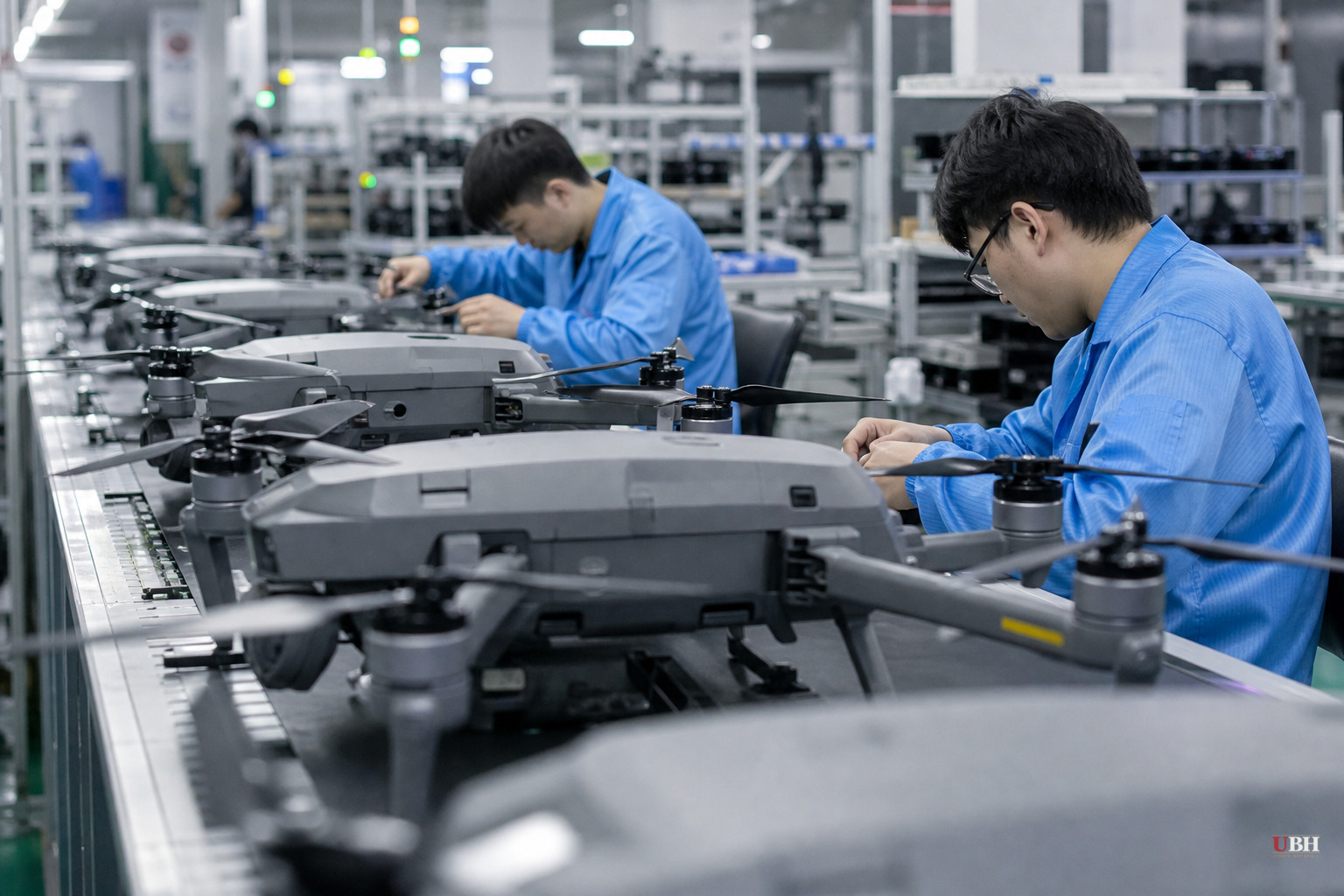
China's Ministry of Commerce announced Wednesday it's sanctioning six American entities and tightening export controls on drones and drone components heading to the United States, according to the South China Morning Post. The ministry called its own move "restrained" while warning of more to come.
The US sanctioned Chinese entities over Xinjiang and banned certain robot imports. China now says those six US entities "assisted" the Xinjiang sanctions and calls their conduct "egregious." Beijing banned Chinese companies and individuals from doing business with them. A seventh company, Compliance Testing LLC, got added to the same blacklist for helping the US Federal Communications Commission draft rules Beijing says threaten its "sovereignty, security and development interests."
Any drone, drone component, or related tech headed to the US now faces "strict case-by-case scrutiny," effective immediately, per the commerce ministry statement. Beijing is framing this as protecting "national security" and honoring "international commitments on non-proliferation." China dominates global drone manufacturing, and it just put a chokepoint on that supply chain aimed squarely at American buyers.
China also opened a national security probe into imported printing and copying equipment running foreign-made software, the first investigation under new provisions in China's revised foreign trade law. Microsoft and HP are the obvious targets here, given their footprint in printing software. No charges, no findings yet. This is an investigation, not a conclusion, and Beijing hasn't announced a timeline for when it wraps up.
While the drone and Xinjiang sanctions grabbed headlines, the more consequential fight is brewing over data center hardware. The FCC is drafting an order to ban Chinese-made data center components, according to Bloomberg, which cited a person familiar with the matter. Reuters reported separately that the agency is weighing a ban on new models of Chinese optical transceivers specifically, according to the Business Times.
Optical transceivers move data at high speed inside and between data centers, the backbone hardware for the AI boom. China exported $61.6 million worth of these components to the US in June, per Business Times reporting, which sounds like a lot until you see it's just 8.7% of China's worldwide transceiver shipments.
That number matters. The US market isn't the lifeline it used to be. Shipments to the US have already dropped sharply since President Trump returned to office, and Malaysia has stepped into the gap, pulling in $260 million of Chinese transceiver exports that same month, four times what the US received.
Vicky Zhou, a Greater China economist at Australia and New Zealand Banking Group, told Business Times a transceiver ban would have limited effect on China's overall AI-related exports, which made up nearly 23% of China's total shipments last year. Her read: China's other AI hardware, like lower-end chips and computers sold heavily into Southeast Asia, faces less exposure because it was never leaning on the US market the way transceivers briefly did.
Markets reacted fast. Zhongji Innolight, a major Chinese optical-equipment maker, fell as much as 14% in Shenzhen trading Wednesday before recovering some ground. Meanwhile US, European, and Japanese competitors rallied. Investors are betting the restrictions help Western and Japanese suppliers at China's expense, at least in the transceiver niche specifically.
The Communist Party's official paper, the People's Daily, ran a commentary Wednesday accusing the US of "unilateral bullying" and warning of countermeasures against the widening tech curbs, according to Business Times.
None of this is subtle. Washington keeps adding restrictions, first semiconductors, then AI services, now hardware components and robots. Beijing keeps answering with sanctions lists and export chokepoints of its own. Both governments are calling their own moves defensive and the other side's moves aggressive. That's the nature of a trade standoff, not evidence either side is lying.
The fair pushback from the China side: Beijing's export controls on drones don't ban all drone sales, they add case-by-case review, which is a real restriction but not a full embargo. And the transceiver data suggests Washington's leverage here is smaller than it looks, since China has already found other buyers.
The fair pushback from the Washington side: national security controls on FCC-related technology and robotics aren't about trade protectionism, they're about not letting a strategic rival build backdoors into American infrastructure, which is a legitimate policy goal regardless of how Beijing frames it.
Nobody's declared this truce dead. Both governments are still operating under whatever trade framework got them to this point, and the FCC hasn't finalized its transceiver order yet. It's still in the drafting stage according to Bloomberg's reporting. The next marker to watch: whether the FCC actually issues that order, and whether Beijing's "case-by-case scrutiny" on drones turns into something closer to an outright ban.
Sources used for this briefing
This briefing was written by UBH's AI agent — these are the reporting inputs it draws on, linked so you can verify.


