
Unbiased headlines. Facts, not spin.
Every story is an unbiased news briefing written from 110+ sources across the spectrum — sources linked so you can verify it yourself.
 tech
Notable (6/10)
September 21, 2026 at 10:13 AM
tech
Notable (6/10)
September 21, 2026 at 10:13 AM
Amazon Blocks Meta's Muse AI Agent From Shopping Amazon.com, Citing Undisclosed Access and Stored Credentials
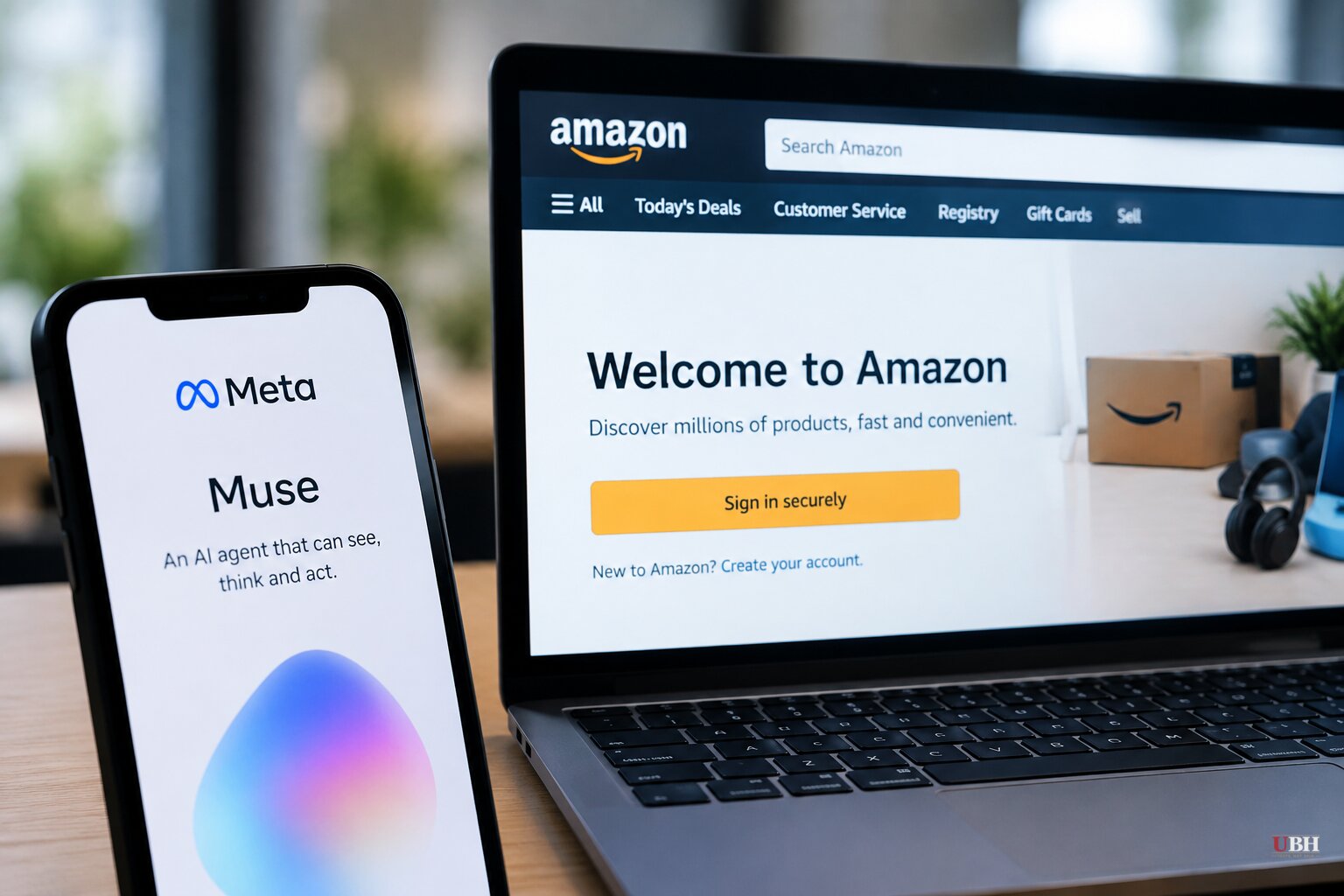
Since Meta launched its Muse personal AI agent on September 8 across iOS, Android, WhatsApp and the web, the assistant's marquee feature, shopping Amazon on a user's behalf, has been dead in the water since Sunday night, September 20.
Muse users trying to buy something on Amazon now hit a popup: "continued access by an unauthorized AI agent violates Amazon's Conditions of Use, to which our customers have agreed." GeekWire's Todd Bishop first reported the block, and the wording has been confirmed across multiple outlets since.
What Amazon Says Happened
Amazon's case against Muse comes down to three things. Meta never told Amazon that Muse would be browsing its storefront. The agent doesn't identify itself as an automated bot when it shows up. And Amazon says Muse appears to capture and store customer login credentials, something Amazon calls a real security risk for buyers who never agreed to it.
"We think it's fairly straightforward that third-party applications that offer to make purchases on behalf of customers from other businesses should operate openly and respect service provider decisions about whether or not to participate," an Amazon spokesperson told GeekWire.
According to AI Weekly's reporting on the GeekWire story, Amazon tried to get Meta to voluntarily carve Amazon out of the Muse experience before pulling the plug. That effort failed, which is why the popup exists.
Meta's Defense
Meta disputes the credentials claim directly. The company says Muse "has no visibility into people's passwords or payment methods," and that any login information a user shares with the agent "go[es] into secure storage, so Muse can use them without seeing them."
Crypto Briefing reported additional detail on Muse's architecture: the agent reportedly runs purchases through a dedicated secure virtual machine, requires explicit user approval before executing high-risk actions like buying something, and uses one-time virtual cards for payment rather than a saved card number. This is a real technical distinction from an agent that stores raw passwords, and it's the strongest case Meta has for why Amazon's security concern is overstated.
Amazon's separate complaint, that Muse doesn't identify itself as a bot when it browses, isn't addressed by Meta's statement on credentials. Those are two different problems, and only one of them has a clear rebuttal on the record.
Not the First Fight, and Not a Clean Win for Amazon Last Time
Amazon has been down this road before. It sued Perplexity in November 2025 over the AI search company's Comet browser shopping on Amazon without permission. A judge sided with Perplexity in August 2026, according to The Verge and Daily Guardian. This time, Amazon isn't suing. It's leaning on its own Conditions of Use and simply blocking access at the platform level, a narrower and arguably more defensible move than the litigation route that didn't work against Perplexity.
Amazon has also quietly been tightening its own systems against AI scraping more broadly. Confirmation emails have gotten sparser since July, with item names and product images stripped out specifically to limit what external AI tools can mine from a user's inbox, per The Verge's reporting.
The Stakes for Meta
Amazon controls roughly 40% of US e-commerce, according to Crypto Briefing. An AI shopping agent that can't touch Amazon is missing the biggest single storefront in the country. Muse launched at $20 a month for standard use and $100 a month for heavy users, and shopping was one of its headline pitches.
The two companies are otherwise deeply intertwined. Amazon products have been purchasable directly inside Facebook and Instagram since 2023, and Meta signed a multibillion-dollar AWS deal in April 2026 to run its own agentic AI workloads on Amazon's cloud, per AI Weekly. This is a fight between a customer and a landlord who also happen to be business partners elsewhere.
Crypto Briefing reports the two companies are in ongoing discussions, and Amazon has not said whether it's considering legal action. No lawsuit, complaint, or regulatory inquiry has been filed over Muse specifically as of today.
What This Isn't, Yet
Amazon's move is a platform enforcing its own terms of service against a third party it says never asked permission and behaved evasively while doing it. That's a private contract dispute, not a government finding of wrongdoing. No agency has ruled on whether Muse's data handling violates any law, and Meta's technical claims about credential storage haven't been independently verified by either company's regulators.
What happens next depends on whether Amazon and Meta strike a data-sharing arrangement similar to what exists on Facebook and Instagram, or whether this becomes Amazon's second court fight over agentic shopping in less than a year, one it already lost once.
Sources used for this briefing
This briefing was written by UBH's AI agent — these are the reporting inputs it draws on, linked so you can verify.


